Celestron spotting scopes are, in practice, assembled in places you might not expect. You’ll usually find manufacturing handled by contracted partners in China and other Asian sites, while Celestron in the U.S. sets design targets, specs, and quality checks.
That split matters because the label doesn’t tell the full story, and the serial number can reveal more if you know where to look.
Key Takeaways
- Celestron spotting scopes are primarily manufactured in China through contracted OEM and ODM partner factories.
- Celestron designs and specifies the scopes in the United States, while overseas partners handle component fabrication and assembly.
- Country-of-origin labels usually show the final assembly location, which may vary by model and production batch.
- Different parts, such as lenses and housings, can come from multiple specialized suppliers across global production partners.
- Check the scope’s barrel label, packaging, and serial number to confirm its manufacturing origin and import records.
Where Are Celestron Spotting Scopes Made?
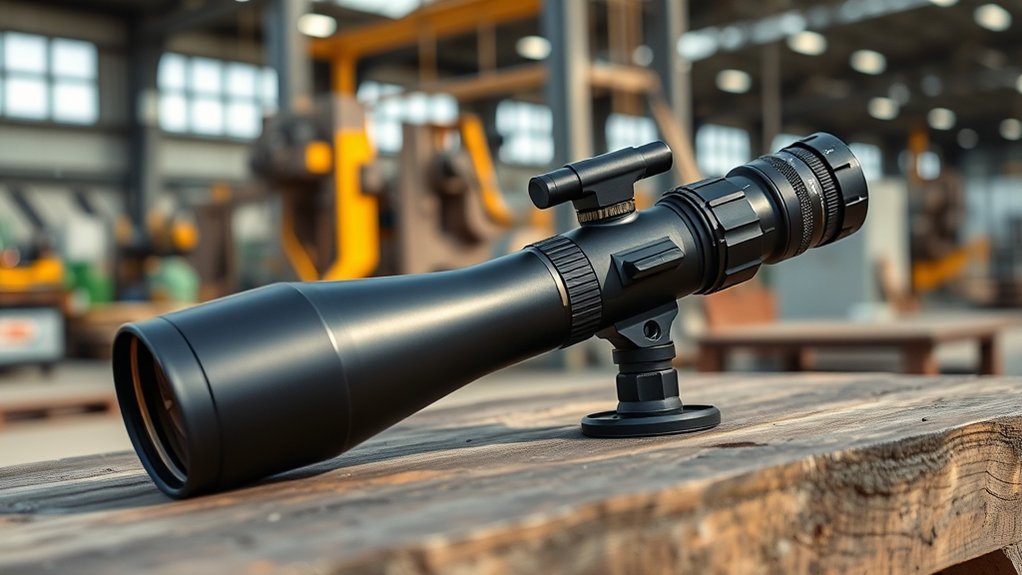
Celestron spotting scopes are primarily made in China, where the company sources and assembles many of its optical products through contracted manufacturing partners. When you ask, Where are Spotting scopes from Celestron made, the answer is usually China, with production handled by external factories that follow Celestron’s specifications.
You’ll find that this arrangement lets the brand control optical design, mechanical tolerances, and final quality targets while keeping manufacturing scalable. Spotting scopes in this line typically include multi-coated lenses, waterproof housings, and tripod-compatible bodies, and those features depend on consistent assembly processes.
You should expect country-of-origin labeling to reflect the final assembly location rather than every parts source. If you want to verify a specific model, check the product packaging or documentation, because sourcing can vary by release. That’s the most accurate way to identify where a given scope was produced.
Where Celestron Makes Its Scopes
You’ll find that Celestron scopes are produced through a mix of manufacturing locations and global production partners rather than in a single factory. The brand’s origin in the United States shapes its product development, while fabrication and assembly often occur in Asia.
This distribution affects how you should interpret origin claims, component sourcing, and final assembly details.
Manufacturing Locations
So where are Celestron spotting scopes made? You should treat manufacturing location as a production variable, not an unrelated topic. Celestron designs and specifies its spotting scopes in the United States, while optical assembly occurs in Asia. That division lets you evaluate origin without confusing it with irrelevant scope features such as magnification or objective diameter.
| Location | Role |
|---|---|
| United States | Design, specification, quality control |
| Asia | Optical assembly and final build |
| Distribution hubs | Packaging and shipment |
You’ll usually see the country of manufacture on the product label or packaging. For buyers, that marking identifies the final assembly site, not every sourced component. This distinction helps you read product data precisely and compare models consistently.
Global Production Partners
Where exactly does Celestron rely on global partners? You’ll find that Celestron uses a distributed manufacturing model, so you can expect multiple suppliers to contribute optical assemblies, mechanical housings, and finishing operations. This approach lets the company optimize the supply chain while maintaining technical tolerances across product lines.
- Component sourcing: You see lenses, prisms, and metals procured from specialized vendors.
- Assembly coordination: You get integrated production steps managed across partner facilities.
- Quality control: You rely on inspection protocols that verify alignment, coatings, and durability.
This structure can support cost control, scalability, and compliance with global ethics requirements, but it also demands consistent documentation. When you evaluate Celestron scopes, you’re looking at a coordinated international production network, not a single isolated factory.
Brand Origin Details
Celestron designs its spotting scopes under a U.S. brand identity, but manufacturing typically happens through overseas OEM and ODM partners, most often in Asia. You should view this as a split model: product concept, optical specifications, and quality control originate with Celestron, while component fabrication and final assembly often occur in third-party facilities.
This structure supports competitive pricing and broad model availability. When you assess brand heritage, remember that Celestron’s legacy comes from its California roots in consumer optics, not from domestic production alone.
For sourcing ethics, you should examine supplier audits, labor standards, material traceability, and environmental compliance. The made-for-market approach doesn’t reduce brand value, but it does mean country-of-origin labels can vary by model, production batch, and distributor requirements.
How to Verify Your Scope’s Origin
You can verify your scope’s origin by checking the model label for the listed country of manufacture.
Next, inspect the serial number and compare it with Celestron’s documentation or customer support records. These two identifiers usually provide the most direct confirmation of where your scope was made.
Check Model Label
To verify a Celestron spotting scope’s origin, check the model label on the barrel, body, or packaging for manufacturing details such as the country of origin, importer, or compliance markings. You can identify the production source by reading the printed text exactly as marked. Use this quick check:
- Confirm the country name on the label.
- Note the importer’s address or regional distributor.
- Compare model wording with Celestron’s brand history and factory ethics statements.
If the label is faded, use angled light and a magnifier to improve readability. You should treat the label as the primary origin indicator because it reflects the manufacturer’s declared jurisdiction. This method won’t prove every component’s source, but it gives you a reliable baseline for assessing where the scope was assembled and sold.
Inspect Serial Number
After checking the model label, inspect the serial number engraved or printed on the spotting scope, since Celestron often uses it to trace production runs, assembly batches, and distribution channels. You should record the full code exactly as shown, including prefixes, suffixes, and any separators.
Compare it with Celestron’s support records, retailer paperwork, and packaging labels to confirm whether the unit matches an authorized import path. Look for inspection stamps near the serial plate, because they can indicate factory verification or final quality control.
If the number is missing, altered, or inconsistent, treat the origin as unverified. You can also use the serial number when you request warranty coverage, since Celestron may validate ownership, model identity, and manufacturing history before approving service.
Why Celestron Uses Overseas Manufacturing
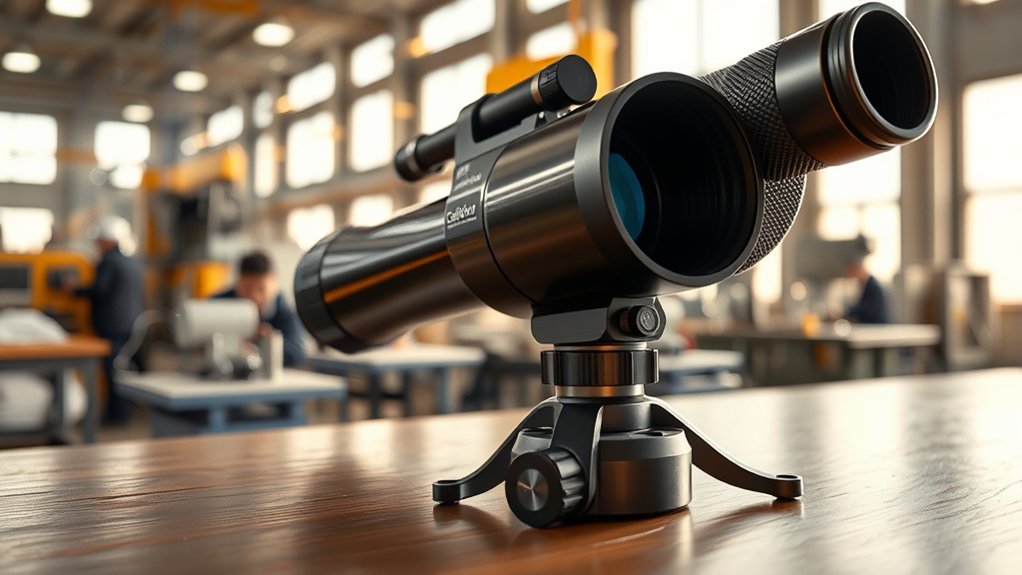
Celestron uses overseas manufacturing because it lets the company balance production cost, scale, and component sourcing while keeping retail prices competitive. You can see the logic in how it coordinates overseas labor and global supply chains for optical tubes, mounts, and accessories. This model supports predictable output and tighter procurement control.
Celestron’s overseas manufacturing balances cost, scale, and sourcing, keeping production predictable and retail prices competitive.
- Lower unit cost through labor and facility economics.
- Access to established suppliers for lenses, housings, and hardware.
- Faster scaling when demand shifts across product lines.
You should view this as a manufacturing strategy, not a design shortcut. Celestron can allocate engineering resources to specification control, vendor management, and logistics planning while external factories handle assembly. That structure reduces overhead and helps the company maintain consistent availability across markets. For you, the result is a product line that stays competitively priced without requiring a domestic production footprint.
Does Factory Location Affect Quality?
Factory location can affect quality, but it doesn’t determine it by itself. You should evaluate the factory’s process controls, inspection standards, and supplier consistency before judging the scope.
A plant with strong quality control can produce reliable optics even if it’s overseas, while a poorly managed domestic plant can still release defects. What matters is how well the manufacturer controls lens alignment, coatings, housing tolerances, and final calibration.
You also need to consider sourcing ethics, because material provenance and labor practices can influence long-term product integrity and brand accountability. Location may shape logistics and oversight, but it isn’t a proxy for precision.
When you compare products, focus on documented test results, warranty support, and consistency across batches. Those indicators tell you more about actual performance than the country on the label.
What Celestron Spotting Scopes Offer
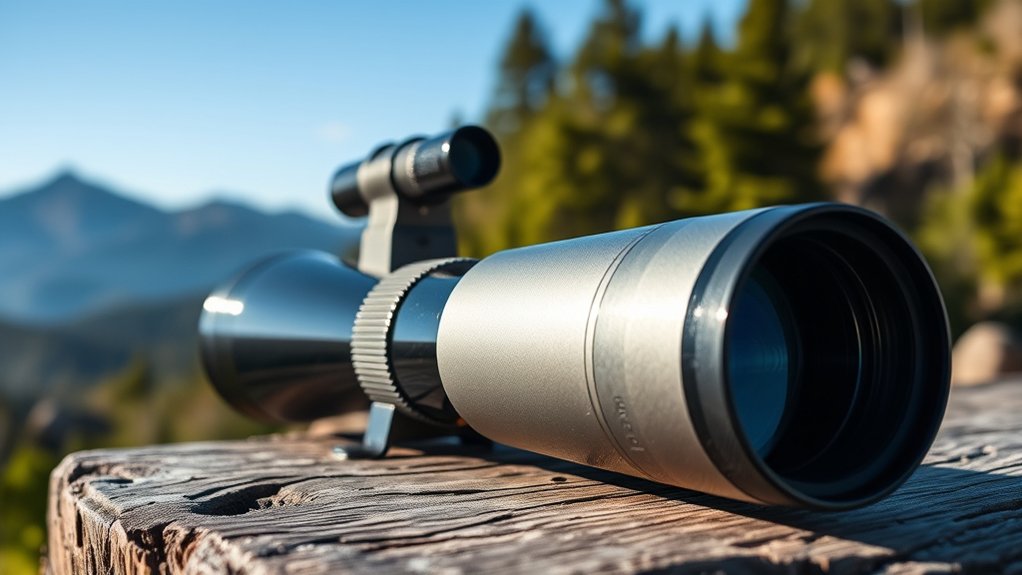
When you look at Celestron spotting scopes, you’ll typically find a practical mix of optical performance, portability, and value-oriented features. You can compare models by aperture, magnification range, and body construction, then match them to your use case. Most units offer:
- Multi-coated optics that improve contrast and reduce glare.
- Waterproof, fog-resistant housings that support field use.
- Tripod-ready mounts and compact designs for easier transport.
You’ll also see pricing models that span entry-level, midrange, and premium configurations, so you can balance budget against optical demands. Depending on the series, you may get angled or straight viewing, interchangeable eyepieces, and close-focus capability for variable observing distances.
Warranty coverage usually adds a predictable service layer, which helps you evaluate long-term ownership costs. Overall, Celestron scopes target users who want measurable performance without unnecessary complexity, and you can assess each feature set quickly against your observation needs.
Why Celestron’s Origin Matters to Buyers
A product’s origin matters because it can shape how you evaluate build consistency, quality control, supply chain support, and warranty service. When you buy a Celestron spotting scope, you’re not just comparing optics; you’re assessing manufacturing traceability and service expectations.
If the brand sources components or final assembly in multiple regions, you may see variation in coatings, mechanics, or accessory fit. Knowing the origin also helps you judge replacement-part availability and turnaround times for repairs.
You should treat origin as one data point, not the only one. Product labels, serial numbers, and warranty terms can confirm details better than marketing claims. If the manufacturer provides insufficient data, you can’t reliably infer performance from geography alone.
You should also avoid unrelated topics, such as general astronomy gear preferences, because they don’t answer the sourcing question. In short, origin matters when you want a predictable ownership experience and a clearer estimate of long-term support.
Frequently Asked Questions
Are Celestron Spotting Scopes Assembled in Multiple Countries?
You can find Celestron spotting scopes assembled in multiple countries, depending on model. You should check labels and documentation for country of origin versus assembly location. Manufacturers often use factory diversification versus single site production.
Can I Identify the Factory From the Scope’s Serial Number?
You usually can’t identify the factory from a serial number alone; it’s a faint trail, not a full map. For identifying serials, factory mapping, production origin, and sourcing transparency, you’ll need Celestron’s records or support.
Do Celestron Warranties Differ by Manufacturing Country?
Yes. Celestron warranties can differ by warranty regions, not just manufacturing origins. You should check your local distributor’s terms, because coverage length, service channels, and proof-of-purchase rules often vary by country and retailer.
Are Replacement Parts Sourced From the Same Production Facility?
Not necessarily; you’ll often find replacement parts from different suppliers, since the availability of local service and pricing vs. import drive sourcing.
Like a ship in changing tides, you should verify part compatibility with Celestron.
Has Celestron Ever Relocated Spotting Scope Production?
Yes, you’d see Celestron has shifted some spotting scope production over time, balancing tradition vs modernization and outsourcing vs in house production.
You’d need model-specific sourcing data, because facilities and partners can change without public notice.
Conclusion
When you ask where Celestron spotting scopes are made, you should understand that they’re typically assembled in China under U.S.-directed design and quality control. You can verify origin through labels and serial numbers, but the real value lies in consistent performance, not geography alone.
Manufacturing is a bridge, not the destination: it connects global parts into a usable instrument. For you, that means evaluating build quality, optics, and support before assuming location tells the whole story.
Ultimately, the best approach is to focus on how well Celestron spotting scopes perform and meet your needs rather than just where they are made.