If you’re considering BSA rifle scopes, you’ll find a mixed picture. Some models offer usable magnification, simple controls, and acceptable clarity for casual use.
However, others show weak turret tracking, limited durability, or softer image quality at higher power. You can get decent value from the right model, but the details matter more than the brand name.
The real question is which BSA scope actually holds up when you mount and zero it.
Key Takeaways
- BSA rifle scopes can be a decent budget choice for casual shooting and light hunting.
- Optical quality is usually acceptable at low to mid magnification, but edges soften at higher power.
- Reliability is mixed, with some models holding zero well while others vary in tracking and durability.
- They work best with proper mounting, ring torque, and a careful zeroing process.
- They are not ideal for harsh recoil, heavy use, or precision shooting where top-tier consistency matters.
Are BSA Rifle Scopes Any Good?

When you ask whether BSA rifle scopes are any good, the answer is that they can be a practical budget option, but their performance depends heavily on the specific model and how you intend to use it. You should evaluate BSA scope reliability by checking tracking consistency, turret repeatability, and whether the zero holds after recoil.
You’ll also want to inspect glass coating quality, since it affects light transmission, contrast, and glare control in bright or low-light conditions. In this price class, tolerances can vary, so you may notice differences from one unit to another.
If you compare specs carefully and mount the scope correctly, you can get acceptable service for casual shooting. For demanding use, though, you’ll need stricter expectations.
What BSA Rifle Scopes Do Best?
BSA rifle scopes do best in low-risk, general-purpose roles where affordability matters more than premium optical performance, such as casual target shooting, plinking, and light hunting at moderate distances. You’ll get usable magnification, straightforward controls, and enough clarity for typical daytime shooting.
If you mount one correctly, you can expect practical zero retention for standard cartridges, especially when you follow a consistent recoil management approach and verify ring torque. These scopes also suit shooters who want simple features without complex setup.
Their lighter-duty construction pairs well with a regular maintenance routine that includes lens cleaning, cap use, and periodic screw checks. For range practice and informal field use, BSA scopes can deliver acceptable repeatability, predictable handling, and enough precision to support basic marksmanship goals.
Where Do BSA Rifle Scopes Fall Short?

You may notice that BSA rifle scopes can show optical clarity limits, especially at higher magnification or in low light, where edge sharpness and image contrast can drop.
You’ll also find that their durability under stress can be inconsistent, with recoil, rough handling, or repeated adjustment sometimes affecting zero retention and overall reliability. These tradeoffs matter most when you need consistent performance in demanding field conditions.
Optical Clarity Limits
Optical clarity is where BSA scopes tend to show their most obvious trade-offs, especially in low light and at the edge of the image. You’ll usually notice less edge sharpness, modest resolution, and some color fringing when you push magnification or shoot into bright background light.
Compared with higher-tier optics, image contrast can look flatter, so fine details don’t separate as cleanly. You may also see optical artifacts such as glare, veiling flare, or a slightly hazy image around strong light sources.
Their coatings help, but coating longevity can matter over time if performance degrades from wear or frequent cleaning. For casual range use, these limits may be acceptable; for precision shooting, you’ll likely want better glass.
Durability Under Stress
Under hard use, BSA rifle scopes can show their limits in mechanical ruggedness more than in basic zero retention. You may keep zero, yet durability stress from recoil, bumps, and repeated turret adjustments can expose looser internals.
In field reliability terms, that means you should expect more caution than abuse.
- Heavy recoil can accelerate wear.
- Turrets may feel less precise under load.
- Knobs can shift after impact.
- Tube sealing may be less robust.
- Mounting checks matter after rough carry.
If you shoot from a bench or hunt lightly, you’ll likely be fine. If you demand frequent hard knocks, rapid dialing, or harsh weather, you may want a tougher optic.
BSA’s value is real, but its stress tolerance is modest.
Which BSA Rifle Scopes Are Best for Hunting?
For hunting, the best BSA rifle scopes are typically the models that balance clear glass, reliable turrets, and useful magnification without adding unnecessary weight. You’ll usually get the best field results from compact variable-power scopes in the 3-9x or 2-7x range, especially when you’re moving through brush or taking shots at mixed distances.
Look for fully coated lenses, simple duplex reticles, and capped adjustments that hold zero after recoil. If you hunt at dawn or dusk, choose a scope with a larger objective only if your rifle can still carry naturally.
You should match eye relief to your firing position and caliber. Good hunting optics also support hunting ethics and campfire etiquette by helping you identify game clearly before you squeeze the trigger.
Which BSA Rifle Scopes Are Best for Target Shooting?
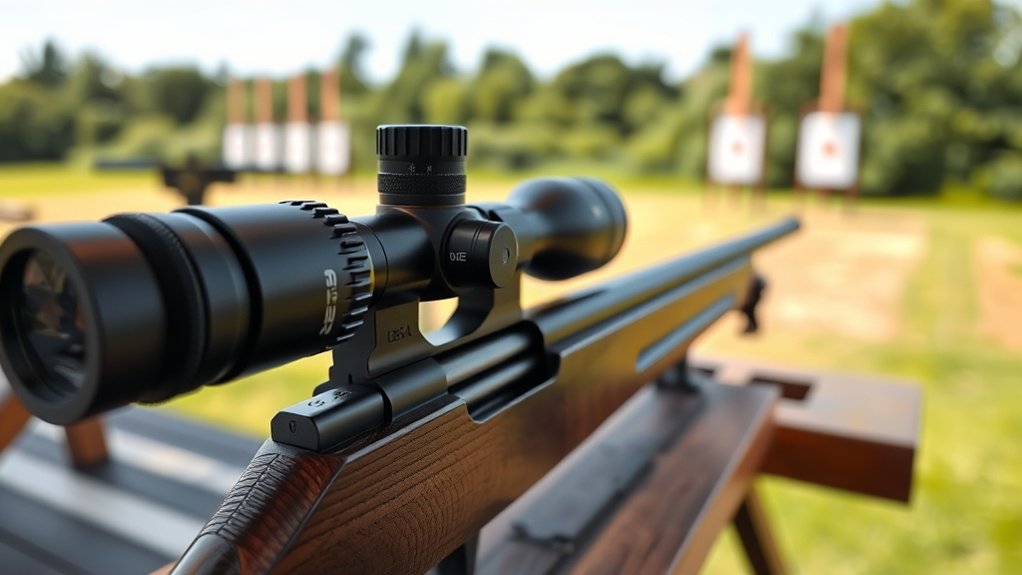
When you’re choosing a BSA rifle scope for target shooting, prioritize repeatable turrets, a fine reticle, and magnification that lets you resolve small aiming points at your expected distance. You’ll usually do best with BSA models that offer target-style adjustments, side focus, and consistent tracking, because these features matter more than cosmetic extras.
Prioritize repeatable turrets, a fine reticle, and enough magnification to clearly resolve your target.
- Pick a scope with clear click values
- Choose higher magnification for bench work
- Verify zero stop or precise return-to-zero
- Match tube size to your rings
- Confirm scope mounting leaves enough eye relief
For formal groups, a 4-16x or 6-24x BSA can work well if you mount it rigidly and keep parallax tuned. Use stable scope mounting, then test turret corrections at distance.
How Good Is BSA Scope Glass?
When you evaluate BSA scope glass, you’ll want to look first at image clarity, since it affects how precisely you can identify fine target details and reticle contrast. You should also assess light transmission, because better coatings and lens quality help preserve brightness in low light.
Edge sharpness is important too, as it shows how well the optic maintains focus across the full field of view. These three factors together give you a practical measure of how usable the scope really is in real shooting conditions.
Glass Clarity
BSA scope glass is generally serviceable rather than exceptional, with image quality that tends to match the brand’s budget positioning. You’ll notice glass clarity that’s adequate for casual target work and short to midrange shooting, but it won’t rival premium optics in edge definition or fine detail.
Optical performance stays usable when you center your eye properly, yet you may see some softness, especially toward the outer field.
- Good enough for basic zeroing
- Acceptable contrast in bright conditions
- Mild color fringing can appear
- Resolution drops at higher magnification
- Best used for practical, not precision, shooting
Light Transmission
How well does BSA scope glass transmit light? You’ll usually find that BSA scopes deliver adequate light transmission for daylight and bright overcast conditions, but they don’t match premium optics in low light.
Their coatings and lens quality help preserve brightness, yet you may notice a modest drop in image intensity as ambient light fades. Optical clarity is generally acceptable, so the view stays usable and targets remain distinguishable at typical hunting distances.
In practical terms, you can expect a functional image with moderate contrast, not a highly efficient twilight performance. If you’re using the scope for range work or casual hunting, the light transmission is serviceable.
If you demand maximum brightness at dawn or dusk, you’ll likely want higher-end glass for better performance.
Edge Sharpness
Edge sharpness is one of the clearest indicators of overall scope glass quality, and with BSA scopes you can generally expect a decent center image with softer performance toward the outer field. You’ll notice that edge sharpness holds best at moderate magnification, where distortion stays manageable.
At higher power, the image can lose definition near the rim, so you may need to refocus or accept a narrower sweet spot. That doesn’t usually affect practical shooting, but it does show the limits of the optics.
- Center clarity remains usable
- Outer-field softness appears sooner
- Weight distribution feels balanced
- Image transitions stay predictable
- Best performance comes at mid-range settings
Are BSA Rifle Scopes Reliable and Durable?
When you look at BSA rifle scopes for reliability and durability, you’ll generally find a mixed but usable reputation: many models hold zero adequately for light to moderate recoil, but build quality, tracking consistency, and long-term durability vary by series and price point. You should expect acceptable performance for casual use, yet not the same consistency you’d get from higher-tier optics.
Tube sealing, turret feel, and internal alignment can differ, so you’ll want to test your scope after mounting and after recoil exposure. That unrelated topic, when linked by a random pairing to harsh field use, shows why user reports often split. If you need repeatable performance under heavier abuse, you may notice limitations sooner. For standard rimfire or low-recoil setups, though, BSA can be serviceable.
Which BSA Features Are Worth It?
Which BSA features are actually worth paying for depends on how you’ll use the scope, but the most useful upgrades are usually a clear, multi-coated lens, a reticle that stays visible in low light, and reliable adjustable parallax on longer-range models.
The most useful BSA upgrades are clear multi-coated lenses, low-light reticles, and reliable adjustable parallax.
You’ll notice innovative coatings most in glare control and color fidelity.
You should prioritize capped or precise turrets if you need repeatable windage corrections.
A simple duplex reticle works well for general hunting.
An illuminated reticle helps when contrast drops at dawn or dusk.
Adjustable parallax matters when you shoot beyond close range.
You don’t need extra markings or cosmetic features if they don’t improve image quality, aiming speed, or correction consistency.
Focus on optics that give you a cleaner sight picture and predictable adjustments.
How to Mount and Zero a BSA Rifle Scope
You should mount the BSA scope with correctly sized rings, level the reticle, and torque the hardware to the manufacturer’s specification. Next, bore sight the rifle so the initial point of aim is close to the point of impact, which reduces ammunition waste during live fire.
Then zero the scope at your chosen distance, using measured shot groups and precise turret adjustments to confirm consistent impact shift.
Scope Mounting Steps
Before you mount a BSA rifle scope, verify that the bases, rings, and receiver all match your rifle’s specifications. Then clean the mounting surfaces and inspect the scope body for damage or loose turret caps.
Set the scope in the rings, level the reticle, and tighten screws evenly in a crisscross pattern to the manufacturer’s torque. Keep the eye relief consistent so you can maintain a full sight picture without strain.
After securing the optic, confirm alignment with bore sighting. Then make a precise windage adjustment at the range before final zeroing.
- Check ring spacing
- Use a torque driver
- Level the crosshairs
- Confirm eye relief
- Recheck screw tension
Bore Sighting Basics
Bore sighting gives your BSA rifle scope a close initial alignment with the barrel so you can reach paper faster at the range. You should remove the bolt, secure the rifle, and look through the bore at a distinct point. Then adjust the scope so its reticle matches that same point.
This bore sighting basics step doesn’t replace live-fire correction, but it reduces wasted shots and helps confirm mounting accuracy. Keep the rifle level, verify ring torque, and check that the eye relief remains consistent when you shoulder the gun.
If you use a laser bore sighter, confirm that it fits the chamber or muzzle correctly. After alignment, recheck all screws and caps before firing. A precise setup makes later adjustments faster and more repeatable.
Zeroing At Distance
Once the scope is mounted and bore sighted, move to live-fire zeroing at your intended distance, because that’s where a BSA rifle scope proves whether its adjustments track correctly. Use solid bags or a rest, fire three-shot groups, and measure the group center before you adjust windage and elevation.
Apply one change at a time, then confirm with another group. Consistent zeroing techniques matter more than chasing single impacts, since they reveal true point-of-impact shifts. If your rifle recoils sharply, let the reticle settle before each shot.
Check parallax if your model includes it
Record click values and group movement
Reconfirm after tightening mounts
Zero at 25, 50, or your real distance
Revisit bore sighting if impacts drift unexpectedly
Is a BSA Rifle Scope Worth the Money?
Whether a BSA rifle scope is worth the money depends on what you expect from it and how hard you plan to use it. If you need a budget optic for casual plinking, small-game hunting, or short-range zeroing, you can get acceptable glass, usable turrets, and adequate tracking for the price.
If you demand repeatable adjustments, edge-to-edge clarity, and durable internal mechanics, you may find better value elsewhere. You should compare magnification range, reticle type, eye relief, and mount compatibility before buying.
Warranty support and long-term durability also affect value. An unrelated topic, another irrelevant topic, and cosmetic features shouldn’t drive your decision. For the money, BSA can be reasonable, but only when you match the scope’s performance to realistic use.
Frequently Asked Questions
Do BSA Scopes Work Well on Magnum Rifles?
Not usually; you’ll want to verify BSA scope durability and Magnum compatibility first. Many BSA models handle moderate recoil, but magnum rifles can damage weaker internals, so you should choose reinforced, recoil-rated optics instead.
Are BSA Rifle Scopes Waterproof and Fogproof?
You’ll find BSA rifle scopes are typically sealed and nitrogen-purged, so they resist water and fog like a raincoat on a stormy day. Still, you should check model specs for waterproof, fogproof, and durability concerns.
Can BSA Scopes Handle Rimfire Recoil?
Yes, you can usually trust BSA scopes on rimfire durability; most rimfire cartridges produce mild recoil. You’ll want to verify mounting quality and check illuminated reticles for reliable function under repeated use.
Do BSA Scopes Come With Illuminated Reticles?
Yes, you can find some BSA models with illuminated reticles, while others don’t offer them. Like a lighthouse in fog, bsa illuminated options can aid aiming, but you should still judge scope durability and model specs carefully.
What Warranty Does BSA Offer on Rifle Scopes?
You typically get BSA’s limited warranty coverage on rifle scopes, which protects against defects in materials and workmanship.
You should expect service turnaround to vary, and you’ll usually need proof of purchase for claims.
Conclusion
If you want a budget optic, BSA scopes can give you usable magnification, simple controls, and decent daylight clarity. If you mount it correctly, torque it properly, and zero it carefully, you can get solid performance for casual hunting or plinking.
But if you need repeatable tracking, rugged durability, or consistent low-light sharpness, you should look higher. You get value, you get basic reliability, and you get limitations that show up under harder use.
In conclusion, BSA rifle scopes offer good value for those on a budget, but their performance may fall short in demanding conditions.