If you get eye relief wrong on a spotting scope, the image can seem to vanish in an instant.
Eye relief on a spotting scope is the distance from the eyepiece to your eye where you still see the full field of view.
It affects comfort, clarity, and how well glasses fit into the view.
A few millimeters can change everything, especially when you compare eyepieces.
So, the next question is which value actually works for you.
Key Takeaways
- Eye relief is the distance from the eyepiece where you can see the full image clearly.
- Too little eye relief feels cramped; too much distance can cause darkening or vignetting.
- Good eye relief improves comfort, reduces neck strain, and helps maintain a stable view.
- Eyeglass wearers usually need longer eye relief, often around 16 to 20 mm or more.
- Check eye relief on each eyepiece or zoom setting, since it can change with magnification.
What Is Spotting Scope Eye Relief?
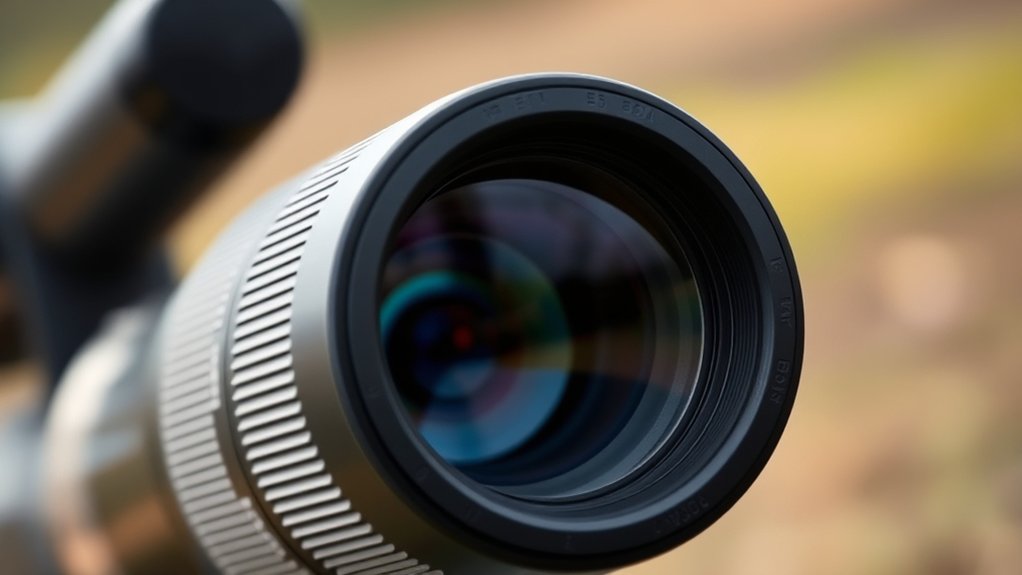
Eye relief is the distance between the spotting scope’s eyepiece and your eye where you can still see the full image clearly. In practice, you measure it in millimeters, and it defines the usable viewing gap between your eye and the ocular lens.
If you place your eye closer than this distance, you may lose part of the field of view; if you move farther away, the image can darken or vignette. When you compare spotting scope models, eye relief tells you how much positional tolerance the optic gives you during use.
Longer eye relief generally makes alignment easier, especially when you wear glasses, because you don’t need to press your face against the eyepiece. Shorter eye relief demands more precise eye placement. You’ll usually find the specification listed with the eyepiece or magnification data, and it helps you judge how the spotting scope will fit your viewing setup.
Why Eye Relief Matters
Eye relief matters because it determines how comfortably you can position your eye behind the scope while maintaining a full, usable image. If the eye relief is too short, you may need to press your eye too close to the eyepiece, which reduces viewing comfort and can cause vignetting or a restricted field of view.
It’s also critical if you wear eyeglasses, since adequate eye relief lets you see the entire image without removing them.
Viewing Comfort
When you’re looking through a spotting scope for long periods, eye relief directly affects how comfortable and usable the image feels. With proper Eye relief, you keep a natural head position and reduce strain on your neck and brow.
That improved Viewing comfort helps you maintain stable alignment, so the image stays centered with less effort. Short eye relief can force you too close to the eyepiece, making the view feel cramped and tiring.
Longer eye relief gives you more flexibility in eye placement and steadier observation.
- Less facial pressure
- More relaxed posture
- Easier image acquisition
- Longer observation sessions
Eyeglasses Compatibility
If you wear glasses, eye relief becomes even more important because it determines whether you can see the full field of view without pressing your lenses against the eyepiece. You need enough eye relief to keep your spectacles clear of the housing while still viewing the entire image.
Short eye relief forces you to remove glasses or accept vignetting, which reduces usable resolution and precision. Check eyewear compatibility by testing the scope in your normal viewing position, not just by reading specifications.
If the eyecup extends too far, you’ll lose edge detail. Also consider weight considerations, since some eyeglass-friendly eyecups and larger eyepieces add mass to the optic and tripod system.
How Eye Relief Affects Eyeglass Wearers
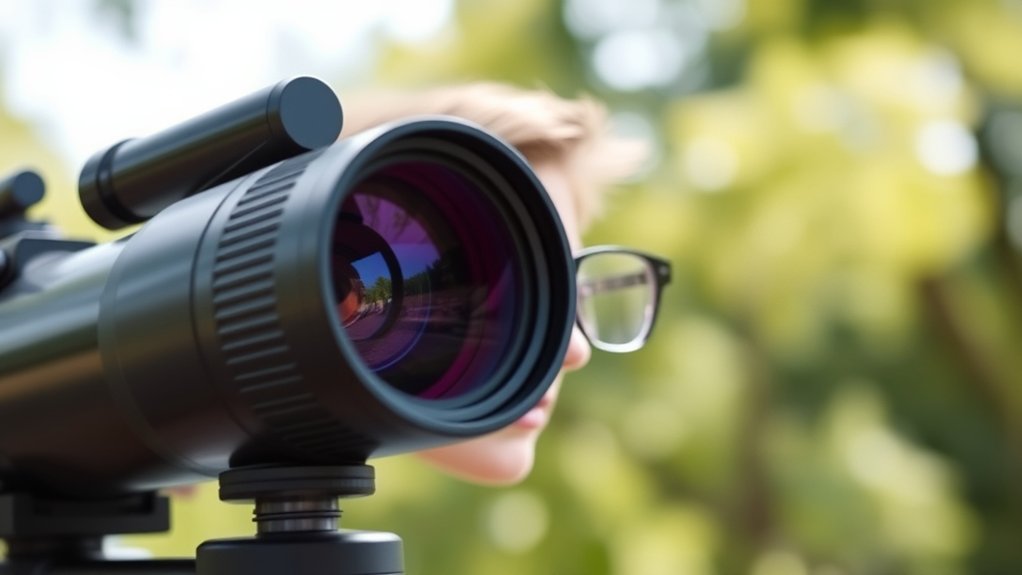
If you wear eyeglasses, you need enough eye relief to keep your lenses from pressing against the scope and to maintain comfortable viewing. When the eye relief is too short, you can’t place your eye far enough back to see the full field of view.
A proper eye relief value lets you use the scope without strain while still capturing the entire image.
Eyeglass Comfort
Eyeglass comfort depends heavily on eye relief because your glasses place your eye farther from the spotting scope’s exit pupil. With adequate eye relief, you can keep your lenses on and still align your pupil without strain. Insufficient eye relief forces you to press too close, which can make viewing awkward and unstable.
- Check the manufacturer’s stated eye relief.
- Compare it with your glasses’ lens thickness and frame fit.
- Choose a scope that lets you relax your eye position.
- Test comfort before you buy, if possible.
When eye relief matches your setup, eyeglass comfort improves because you avoid vignetting and reduce pressure on your frames. You’ll also maintain a repeatable head position, which makes extended observation easier and more precise.
Full Field View
To see the full field of view through a spotting scope, your eye has to sit at the correct distance from the exit pupil. That distance becomes harder to maintain when you wear glasses. If your eye sits too far back, you lose the full field view and see tunnel edges.
More eye relief helps you keep the image bright and complete without pressing your lenses into the eyecup.
| Eye relief | Effect | Result |
|---|---|---|
| Short | Eye stays too close | Cropped image |
| Proper | Exit pupil aligns | Full field view |
| Long | Glasses fit easier | Stable image |
You need enough eye relief to preserve viewing comfort, but not so much that your head position wanders. That balance determines how much of the scene you can actually use.
What Counts as Good Eye Relief
What counts as good eye relief depends on how you use the spotting scope, but in practice, 16 to 20 mm is usually comfortable for most observers. That range lets you hold a natural viewing position while preserving eye comfort and a full, usable image.
If you wear glasses, you’ll usually want the higher end of that range so you can see the whole field without pressing your face against the eyepiece.
- 16 mm: workable for many users
- 18 mm: a balanced, common target
- 20 mm: better for eyeglass wearers
- Below 15 mm: often feels cramped
Good eye relief also reduces vignetting from small head movements and helps you keep alignment stable during long viewing sessions. Don’t treat the number alone as absolute; eyecup design and your facial geometry affect the actual experience.
Good eye relief helps prevent vignetting and keeps your view stable, though eyecup design and facial shape still matter.
Still, if you’re choosing among models, eye relief in this window usually signals a practical, comfortable optic.
How to Check Eye Relief Before You Buy

Before you buy a spotting scope, check the listed eye relief in the spec sheet and confirm whether it’s measured at the magnification you’ll actually use, since some zoom eyepieces vary across the range. Then compare that number with your viewing setup and eyeglasses compatibility, because frame thickness can reduce usable distance.
| Check | What to verify |
|---|---|
| Spec sheet | Exact eye relief in millimeters |
| Eyepiece range | Low, mid, and high zoom values |
| Fit test | See full field with your glasses on |
If the maker provides a demo unit, test it at the highest power you expect to use and look for full image coverage without vignetting from your eyeglass lenses. Read user manuals and measurements from independent reviews, not just marketing claims.
When the published eye relief is borderline, choose a model with a little extra margin so you can maintain a stable, repeatable viewing position and avoid constant repositioning.
Eye Relief vs. Exit Pupil
Eye relief and exit pupil measure different things, so don’t treat them as interchangeable. Eye relief is the distance from the eyepiece where you see the full image; exit pupil is the diameter of the light beam leaving the scope.
You use eye relief to position your eye, and you use exit pupil to judge brightness and viewing tolerance. At higher magnification, exit pupil usually shrinks, while eye relief may stay similar or change slightly depending on the design.
- Eye relief = eye position
- Exit pupil = light beam size
- Longer eye relief helps you maintain full field view
- Larger exit pupil makes alignment easier in low light
When you compare spotting scopes, read both numbers together. A scope can offer generous eye relief but a small exit pupil, or the reverse.
Understanding that distinction helps you select optics that match your viewing distance, magnification needs, and expected light conditions.
Common Eye Relief Problems and Fixes
Once you know how eye relief differs from exit pupil, you can spot the most common setup problems faster. If you see a dark ring, you’re likely holding your eye too far back or too close to the spotting scope. Move your head until the full image fills the eyepiece without vignetting, then lock your position.
If you wear glasses, keep them on and use the scope’s eyecup position that preserves your working distance. If the view blackouts when you shift slightly, your eye isn’t centered; steady your cheek weld and align straight through the optical axis.
If you can’t see the entire field, you may be crowding the eyepiece. Check your stance, tripod height, and lens cap clearance. In bright light, stray glare can mimic eye relief errors, so shade the eyepiece with your hand.
Repeat the setup at the intended magnification, because your viewing position must stay consistent.
How Eyepieces Change Eye Relief
Eyepiece design directly changes eye relief, so the same spotting scope can feel very different at different magnifications or with different oculars. When you swap eyepieces, you alter the optical geometry that sets the eye point, and that shifts eye relief. Lower-power eyepieces often give longer eye relief, while high-power designs can shorten it because they use stronger lens groups and tighter exit pupil positions. You should expect eyepiece variability across brands and even within a zoom range.
Eyepiece design changes eye relief, so magnification and ocular choice can make the same scope feel very different.
Fixed focal-length eyepieces usually keep eye relief more consistent.
Zoom eyepieces often vary eye relief as you change magnification.
Wide-angle designs may trade field of view for different eye relief behavior.
Refractor-based optical trains can make eyepiece changes more noticeable.
This means the scope body alone doesn’t define the viewing distance; the eyepiece does. When you compare models, check the stated eye relief for each eyepiece, not just the scope.
Tips for Comfortable Viewing
To view comfortably, set the eye cup and scope height so your eye lands at the eyepiece’s eye point without straining your neck or brow. Then adjust the tripod until the image fills the field without blackout.
If you wear glasses, keep the eye cup retracted; if not, extend it until your pupil sits at the correct eye relief distance. Check eyepiece compatibility before expecting a relaxed view, because some designs need more or less eye relief than others.
Use a stable stance and avoid leaning into the scope, since pressure changes alignment and causes vignetting. Focus with small movements, then fine-tune your position rather than forcing your head forward.
If the view still feels tight, swap to an eyepiece with longer eye relief or lower magnification. Small changes in setup reduce fatigue and help you hold the full image longer.
Frequently Asked Questions
Can Eye Relief Affect Spotting Scope Image Brightness?
Yes, eye relief can affect image brightness slightly if you don’t align your eye properly. With shorter eye relief, you may lose exit pupil coverage, causing a brightness impact and vignetting at the scope’s edge.
Does Eye Relief Change With Different Magnifications?
Yes, eye relief often changes with different magnifications; on my 20-60x scope, it shortened 6mm at 60x. You’ll notice magnification variability acts like a zoom lens: higher power usually means less forgiving eye relief.
Is Longer Eye Relief Always Better for All Users?
No, longer eye relief isn’t always better. You need eye relief matched to your eye position, glasses use, and viewing style.
Too much can reduce stability, while proper eye relief improves user comfort and image access.
Can Eye Relief Help Reduce Eye Strain During Long Sessions?
Yes, eye relief can reduce eye strain during long sessions. You’ll keep a comfortable viewing distance, and that’s half the battle.
With proper eye relief, magnification changes feel steadier, letting you focus longer without fatigue.
Do Compact Spotting Scopes Usually Have Shorter Eye Relief?
Yes, you’ll often notice shorter eye relief in compact spotting scopes because their compact design prioritizes portability and optical packaging. You may need to position your eye closer to the eyepiece, especially with higher magnification.
Conclusion
Now you know what eye relief on a spotting scope means and why it matters for comfort, image quality, and eyeglass use.
If you want a full, bright view without crowding the eyepiece, shouldn’t you check eye relief before you buy? Match the spec to your viewing distance, your glasses, and your eyepiece design.
When you do, you’ll reduce eye strain, avoid vignetting, and get a clearer, more relaxed sight picture every time. Paying attention to eye relief on a spotting scope ensures the best viewing experience possible.