A BDC on a rifle scope is designed to help with bullet drop compensation. It doesn’t measure range by itself; instead, it assumes a specific bullet path and provides preset hold points for aiming.
You can use those marks to compensate for drop faster than dialing turrets, but only if your load, zero, and distance match the reticle’s design. Get them wrong, and the system can mislead you when the shot matters most.
Key Takeaways
- BDC means bullet drop compensating, a scope system designed to help account for bullet drop at different distances.
- It uses reticle marks or dial settings as preset aiming points for specific ranges.
- BDC helps you shoot faster by reducing the need to guess holdover or dial turrets.
- It works best when matched to your exact cartridge, zero distance, and muzzle velocity.
- BDC is not exact in all conditions, so you should verify it with live-fire testing and practice.
What Is a BDC Rifle Scope?
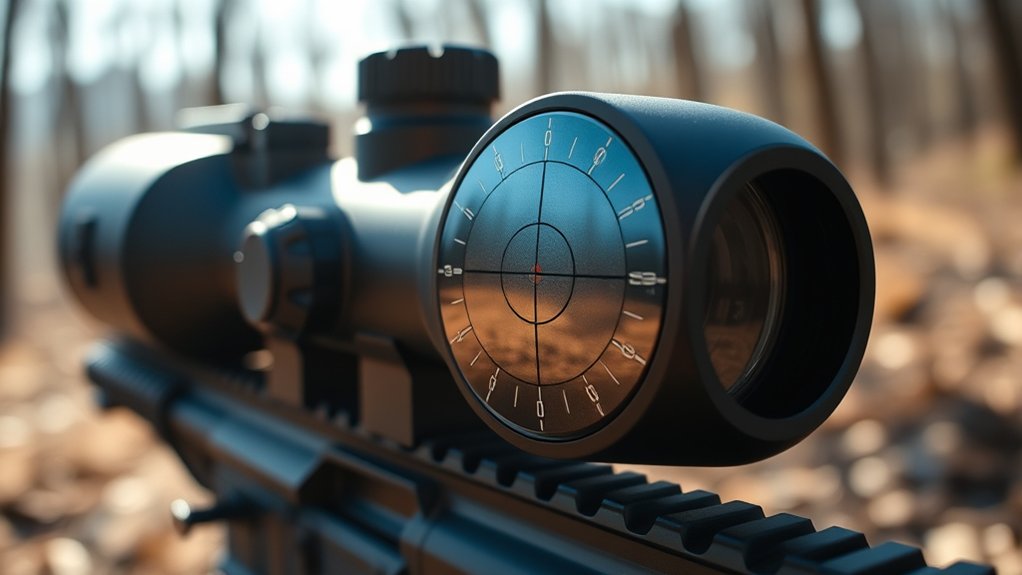
A BDC rifle scope, or bullet drop compensating scope, is built to help you account for a bullet’s drop at different distances without constant manual holdover estimation. You use it to make range adjustments faster and more consistent.
The scope includes a reticle or dial system calibrated for specific trajectory data, so you can match your shot to distance with less guesswork. In practical use, you still need to confirm your ammunition, zero distance, and environmental conditions.
Weather effects can alter trajectory, and wind drift can move your point of impact off target. A BDC scope doesn’t replace skill or verification; it gives you a structured aiming reference that helps you manage distance more efficiently in the field or at the range.
How a BDC Reticle Works
The BDC reticle works by giving you a series of aiming references, usually hash marks, circles, or holdover points, that correspond to predicted bullet drop at set distances. You align your target with the mark that matches your load and zero, then verify the scope’s calibration against your rifle and ammunition.
- The center point sets your primary zero.
- Lower marks represent increasing drop compensation.
- Spacing assumes a specific velocity and ballistic profile.
- Your actual impact can vary with wind, altitude, and barrel length.
You should treat the pattern as a calibrated tool, not a guarantee. When you’re discussing aesthetics or debating pricing, remember that the reticle’s value comes from its data, not its appearance. Choose one that matches your cartridge and shooting conditions.
How BDC Marks Speed Up Distance Shots
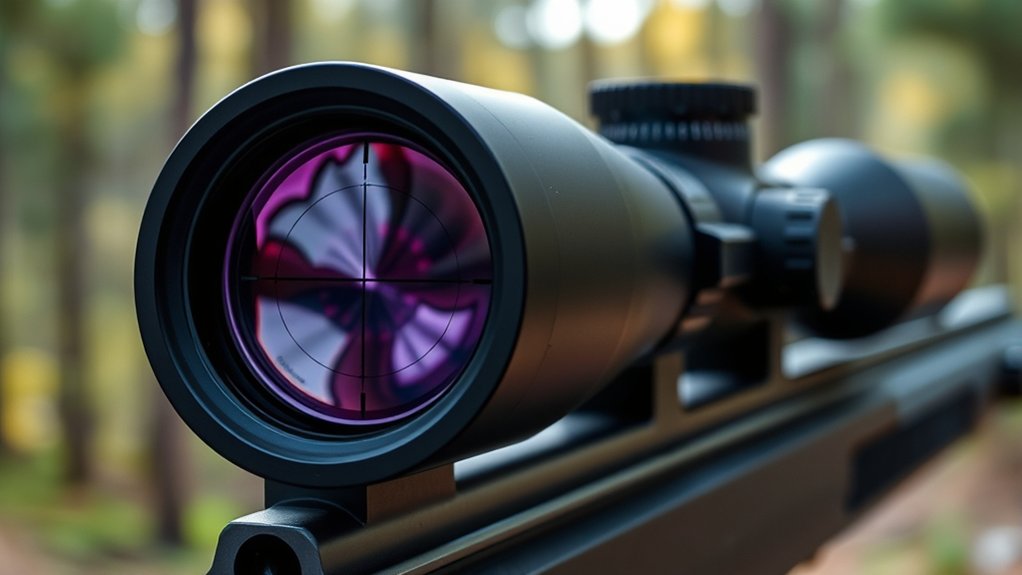
How do BDC marks speed up distance shots? You use the hash marks as precomputed aim points, so you don’t waste time dialing turrets or estimating holdover from scratch. After you range or bracket the target, you move your reticle to the corresponding mark and break the shot.
That cuts decision time and keeps you on target during rapid engagements, moving targets, or field positions where turret adjustments are slow. The system also supports interesting applications in competition and hunting, where quick follow-up shots matter.
Still, you need disciplined practice, because training pitfalls include rushing the shot, misreading distance, and assuming every mark is exact at every range. BDC works best when you verify your holds and stay consistent under stress.
How to Match BDC Marks to Your Load
To match BDC marks to your load, you need to confirm that the scope’s calibration matches your cartridge, bullet weight, muzzle velocity, and ballistic coefficient. You can’t assume factory marks fit every setup, especially with budget optics.
- Check the scope’s stated reference load.
- Compare your published ballistic data with the reticle spacing.
- Use your actual chronographed velocity, not catalog velocity.
- Verify drop values at the ranges you plan for long range hunting.
If your load drifts from the scope’s design, the marks will only approximate holdover. Heavier bullets, slower speeds, and higher BCs usually change drop curves. You should build confidence with ballistic software or a range card, then map each mark to your load’s trajectory.
Precision comes from matching the reticle to real performance.
How to Zero a BDC Rifle Scope
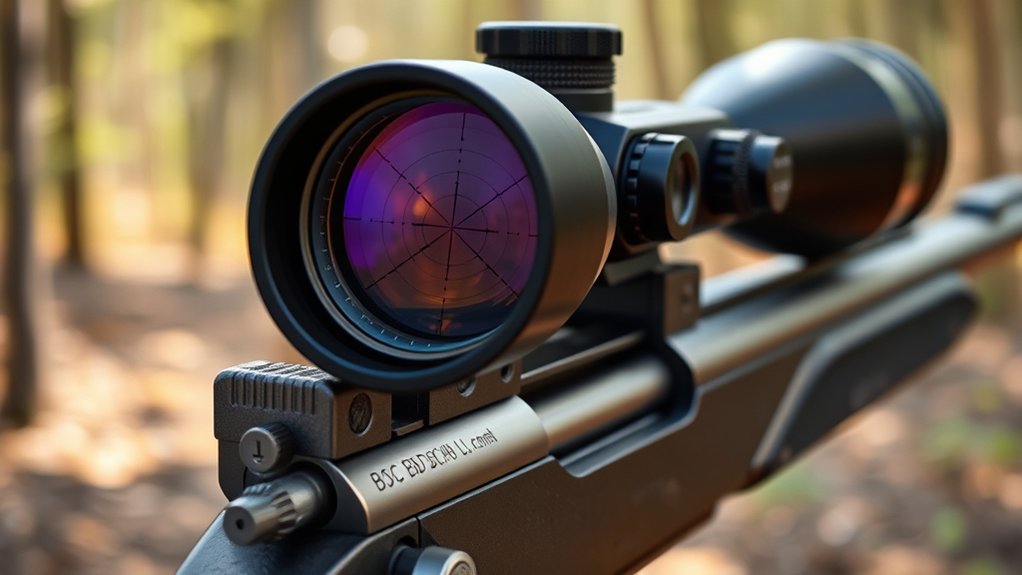
Zeroing a BDC rifle scope starts with a stable rest, a precise target, and a true zero distance that matches the reticle’s design, usually 100 yards or the manufacturer’s stated reference range. You should fire three-shot groups, measure the center of impact, and adjust windage and elevation in small, repeatable increments.
Confirm that your rifle, ammunition, and optic are secured consistently, because sloppy mounting ruins the zero. After each adjustment, shoot another group until point of aim and point of impact coincide.
Record your final settings and load details for future reference. This process supports clear ballistic data, sensible clearance economics, and it cuts through hunting myths about instant long-range precision. When your zero is correct, the BDC marks become dependable elevation references for the intended load.
Where BDC Reticles Lose Accuracy
BDC reticles lose accuracy when real-world conditions drift away from the load, distance, and velocity the reticle was built around. You’ll see bdc misconceptions whenever you assume every cartridge matches the factory chart.
Accuracy drops when:
- Your muzzle velocity differs from the test data.
- Your bullet’s ballistic coefficient changes with a different load.
- Your zero distance doesn’t match the intended calibration.
- You shoot at temperatures, altitude, or angles that alter trajectory.
That’s where misapplied reticles create error. A BDC mark can’t correct for every variable; it only approximates one trajectory. If you treat it like a universal solution, your impacts will shift, especially at longer ranges.
Use the reticle as a reference, then confirm your holds with your specific rifle, ammunition, and environment.
BDC vs. Mil-Dot Scopes
When you compare BDC and mil-dot scopes, you’ll see that BDC reticles simplify holdover compensation by giving you preset aiming points for specific distances.
Mil-dot reticles, by contrast, let you estimate range more precisely and calculate holds with greater flexibility across different loads and conditions. If you need speed, BDC is efficient; if you need adaptability, mil-dot usually gives you more control.
Holdover Compensation
Holdover compensation helps you aim above the target so the bullet lands where you need it at longer distances. With a BDC reticle, you use preset aiming marks matched to a specific cartridge and velocity. With a mil-dot scope, you apply measured subtensions and dial or hold based on your data.
That difference affects timekeeping psychology: you must trust your practiced timing and shot routine, not guess. It also supports hunting ethics because precise holds reduce wounding risk.
- Confirm your zero at the intended distance.
- Learn each reticle’s hold points.
- Match ammunition to the reticle’s calibration.
- Practice under field positions until holds are automatic.
When conditions change, your reticle choice matters, but disciplined holdover execution matters more.
Range Estimation
For range estimation, a BDC reticle gives you quick, approximate distance cues only if your target size and cartridge match the scope’s calibration. A mil-dot scope lets you calculate distance from known target dimensions using measured subtensions. That precision matters when you’re correcting under pressure and respecting range etiquette.
| Scope Type | Range Estimation |
|---|---|
| BDC | Fast, preset guesses |
| Mil-dot | Measured calculations |
You’ll feel the difference when target overlap complicates visual reference points; a BDC can blur intent, but a mil-dot still gives you usable math. Choose BDC for speed when conditions stay consistent. Choose mil-dot when you need verifiable distance data and can confirm the target’s size.
Shooting Flexibility
Range estimation is only part of the picture; once you start engaging targets at different distances, shooting flexibility becomes the real test. With a BDC reticle, you can dial fast holdovers for common ballistic drops, but you’re tied to the load and velocity it was built around.
A mil-dot scope gives you broader adjustment options, so you can adapt to changing conditions with more precision.
- BDC favors speed on preset distances.
- Mil-dot supports exact correction across loads.
- Wind reading is easier when you can fine-tune holds.
- Scoped etiquette matters when you share data with other shooters.
If your shooting changes often, mil-dot usually gives you more latitude. If you want fast, repeatable holds, BDC can still work well.
Common BDC Shooting Mistakes
One of the most common BDC mistakes is assuming the reticle is accurate without verifying it against your rifle, cartridge, and actual muzzle velocity. You can’t rely on factory data alone because altitude, temperature, and bullet design shift impact points.
Another error is ignoring zero distance; if you don’t confirm a true zero, every holdover compounds. You also need to watch parallax and inconsistent cheek weld, since both can move your aim off target.
Don’t skip discretionary maintenance on the scope or rifle, because loose mounts or damaged optics undermine BDC consistency. Follow training protocols that include recording dope, confirming drops at distance, and validating each hold mark with live fire.
If you don’t test, your BDC becomes an estimate, not a solution.
Frequently Asked Questions
Can a BDC Scope Be Used With Different Bullet Weights?
Yes, you can use a BDC scope with different bullet weights, but you’ll need to verify holdovers because varying velocity and different windage shift impact points. Your reticle’s marks won’t match perfectly without confirmation.
Does Illumination Affect a BDC Reticle’s Accuracy?
No, illumination doesn’t affect your BDC reticle’s ballistic accuracy; it’s like adding candlelight to a calculator. Illumination effects only change visibility, not subtensions.
Reticle stabilization helps you maintain a precise hold under recoil.
Are BDC Scopes Suitable for Air Rifles?
Yes, you can use BDC scopes on Air rifles if you match the reticle to your pellet’s trajectory; however, your BDC scopes won’t be precise unless you’ve calibrated magnification, velocity, and holdovers carefully.
How Often Should I Verify My BDC Zero?
Verify your BDC zero before every serious range session and after any impact, temperature shift, or ammo change. You should also check it monthly; zero drift and wind effects can mislead holds quickly.
Can a BDC Reticle Work in Low-Light Conditions?
Yes, your BDC reticle can still whisper through low light, but visibility drops. You’ll need illumination, strong contrast, or a brighter target.
In dim conditions, you’ll rely more on target shape than hash marks.
Conclusion
A BDC on your rifle scope gives you faster hold points for known distances, so you can shoot more confidently without dialing every shot. You might think it’s “plug-and-play,” but it only works well when you match it to your load and confirm it with live fire.
Zero it correctly, verify your drops, and watch for wind and range changes. Used that way, a BDC can save you time and improve practical accuracy. In conclusion, understanding what a BDC on a rifle scope does is key to making the most of its benefits.