When you look through a second focal plane rifle scope, you’ll notice the reticle stays the same size as you change magnification while the target image grows or shrinks around it. This characteristic defines what second focal plane means on a rifle scope and is important for understanding its use.
That matters because your holdovers and ranging only stay accurate at one calibrated power setting. If you use the wrong magnification, your math changes, and so does your shot placement.
The practical difference becomes obvious once you compare it with first focal plane designs. Understanding this helps shooters choose the right scope for their needs.
Key Takeaways
- Second focal plane means the reticle stays the same size while the target image changes with magnification.
- The reticle’s holdovers and subtensions are accurate only at the scope’s calibrated magnification.
- At higher power, the reticle looks smaller relative to the target; at lower power, it looks larger.
- SFP scopes give a stable, uncluttered sight picture for aiming, but ranging is power-dependent.
- Always confirm the calibrated setting in the manual before using SFP holdovers or range estimates.
What Is a Second Focal Plane Scope?
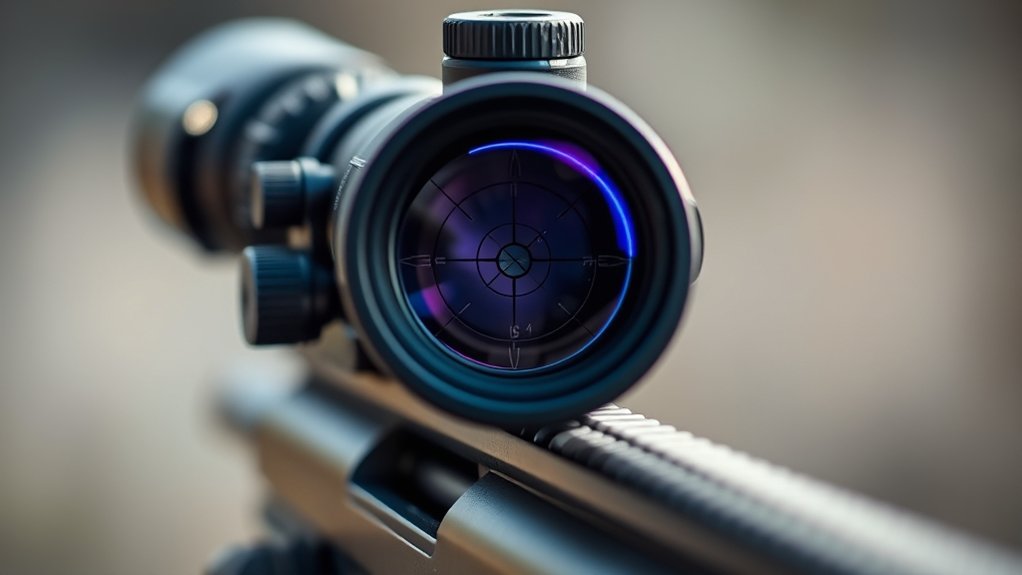
A second focal plane (SFP) scope is a rifle scope in which the reticle stays the same apparent size as you change magnification, while the target image grows or shrinks behind it. You use this layout when you want a constant reticle reference for aiming.
The reticle’s scale only matches the calibrated power, so your holdovers and subtensions stay exact at that setting. Many second focal plane misconceptions come from assuming the reticle changes with zoom; it doesn’t.
Scope mounting myths also confuse eye relief and focal plane behavior, but mounting position doesn’t alter the reticle’s location in the optical system. You should verify the manufacturer’s calibration data before relying on range marks or ballistic holds.
Second Focal Plane vs First Focal Plane
So how does second focal plane compare with first focal plane? In second focal plane optics, you get a fixed reticle size in your view, while the target image changes around it.
Second focal plane optics keep the reticle fixed in view while the target image changes around it.
In first focal plane designs, the reticle scales with the image, so its angular subtensions stay constant. That difference affects how you use holdovers, ranging, and ballistic references.
With second focal plane scopes, your reticle consistency is visually stable, which many shooters prefer for quick aiming and a cleaner sight picture. First focal plane scopes can offer more intuitive ranging across magnification changes, but they often place more visual emphasis on the reticle.
Your choice depends on whether you value a constant-looking reticle or scale-aware geometry for precision work.
How SFP Reticles Change With Magnification
At higher magnification, an SFP reticle appears larger relative to the target image, and at lower magnification it appears smaller, but its actual size in the scope doesn’t change. In a second focal plane optic, you’re seeing reticle scaling only in relation to the image, not in the reticle itself.
The scope places the reticle behind the zoom system, so the lenses enlarge or reduce the target scene while leaving the reticle fixed in angular size at the eyepiece. As you dial magnification, the target grows or shrinks around the same reticle geometry.
This design keeps the center mark, hash marks, and subtensions visually stable in the scope body. You’ll notice the reticle’s apparent thickness shift, but its calibrated dimensions remain constant at one specific magnification setting.
Why SFP Matters for Holdovers
Why does SFP matter for holdovers? Because your reticle subtensions stay valid only at the specified magnification, so any hold you apply must account for that fixed calibration. If you ignore it, your point of aim and point of impact diverge by a predictable but dangerous amount.
That makes SFP useful when you want a simple sight picture at one known power, but it also demands discipline. You shouldn’t trust generic marketing claims that imply universal hold values across all settings.
In non scope examples, a ruler measured at the wrong scale gives the wrong answer; SFP works the same way. For precise shooting, you must treat reticle marks as power-dependent references, not absolute measurements.
How to Range With an SFP Scope
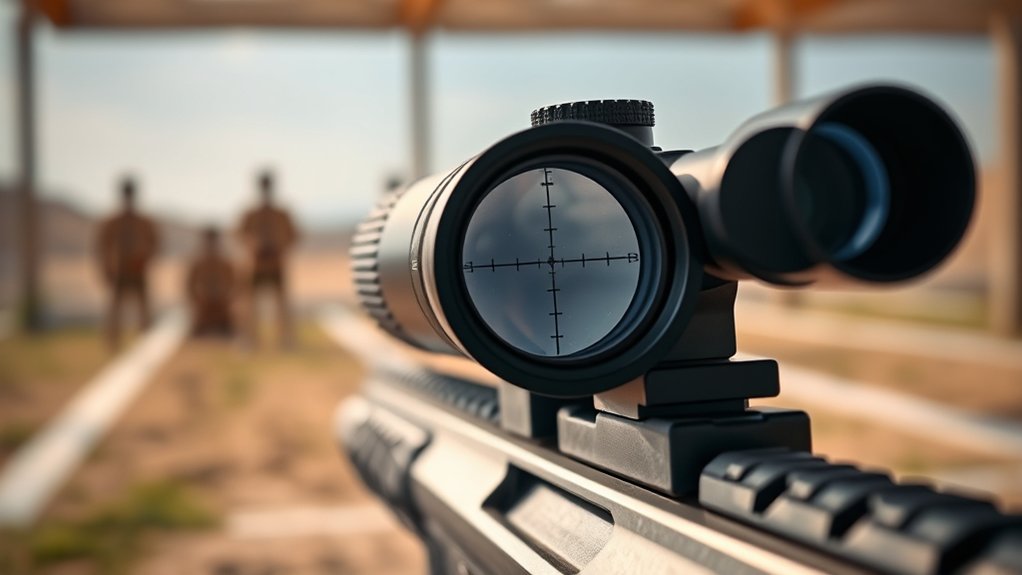
How do you range accurately with an SFP scope? You measure the target against the reticle at one known magnification, then apply the scope’s ranging formula exactly. If you change power, your subtension changes, so verify the correct setting before calculating distance.
| Step | Action |
|---|---|
| 1 | Focus the target image |
| 2 | Set the calibrated magnification |
| 3 | Measure reticle units |
| 4 | Apply the formula |
| 5 | Confirm with a second check |
Ignore rangefinding myths that claim any power works. They don’t. Control parallax pitfalls by centering your eye and checking that the reticle stays fixed on the target. Small head shifts can skew the reading.
After you compute distance, compare it with known landmarks or laser data to catch error. Precision starts with consistency.
When an SFP Scope Makes Sense
An SFP scope makes sense when you value a consistent reticle scale at a specific magnification, since that setup keeps holdovers, ranging, and turret corrections predictable once you know the calibrated power. You benefit when your shooting stays near that magnification, because the reticle subtensions don’t shift with zoom changes.
In precision work, that stability lets you verify a target, apply a known correction, and maintain repeatable data without constant rechecking. In a non scoped discussion, the same logic appears as fixed reference geometry: once the scale is defined, you can measure consistently.
It also reduces concern about theoretical misalignment between magnification and reticle math, because you’re operating inside the scope’s designed calibration point. That makes your system straightforward, efficient, and analytically clean.
Common Mistakes to Avoid
You can’t assume an SFP reticle’s subtensions stay constant across all magnification settings, so misreading the reticle scale will throw off your hold or range estimate. You also need to account for magnification effects, because the reticle only matches its calibrated values at the specified power, not every setting.
Skip range checks at your own risk, since even small errors in target distance will compound into significant point-of-impact error.
Misreading Reticle Scale
A common error with a second focal plane scope is assuming the reticle’s subtensions stay constant across all magnification settings. When you misread reticle marks, you distort your range estimate, holdover, and wind correction.
You need a correct misalignment understanding between the etched scale and the target image, because the reticle only matches calibrated values at the specified power. If you compare marks without checking the reference magnification, your math becomes invalid.
Read the manual, identify the true calibrated setting, and verify the scale against known distances before you trust any measurement. Use consistent notation for each hash mark, and confirm whether your scope’s subtensions are in MOA or mils.
Precision depends on interpreting the reticle exactly as designed, not as you assume it behaves.
Ignoring Magnification Effects
Magnification changes how a second focal plane reticle relates to the target image, so holdovers and range estimates only stay correct at the scope’s calibrated power. If you ignore this, you’ll apply the reticle’s subtensions as if they’re constant, but they aren’t.
At higher or lower magnification, the target image grows or shrinks while the reticle stays the same apparent size, which shifts the effective scale. You need to verify the power setting before using any ballistic data tied to the reticle. Treat the calibration magnification as a fixed reference, not a suggestion.
These ideas matter because subtopic relevance depends on understanding when the reticle’s math applies. If you don’t, your point of aim won’t match your intended point of impact.
Skipping Range Checks
Skipping range checks can turn a second focal plane reticle’s numbers into guesswork, even when the magnification is set correctly. You need to verify the actual target distance before you trust any holdover or subtension data.
In a second focal scope, the reticle’s angular relationship is only valid at the calibrated power, so small setup errors distort range estimation fast. Check your laser rangefinder, confirm known-distance targets, and compare the reticle against a measured object.
If your data doesn’t match, recalibrate your zero and retest. Don’t assume factory markings or turret settings remove the need for validation. Range checks expose errors from terrain, angle, and target size, letting you correct them before you fire.
Consistent verification makes your second focal calculations reliable in real conditions.
Frequently Asked Questions
Can You Use an SFP Scope for Fast-Moving Targets?
Yes, you can use an SFP scope for fast moving targets, and you’ll often get quicker target acquisition.
You should rely on the center reticle at low magnification, since subtensions won’t stay constant.
Do All SFP Scopes Have the Same Reticle Calibration?
No, you don’t get identical reticle calibration across all Second Focal Plane scopes; magnification, lens quality, and pricing affect subtensions. You should verify calibration charts, especially for low light hunting and affordability.
Does Lens Quality Affect Second Focal Plane Performance?
Yes, lens quality affects image clarity, contrast, and edge distortion, but it doesn’t change second focal plane accuracy itself. You’ll see better target resolution and less strain, yet reticle subtensions stay calibration-dependent on magnification.
Can an SFP Scope Be Used for Hunting in Low Light?
Yes, you can absolutely use an SFP scope for low light hunting; its illuminated reticle and consistent magnification often aid fast target tracking.
You’ll just want enough objective lens quality and brightness for precision.
Are SFP Scopes More Affordable Than FFP Scopes?
Yes, you’ll usually find second focal plane scopes cost less, thanks to simpler reticle calibration and an affordability contrast versus FFP.
You still need to weigh lens quality and low light hunting performance.
Conclusion
Second focal plane means your reticle stays the same size while the target image changes with magnification, so your hash marks are only correct at the scope’s calibrated power.
That makes SFP scopes especially useful when you want a clean sight picture and fast target acquisition.
If you need consistent ranging and holdovers across every zoom level, FFP may be better, but for many hunters and casual shooters, SFP gives you simpler, more intuitive aiming.
In conclusion, understanding what second focal plane means can help you choose the right scope for your shooting needs.