To sight in your Leupold rifle scope, you’ll want to start with a solid mount, verified turret zeroes, and a stable firing setup. Choose a fixed distance, align your cheek weld, and bore sight before the first shot.
Then you can measure each impact, adjust windage and elevation with precision, and confirm whether the scope, rifle, or setup is driving the result.
The next step is where the process gets exact.
Key Takeaways
- Ensure the Leupold scope, rings, and base are secure, and start with turret caps at mechanical zero or marked reference points.
- Bore sight first to get on paper, then make initial live-fire corrections before fine zeroing.
- Use a stable bench, solid rests, consistent ammo, and a fixed distance for all initial sight-in shots.
- Adjust windage and elevation in small, deliberate clicks based on measured group impact, one change at a time.
- Fire confirmation groups until point of impact matches point of aim, then verify settings and check for mounting issues.
Start Zeroing Your Leupold Scope
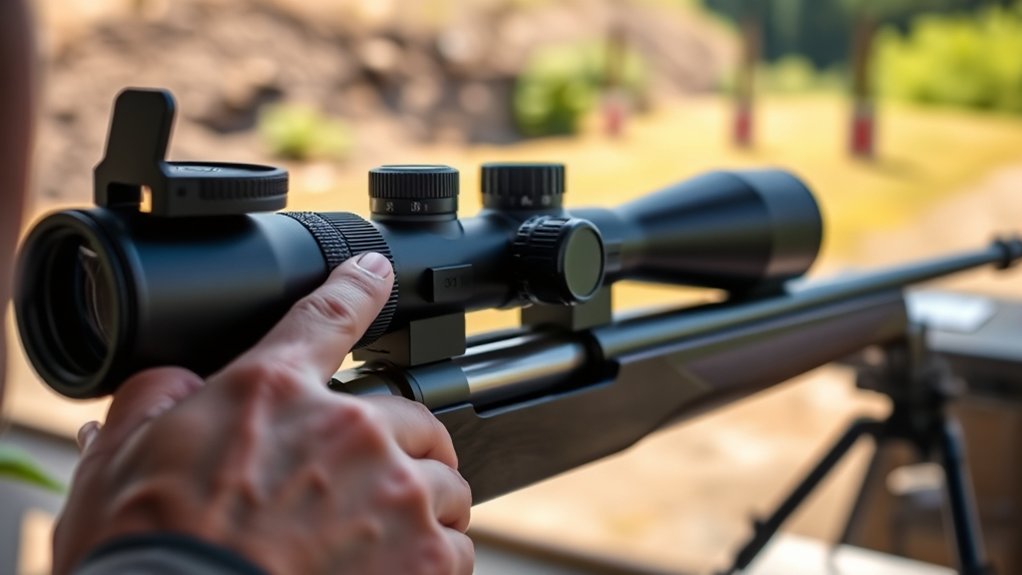
Before you adjust anything further, confirm that your Leupold scope, rings, and base are mounted securely and that the rifle is unloaded and supported on a stable bench. Next, set both turret caps to their mechanical zero or note the factory index marks, then verify windage and elevation knobs move smoothly with distinct clicks.
This gives you a controlled starting point for calibration basics. Dial each turret only enough to align with the scope’s reference marks, and record the original settings in your log. Make small, deliberate corrections so you can trace each change.
If the knobs feel inconsistent, stop and inspect them before proceeding. These maintenance tips help you preserve repeatable adjustments and reduce error as you begin zeroing.
Set Your Distance, Rest, and Target
Choose a consistent shooting distance, a solid front-and-rear rest, and a clearly defined target before you fire the first group. Use a distance that matches your calibration basics and keep it unchanged through the initial zeroing session.
Position the rifle so rifle ergonomics stay natural: align the stock, shoulder pressure, and cheek weld the same way each shot. A stable front rest and rear bag reduce cant and movement, letting you evaluate scope adjustments, not shooter error.
Pick a target with a sharp aiming point and visible scoring grid so you can measure group center precisely. Confirm the bench is level, the rifle is unloaded while you set up, and the target sits square to the bore line.
Consistency here gives you reliable data for every click.
Bore Sight Your Leupold Scope First
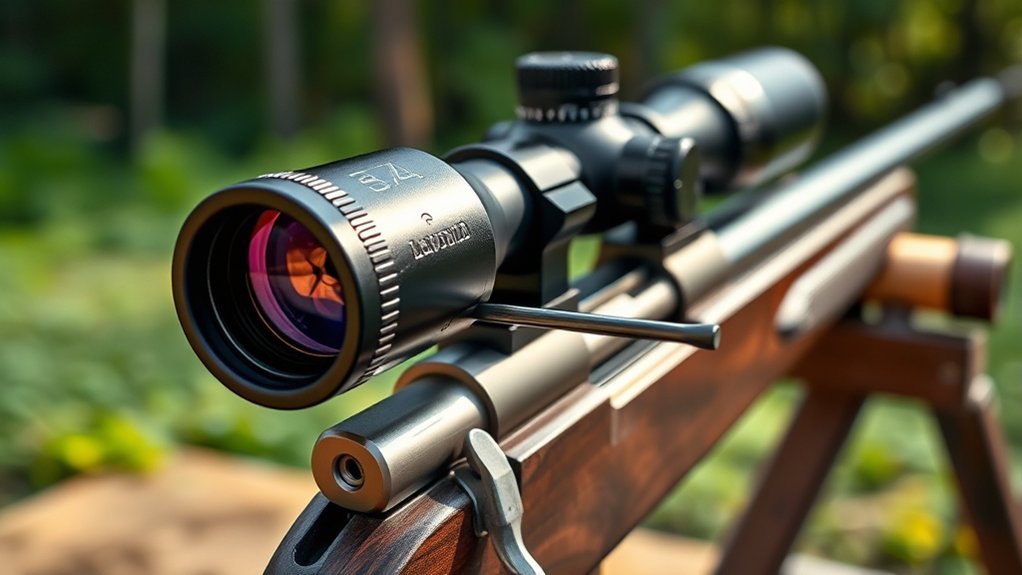
Start by bore sighting the rifle so your initial shots land on paper and you can make coarse scope corrections before live-fire zeroing. Secure the rifle in a stable rest, remove the bolt if your action allows it, and look through the bore at a clearly defined target.
Center the target in the bore, then adjust the Leupold optic until its reticle matches the same point. If you use a laser bore sighter, confirm that its alignment reflects your rifle’s chamber and barrel axis.
Check that scope mounting remains solid, with even ring torque and no rotation in the tube. Bore sighting doesn’t replace zeroing, but it reduces wasted shots and speeds the process.
Recheck alignment after handling, transport, or any scope movement before firing.
Dial in Windage and Elevation
With the rifle bore-sighted and the first shots on paper, adjust the Leupold’s windage and elevation turrets to move impact toward the center of the target. Use windage basics: turn the windage turret to shift the group left or right, and use elevation strategy to raise or lower point of impact in measured increments.
Fire one careful group, then correct only the error you see.
| Adjustment | Effect | Control |
|---|---|---|
| Windage | Left/right shift | Small clicks |
| Elevation | Up/down shift | One direction |
| Group size | Shows consistency | Compare shots |
Keep your hold, rifle position, and ammunition constant. Make one change at a time, record each click count, and stay methodical.
Precision comes from disciplined, incremental corrections, not guesswork.
Confirm Your Leupold Scope Zero
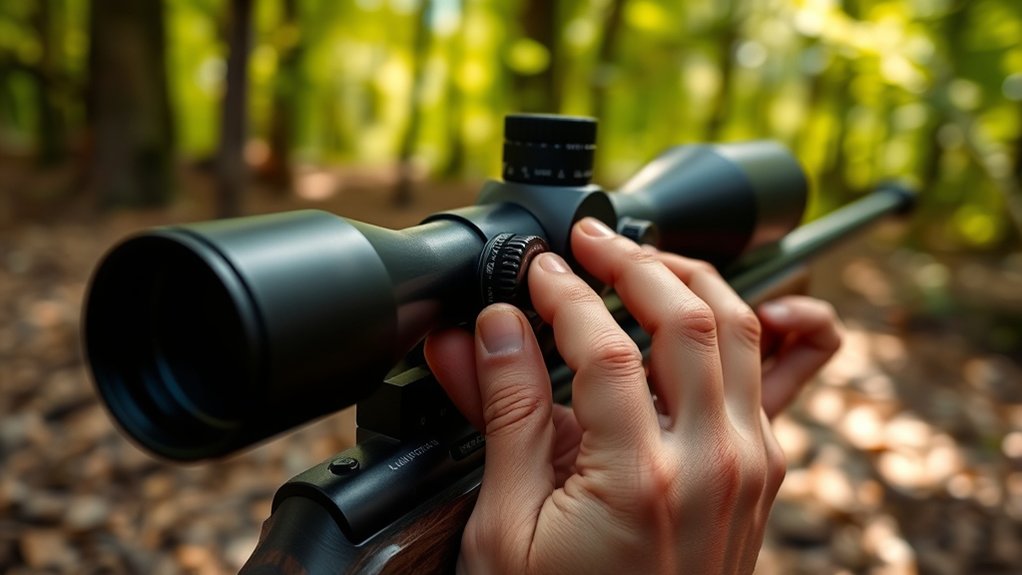
Once you’ve dialed in windage and elevation, fire another careful group to confirm your Leupold scope zero and verify that the point of impact matches your intended point of aim. Use the same ammunition, distance, rest, and shooting position so you can isolate the optic’s settings, not shooter error.
Measure the group center, compare it to the target point, and make only small corrections if needed. Repeat the process until the group lands consistently at zero.
Watch for calibration mistakes such as loose ring screws, parallax error, or inconsistent cheek weld, because they’ll skew results. After confirmation, document your settings and apply maintenance tips by checking torque, lens condition, and turret integrity before storage.
Frequently Asked Questions
How Do I Choose the Right Leupold Reticle for My Rifle?
Choose a Leupold reticle by matching reticle selection to your rifle’s purpose, magnification, and distance. You’ll want a sight picture that stays clear under your typical lighting, target size, and shooting conditions.
What Tools Are Needed for Mounting a Leupold Scope?
You’ll need mounting tools: correctly sized screwdrivers or Torx drivers, a torque wrench, leveling kit, degreaser, thread locker, and bore sighter.
Follow installation tips: clean surfaces, align rings, and torque screws evenly.
Can I Sight in a Leupold Scope Without a Boresighter?
Yes, you can sight in your Leupold scope without a boresighter; about 80% of shooters do. You’ll use careful sighting without a boresighter, then refine with peak accuracy considerations. Adjust groups methodically at 25 and 100 yards.
How Often Should I Recheck My Scope Zero?
You should recheck your scope zero after any hard impact, mounting change, ammunition change, or before each season. During practice logistics and field maintenance, verify it every few range sessions to catch drift early.
Does Ammunition Type Affect Leupold Scope Zero?
Yes, ammunition type can shift your Leupold zero like a drifting compass. You’ll see changes from ammunition consistency and windage considerations, so test with the exact load you’ll shoot.
Then recheck and adjust carefully.
Conclusion
You’ve mounted your Leupold scope, set your distance, and centered your first group. Now the work turns sharp and simple: confirm the zero, then verify it again. A clean click means confidence; a drifting impact means you adjust, not guess.
The rifle feels still, but the target shifts when your setup isn’t consistent. Record your final windage and elevation, then lock them in. What’s precise on paper should stay precise in the field.
Following these steps ensures your accuracy and reliability. This is how to sight in a Leupold rifle scope for consistent performance every time.