You must always safely decock a crossbow by first engaging the safety and pointing it downward to prevent accidents.
Using proper tools like a rope cocking device or decocking crank helps release tension slowly and evenly. Secure the crossbow on a stable surface before beginning.
Avoid sudden releases or forcing the mechanism, as this can cause damage or injury. Wearing protective gloves is essential for safety during the process.
After decocking, inspect the crossbow carefully for any signs of damage.
Understanding common pitfalls and maintenance guarantees safe handling and longevity.
More detailed guidance follows to help you master this vital process.
Key Takeaways
- Always point the crossbow downward and engage the safety before starting the decocking process to prevent accidental firing.
- Secure the crossbow on a stable surface and use a rope cocking device or decocking crank for controlled tension release.
- Slowly and evenly release the string tension to avoid mechanical stress and potential damage to the limbs or trigger mechanism.
- Wear protective gloves and ensure the firing zone is clear of bystanders during decocking for maximum safety.
- Inspect the crossbow for wear or unusual resistance after decocking, and seek professional help if you encounter problems or abnormal noises.
Why It’s Important to Decock Your Crossbow Safely
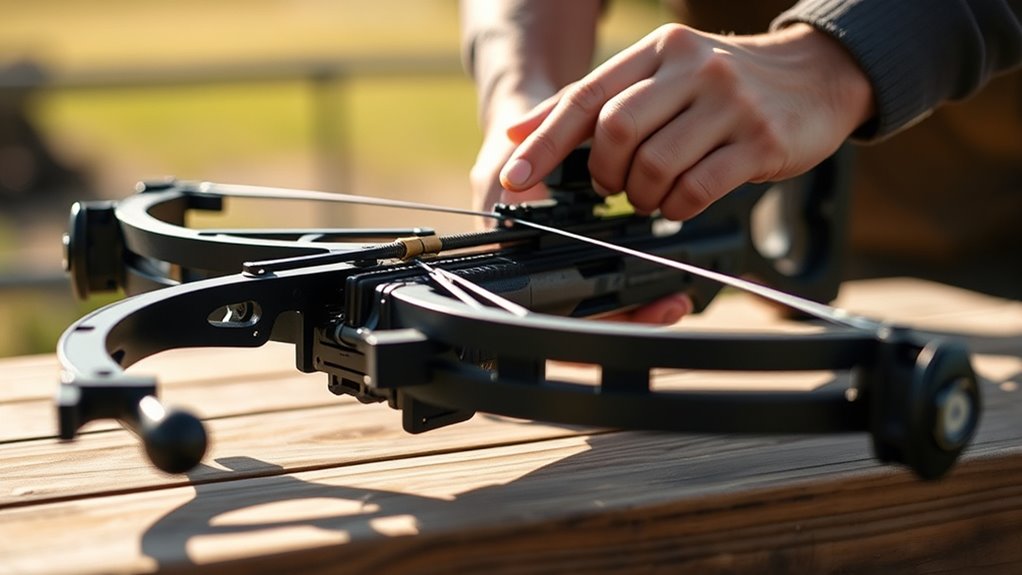
Because a crossbow stores significant mechanical energy when cocked, failing to decock it safely can result in serious injury or damage. You must adhere to strict safety measures to prevent accidental discharge or mechanical failure. Proper decocking minimizes stress on the limbs and trigger mechanism, extending the lifespan of your crossbow.
Neglecting safe decocking compromises crossbow maintenance protocols, leading to premature wear or potential malfunctions. Ensuring the crossbow is decocked before transport or storage eliminates unnecessary risks. Always approach decocking methodically, understanding the mechanical forces involved to maintain control throughout the process.
Gather the Tools You Need to Decock Your Crossbow
Before you begin decocking your crossbow, make certain you have the necessary tools on hand to perform the task safely and efficiently. Essential crossbow tools include a rope cocking device or decocking crank, which help control the tension while releasing the string. You’ll also need a pair of protective gloves to safeguard your hands during the process.
Decocking equipment like a secure clamp or vise can stabilize the crossbow, preventing unwanted movement. A soft cloth or padding is useful to protect the crossbow’s limbs and trigger mechanism from damage. Having a clean, well-lit workspace and a reliable instruction manual specific to your crossbow model guarantees precision.
Preparing these crossbow tools and decocking equipment beforehand minimizes risk and streamlines the decocking procedure.
Decock Your Crossbow Step by Step
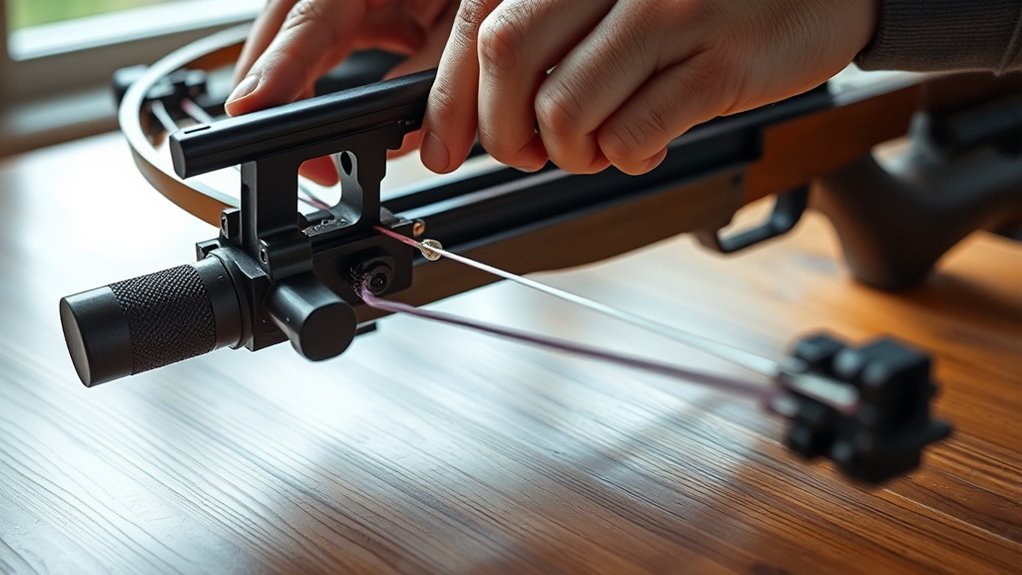
Before you begin decocking, make certain you follow strict safety precautions to prevent accidental discharge.
You’ll then proceed through manual decocking techniques, carefully controlling the release of tension.
Finally, if available, use specialized decocking tools designed to make the process safer and more efficient.
Safety Precautions First
A critical first step in decocking your crossbow safely involves understanding and adhering to essential safety precautions. Before you begin, verify the crossbow is pointed in a safe direction and engage the safety mechanism. Familiarize yourself with your specific model’s manual to avoid accidental discharge.
Maintaining crossbow safety reduces risk and verifies a controlled decocking process. Here are key safety measures and decocking tips:
| Safety Precaution | Reason |
|---|---|
| Point crossbow downward | Prevents accidental injury |
| Engage safety | Stops unintentional firing |
| Wear protective gear | Shields from potential debris |
| Clear firing zone | Avoids harming bystanders |
| Follow manufacturer’s guide | Verifies proper handling and decocking |
Adhering to these safeguards is fundamental before proceeding to manual decocking techniques.
Manual Decocking Techniques
Decocking your crossbow manually requires careful control and adherence to specific steps to guarantee safety and prevent damage. Begin by ensuring the crossbow is pointed in a safe direction. Engage the safety mechanism to prevent accidental firing.
Next, secure the crossbow firmly on a stable surface to maintain control during the process. Using manual techniques, slowly and evenly release the tension on the string by gently lowering the cocking mechanism or string lever, depending on your model. Avoid sudden movements to prevent mechanical stress.
Throughout, maintain focus on safe practices, such as keeping fingers clear of the trigger and string path. Once the string is fully decocked, visually inspect the crossbow for any signs of wear or damage before storage or next use.
Using Decocking Tools
While manual decocking methods demand steady control and caution, using decocking tools can offer a more controlled and often safer way to release the string tension on your crossbow. Start by selecting the appropriate decocking accessories designed for your model, guaranteeing compatibility. Secure the crossbow on a stable surface, then attach the decocking tool firmly to the string’s cocking point.
Apply steady, even pressure to gradually release tension, preventing sudden string snaps. Always follow manufacturer instructions to avoid damage. After use, prioritize tool maintenance by cleaning and inspecting for wear or damage, which preserves functionality and safety.
Proper upkeep of your decocking accessories guarantees consistent performance and extends their service life, making your decocking process both efficient and reliable.
Common Decocking Mistakes and How to Avoid Them
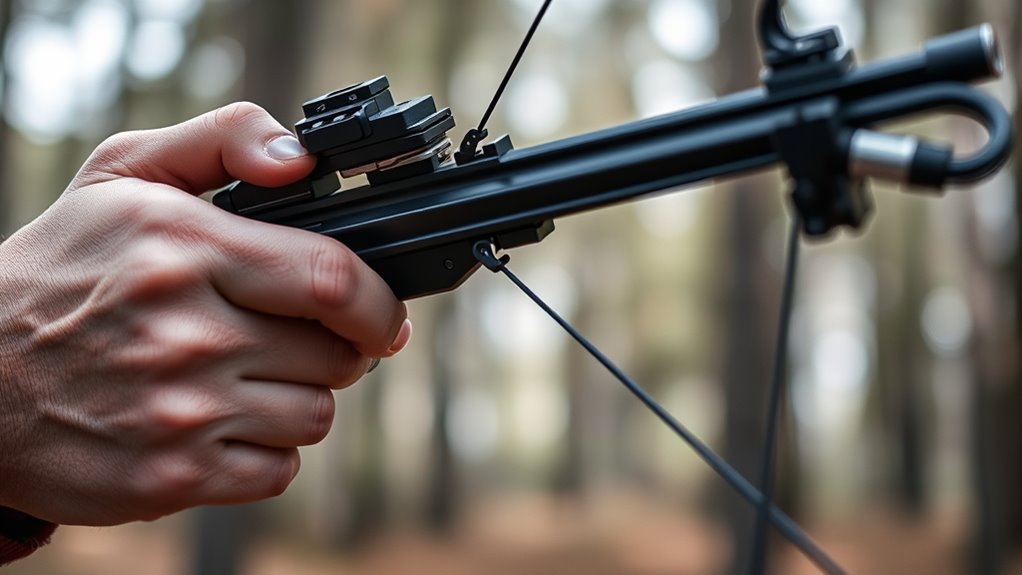
Even if you follow the manufacturer’s instructions carefully, mistakes during decocking can compromise both your safety and the integrity of your crossbow. Common decocking errors often result from rushing or neglecting proper positioning, leading to safety violations and mechanical damage.
You must stay calm, use the correct tools, and maintain control throughout the process.
| Decocking Mistake | How to Avoid It |
|---|---|
| Releasing tension abruptly | Decock slowly, maintain firm grip |
| Ignoring tool compatibility | Use only manufacturer-approved tools |
| Incorrect bolt placement | Always remove bolts before decocking |
| Poor stance or grip | Adopt stable stance, use steady hands |
Avoid these pitfalls to guarantee safe and effective decocking every time.
Maintain Your Crossbow After Decocking
Once you’ve safely decocked your crossbow, it’s essential to clean the bowstring regularly to prevent wear and fraying. You should also inspect the limbs carefully for any signs of damage that could compromise performance or safety.
Finally, lubricate all moving parts to guarantee smooth operation and extend the lifespan of your equipment.
Clean Bowstring Regularly
Maintain your crossbow’s performance by cleaning the bowstring regularly. Proper bowstring care is critical for safe, consistent shooting and extends the lifespan of your equipment. After decocking, inspect the string for debris or buildup, then use a soft brush or cloth with mild solvent to remove grime.
Avoid harsh chemicals that degrade fibers. Incorporate this task into your regular maintenance routine to prevent fraying and maintain tension.
| Cleaning Step | Purpose |
|---|---|
| Visual Inspection | Detect dirt or damage |
| Dry Brush | Remove loose debris |
| Solvent Wipe | Eliminate oils and grime |
| Dry Thoroughly | Prevent moisture damage |
| Apply Wax | Protect fibers, reduce wear |
Consistent cleaning guarantees ideal bowstring integrity and shooting accuracy.
Inspect Limbs For Damage
The limbs of your crossbow bear significant stress during use and require thorough inspection after each decocking. Begin your limb inspection by visually examining each limb for cracks, splinters, or deformation. Use a bright light and magnification if necessary to detect microfractures that could compromise structural integrity.
Next, perform a damage assessment by gently pressing along the limb’s surface to identify any soft spots or unusual flexing that deviates from its original tension profile. Pay close attention to the limb tips and attachment points, as these areas are prone to stress concentration.
Any signs of damage, no matter how minor, should prompt immediate professional evaluation or replacement. Regular, precise limb inspection guarantees safety and prolongs your crossbow’s functional lifespan.
Lubricate Moving Parts
After thoroughly inspecting the limbs for damage, attention should shift to the moving parts that guarantee smooth operation of your crossbow. Proper lubrication is essential to reduce friction, prevent wear, and extend the lifespan of components such as the trigger mechanism, rail, and string. Use a high-quality, crossbow-specific lubricant to guarantee compatibility and peak performance.
Apply sparingly but thoroughly, focusing on contact points without over-lubricating, which can attract dirt and debris. Regular lubrication enhances reliability and accuracy, key lubrication benefits you shouldn’t overlook. As part of your maintenance routine, clean the parts before lubricating to avoid trapping contaminants.
Following these maintenance tips will keep your crossbow functioning efficiently and safely, ensuring consistent performance each time you use it.
When to Get Professional Help With Decocking Problems
If you encounter resistance beyond normal tension or hear unusual noises while attempting to decock your crossbow, it’s a clear sign you should seek professional assistance. These symptoms often indicate internal mechanical issues or misalignments that standard troubleshooting techniques can’t safely resolve. Avoid forcing the decocking process, as this can damage components or cause injury.
A qualified technician has the specialized tools and expertise to diagnose complex problems, ensuring the crossbow is properly disassembled and repaired if needed. Additionally, if you’re unsure about your decocking procedure or if repeated attempts fail, don’t hesitate to consult a professional. Prioritizing safety and equipment integrity means recognizing when professional assistance is essential rather than risking further damage or compromised functionality through improper handling.
Frequently Asked Questions
Can You Decock a Crossbow Without Removing the Bolt?
You generally shouldn’t decock a crossbow without removing the bolt due to bolt safety. Most decocking methods require the bolt’s absence to prevent accidental discharge, ensuring safe handling.
Always follow manufacturer guidelines for precise, safe decocking.
How Long Does It Take to Decock a Typical Crossbow?
Imagine carefully lowering a crossbow’s tension in under a minute.
With proper decocking techniques and strict crossbow safety, you can efficiently and safely decock most crossbows within 30 to 60 seconds, minimizing risk and maintaining control.
Are There Specific Crossbow Brands That Require Unique Decocking Methods?
Yes, Barnett Crossbows often require a specific decocking crank, while TenPoint Crossbows use a unique safety lever system.
Always consult your model’s manual to follow precise decocking procedures and avoid damaging your crossbow.
Can Decocking Damage the Crossbow’s String or Limbs?
Decocking properly won’t cause excessive string wear or limb stress, but careless methods can. You should always follow manufacturer guidelines to minimize mechanical strain, ensuring the string and limbs maintain integrity and prolong your crossbow’s lifespan.
Is It Legal to Decock a Crossbow in Public Areas?
You might think it’s simple, but public area regulations vary widely—decocking a crossbow in public often breaches crossbow safety laws.
Always check local rules first, since unauthorized handling can lead to serious legal consequences.
Conclusion
Decocking your crossbow safely is like carefully lowering a loaded spring—precision and caution prevent accidents. By following each step methodically and avoiding common mistakes, you guarantee both your safety and your crossbow’s longevity.
Remember to maintain your equipment after decocking and don’t hesitate to seek professional help if anything feels off. Mastering this process keeps your crossbow ready for action, while protecting you from unnecessary risks.
Properly learning how to decock a crossbow ensures that you handle your equipment responsibly and safely every time.