When operating a crossbow, always treat it as loaded and never point it at anything unintended. Inspect your crossbow and bolts for damage, guarantee safety locks are engaged, and use proper bolts matching your model.
Load bolts carefully with the cock feather away from the rail, maintain a stable stance, and apply smooth trigger pressure.
Wear safety gear and follow all local laws.
Understanding these basics guarantees safe, effective use; more detailed steps and tips can help you master your crossbow fully.
Key Takeaways
- Always treat the crossbow as loaded and never point it at anything you do not intend to shoot.
- Inspect the crossbow and bolts for damage before loading and ensure proper arrow alignment and secure placement.
- Use appropriate safety gear, including eye protection, and maintain a stable stance with controlled breathing when aiming.
- Follow manufacturer’s loading and firing instructions carefully, applying slow, steady trigger pressure for a clean shot.
- Store the crossbow unloaded and locked away safely, and comply with all local hunting regulations and permit requirements.
Crossbow Safety Rules You Can’t Ignore
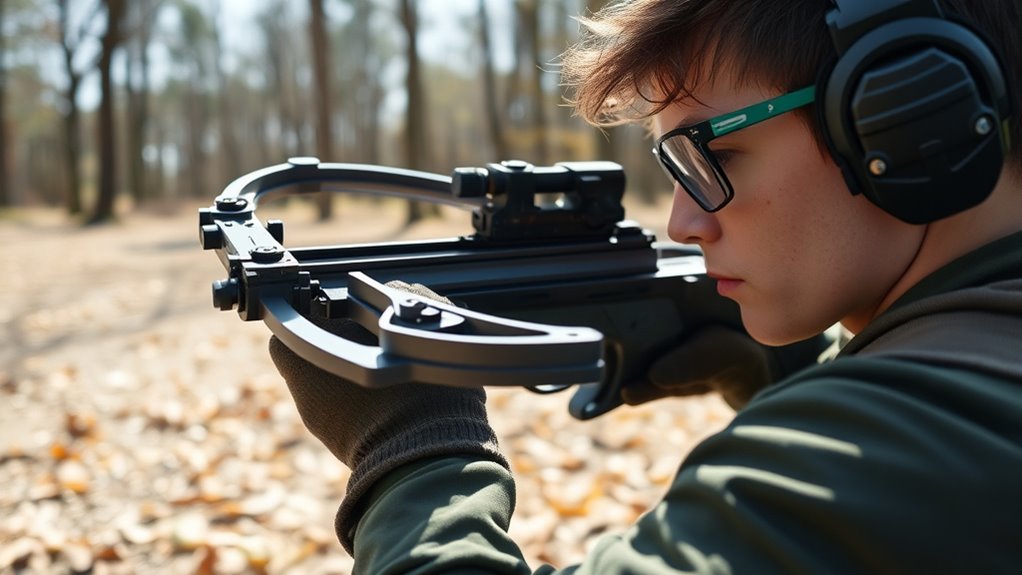
Before you even load your crossbow, you need to understand and follow essential safety rules that protect both you and those around you. Always treat your crossbow as if it’s loaded, never pointing it at anything you don’t intend to shoot.
Make certain your crossbow storage is secure, keeping it unloaded and out of reach of children or unauthorized users. Use crossbow accessories like safety locks and cases to prevent accidental discharge.
Never dry-fire your crossbow, as this can damage the weapon and cause injury. Always check your surroundings before shooting to avoid accidents.
How to Prepare Your Crossbow (Inspection & Bolts)
Preparing your crossbow properly starts with a thorough inspection and selecting the right bolts. For effective crossbow maintenance, check the limbs, string, rail, and trigger mechanism for damage or wear. Verify everything is clean and properly lubricated.
Next, focus on bolt selection: choose bolts that match your crossbow’s specifications for length, weight, and material to maintain accuracy and safety.
| Inspection Area | What to Check |
|---|---|
| Limbs | Cracks or splinters |
| String | Fraying or looseness |
| Rail | Cleanliness, smoothness |
| Trigger | Functionality, safety catch |
Following these steps guarantees your crossbow operates reliably and safely every time.
How to Load Your Crossbow Safely
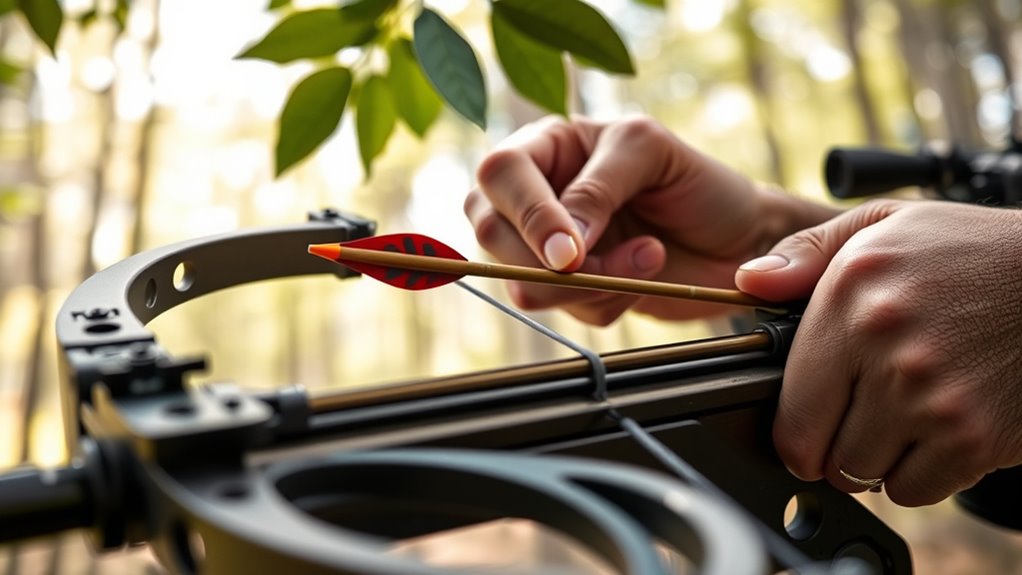
Before you load your crossbow, make certain to inspect all components for damage or wear. Always follow the manufacturer’s instructions to guarantee proper and safe handling.
When placing the arrow, secure it firmly in the track to prevent misfires or accidents.
Inspect Crossbow Components
A thorough inspection of your crossbow’s components is essential to guarantee safe and effective loading. Start by examining the limbs, string, and cables for any signs of wear or damage that could compromise component durability. Check the rail for debris or cracks that might affect bolt placement.
Next, confirm that the trigger mechanism and safety are functioning smoothly without any obstruction. Pay close attention to areas where crossbow adjustments are made, ensuring screws and bolts are tight but not over-tightened. Any loose or damaged parts should be addressed immediately to prevent malfunction during use.
Follow Manufacturer Instructions
Although it might be tempting to skip the manual, following the manufacturer’s instructions is essential when loading your crossbow safely. Always adhere to the manufacturer guidelines and crossbow specifications to prevent accidents and guarantee peak performance.
Each model has unique loading techniques and safety measures you must understand.
| Step | Action | Reason |
|---|---|---|
| 1 | Read the manual thoroughly | Understand specific specs |
| 2 | Use recommended bolts/arrows | Prevent damage or misfire |
| 3 | Follow loading sequence exactly | Maintain safety and function |
| 4 | Inspect components before use | Detect wear or faults |
Secure Arrow Properly
When you load your crossbow, securing the arrow properly is essential to guarantee both accuracy and safety. Begin by placing the arrow on the flight groove, ensuring its nock fits firmly on the string. Correct arrow placement is critical; the arrow’s cock feather (odd-colored vane) must face away from the rail to prevent contact and damage.
Next, check the arrow alignment carefully—make sure it sits straight and flush against the rail without any tilt or gap. Misalignment can cause erratic flight and pose safety risks. Always use arrows designed for your specific crossbow model, as improper size or material affects performance and could cause injury.
Aim and Fire Your Crossbow Like a Pro
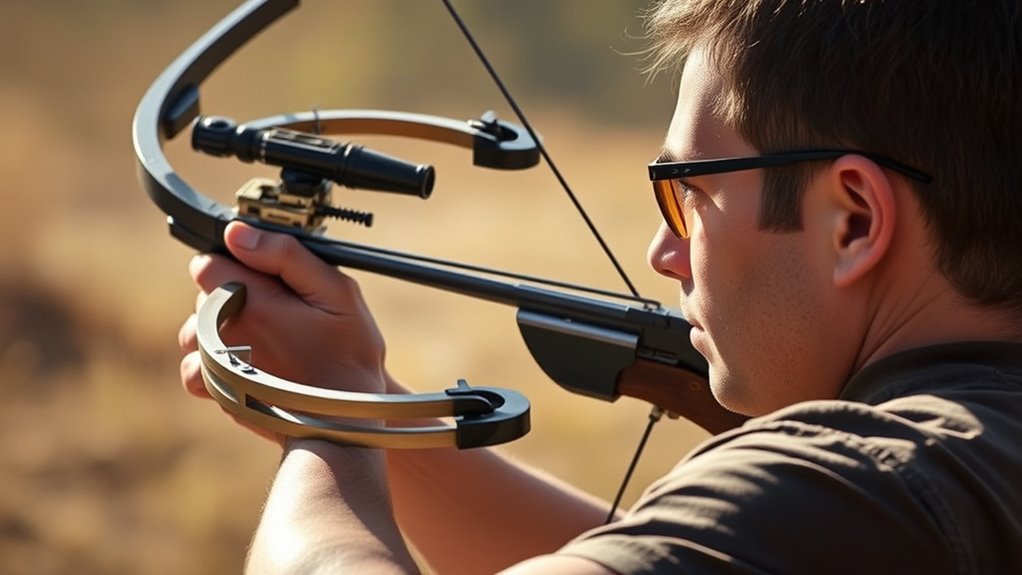
To aim and fire your crossbow like a pro, start by mastering a proper stance that provides stability and balance. Next, focus on target acquisition by aligning your sight with precision and minimizing distractions.
Finally, control your trigger smoothly to guarantee a clean, accurate shot every time.
Proper Stance Techniques
Since your stance is the foundation of accurate shooting, mastering proper techniques is essential for aiming and firing your crossbow like a pro. Begin by positioning your feet shoulder-width apart, ensuring balanced foot placement to provide stability. Your weight should be evenly distributed across both feet.
Next, focus on body alignment: square your shoulders to the target while keeping your torso upright but relaxed. This alignment helps maintain consistent aim and reduces muscle fatigue. Avoid leaning too far forward or backward, as this can throw off your shot.
Keep your knees slightly bent to absorb any movement and maintain control. By consistently practicing these stance fundamentals, you’ll improve your accuracy and confidence with every shot you take.
Target Acquisition Tips
Mastering your stance sets the stage, but pinpointing your aim is what truly determines success. When operating a crossbow, target acquisition is key. Follow these steps to improve:
- Target Selection: Choose a clear, unobstructed target. Avoid cluttered backgrounds to reduce errors.
- Distance Estimation: Accurately judge the distance between you and your target. This influences your aim point and bolt trajectory.
- Focus on the Center: Align your sight with the target’s center mass for maximum accuracy.
- Control Your Breathing: Steady your breath to minimize movement and maintain a stable aim.
Trigger Control Methods
Steady your finger and maintain control as you prepare to fire your crossbow. The key to a successful shot lies in mastering the trigger squeeze. Rather than jerking or slapping the trigger, apply slow, steady pressure until the shot releases.
This controlled action minimizes movement and keeps your aim true. Never rush the trigger pull; haste can compromise accuracy and safety. Incorporate consistent safety habits by always engaging the safety mechanism until you’re fully ready to shoot.
Keep your finger off the trigger when not actively firing to prevent accidental discharge. By practicing smooth trigger control and adhering to safety habits, you’ll improve your shot precision and handle your crossbow responsibly every time you take aim.
Practice Accuracy and Control With Your Crossbow
Although handling a crossbow can feel intimidating at first, practicing accuracy and control is essential to becoming proficient. To improve, focus on consistent crossbow drills and targeted accuracy exercises.
Here’s how to start:
- Set up a safe shooting range with clear targets at varying distances.
- Perform dry-fire drills (without bolts) to refine your trigger control and stance.
- Shoot groups of bolts aiming for tight clusters, analyzing each shot’s placement.
- Adjust your aim and repeat to build muscle memory and improve precision.
What to Do If Your Crossbow Misfires
Once you’ve developed accuracy and control with your crossbow, it’s important to know how to respond if it misfires. First, keep the crossbow pointed in a safe direction and wait at least 30 seconds before handling it. This reduces the risk of a delayed discharge.
Next, engage in basic crossbow troubleshooting tips: check the safety mechanism, inspect the string and limbs for damage, and verify the bolt is properly seated. Avoid attempting to fire again until the issue is resolved.
Misfire prevention strategies include regularly inspecting components and using quality bolts. If you’re unsure or the problem persists, seek professional assistance. Knowing these steps helps maintain safety and confidence in your crossbow use.
How to Maintain Your Crossbow for Top Performance
To keep your crossbow performing at its best, regular maintenance is essential. Follow these steps to guarantee longevity and reliability:
- Clean the Crossbow: Use proper crossbow cleaning techniques to remove dirt and debris, focusing on the rail and limbs to prevent wear.
- Inspect the String: Regularly check for fraying or damage. Apply string maintenance tips by waxing the string every 5-10 shots to maintain flexibility and strength.
- Lubricate Moving Parts: Apply lubricant to the rail and trigger mechanism to reduce friction and guarantee smooth operation.
- Tighten Screws and Bolts: Check all fasteners regularly to avoid loosening, which can affect accuracy and safety.
Choosing the Right Crossbow Bolts and Accessories
When selecting crossbow bolts and accessories, you need to prioritize compatibility and quality to guarantee safety and peak performance. Begin by choosing bolts that match your crossbow’s specifications; improper bolt materials can cause damage or poor accuracy. Carbon and aluminum bolts are common—carbon offers durability and straight flight, while aluminum is budget-friendly but may bend.
Next, explore accessory options like quivers, scopes, and cocking devices that enhance usability and precision. Ascertain each accessory fits your model to avoid malfunctions. Avoid cheap or generic parts; investing in manufacturer-recommended bolts and accessories maintains your crossbow’s integrity.
Crossbow Hunting Laws and Legal Tips You Should Know
Understanding crossbow hunting laws is essential before you head out into the field. Following crossbow regulations and securing the right hunting permits guarantees a safe, legal experience. Here’s what you need to keep in mind:
- Verify crossbow regulations in your area, as laws vary by state and season.
- Obtain all necessary hunting permits before you start; hunting without them can lead to severe penalties.
- Familiarize yourself with legal hunting hours, species restrictions, and designated hunting zones.
- Always carry your permits and identification while hunting; law enforcement may request them.
Frequently Asked Questions
Can Crossbows Be Used for Target Shooting Indoors?
Yes, you can use crossbows for indoor target shooting, but you’ve got to prioritize indoor safety and guarantee a secure backstop.
Focus on target accuracy by practicing proper stance and controlled shots to improve consistently.
What Is the Best Weather for Crossbow Hunting?
You’ll want to hunt in mild weather conditions since extreme temperature effects can alter your crossbow’s performance. Avoid heavy rain or strong winds, as they impact accuracy and arrow flight, ensuring a safer, more effective hunt.
How Do Crossbows Compare to Compound Bows?
Crossbows offer crossbow accuracy so sharp it feels like shooting lightning, while compound bows boast superior bow efficiency through smoother draw cycles. You’ll find crossbows easier to aim, but compound bows deliver faster, more energy-efficient shots.
Are There Crossbows Specifically Designed for Left-Handed Users?
Yes, left handed crossbows are available, featuring ergonomic designs tailored for your dominant hand. Choosing one guarantees better comfort, accuracy, and safety by aligning with your natural shooting stance and grip.
These crossbows ensure that all controls and components are positioned for left-handed use, making handling more intuitive. This customization helps improve performance and reduces the risk of injury.
Whether you are a beginner or an experienced shooter, selecting a left-handed model can enhance your overall shooting experience.
Can Children Safely Operate a Crossbow?
Crossbow safety is no small potatoes—children can only operate crossbows under strict child supervision, ensuring they understand proper handling and precautions. Always prioritize safety rules to prevent accidents and teach responsible use from the start.
Conclusion
When operating a crossbow, following safety rules isn’t just smart—it’s crucial. You might’ve heard that crossbows are easier to use than traditional bows, but mastering preparation, loading, and aiming takes real skill.
By inspecting your gear, choosing the right bolts, and practicing regularly, you’ll guarantee both safety and accuracy. Remember, staying informed on laws and maintenance keeps your crossbow reliable.
Take these steps seriously, and you’ll handle your crossbow like a true pro. Understanding what should you do when operating a crossbow is key to safe and effective use.