When you’re choosing the best spotting scope for wildlife viewing, you need to balance magnification, objective lens size, and durability for the conditions you actually face. A 20–60x zoom with a 60–80 mm objective often gives you the best mix of detail and brightness, while an angled body can make long sessions easier.
But the right answer also depends on where you watch, what you track, and how much gear you want to carry. Considering these factors will help you find a spotting scope that fits your specific wildlife viewing needs.
Key Takeaways
- Choose a spotting scope with 20–60x magnification for versatile wildlife viewing, balancing detail, tracking ease, and brightness.
- Pick a 60–80 mm objective lens to gather enough light while keeping the scope reasonably portable.
- Prioritize sharp optics, strong edge clarity, low chromatic aberration, and good low-light coatings for cleaner animal detail.
- Match scope style to use: straight scopes for fast target acquisition, angled scopes for shared viewing and less neck strain.
- Consider weight, tripod stability, waterproof sealing, smooth focus, and comfortable eyecups for reliable field use.
How to Choose a Wildlife Spotting Scope
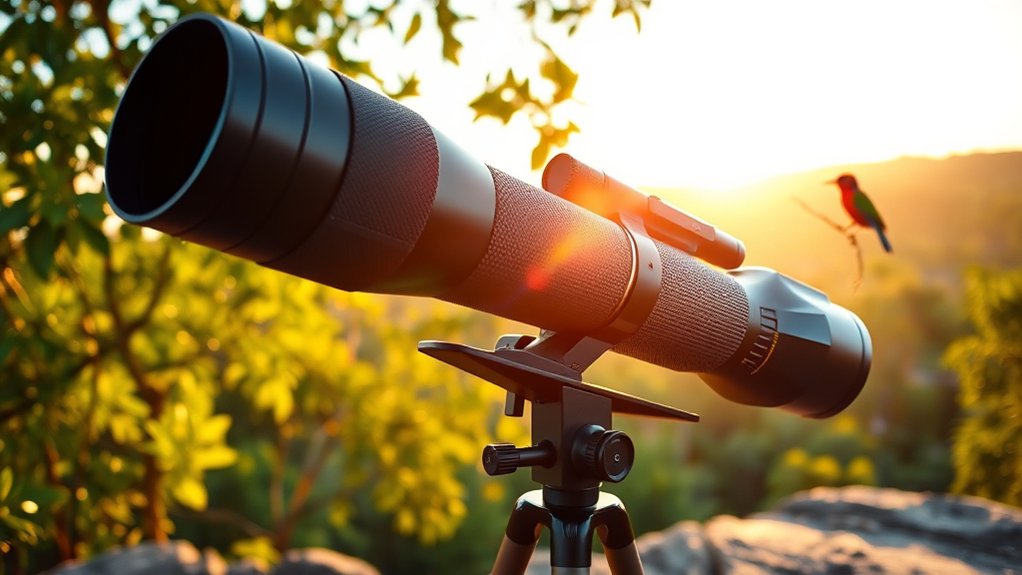
When you’re choosing a wildlife spotting scope, start by matching the scope’s magnification, objective lens size, and optical quality to the kind of viewing you’ll actually do. If you watch birds from trails, a moderate zoom range keeps images steadier and easier to find.
If you scan marshes or open fields, a larger objective lens can improve brightness, but it usually adds bulk. Compare weight considerations against how far you’ll carry the scope, tripod, and case; lighter setups reduce fatigue on long outings.
Check the build for weather sealing, smooth focusing, and a comfortable eyecup, because those details affect daily use. For nighttime usability, choose glass and coatings that preserve contrast in low light, though no scope replaces daylight.
Before buying, read reviews from people who use the scope in similar conditions. Finally, follow simple maintenance tips: keep lenses capped, clean them with proper cloths, and store the scope dry to protect performance.
Features That Help You See More Wildlife Detail
To see more wildlife detail, focus on features that sharpen the image and make fine textures easier to distinguish. You’ll want strong edge quality, so animals stay crisp even when they move toward the frame.
Sharp image quality helps reveal fine wildlife detail, keeping animals crisp and textures easy to see.
Good optics also reduce chromatic aberration, which keeps feather, fur, and antler edges from showing distracting color fringing. A wide field of view helps you locate subjects quickly and track them through brush, especially when birds or deer shift position.
Look for coatings and lens designs that preserve contrast in low light, because subtle markings stand out better when glare stays controlled. Solid weather sealing matters too, since moisture, dust, and temperature changes can blur performance and limit use in the field.
When these features work together, you can judge posture, markings, and behavior more confidently without constantly adjusting your setup or losing sight of important detail.
Best Magnification and Objective Lens Sizes
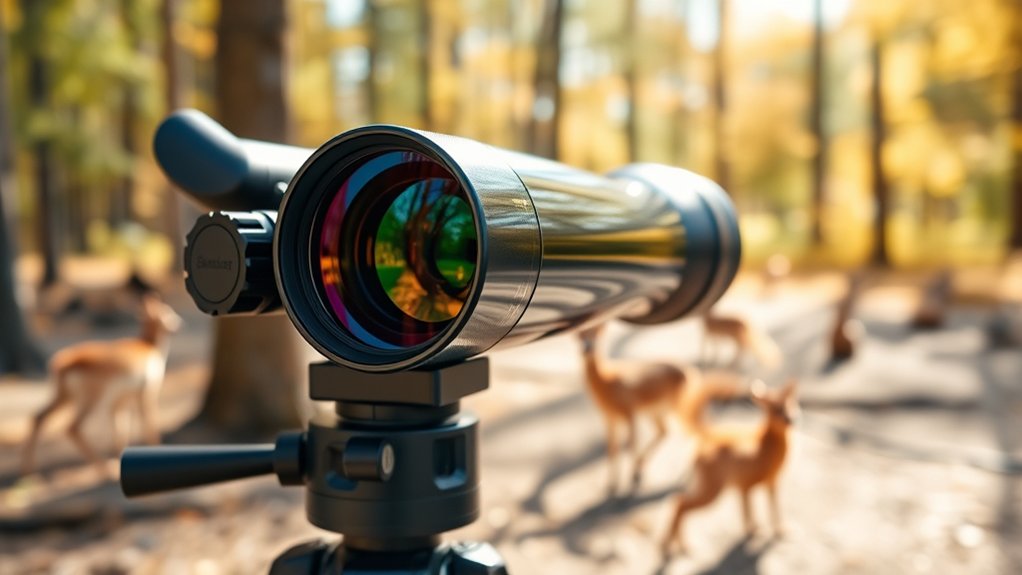
For most wildlife viewing, a spotting scope in the 20–60x range gives you the flexibility to scan widely at lower power and then zoom in for fine detail. You’ll usually get the best balance of image brightness, steadiness, and reach in that range. High magnification can reveal texture on distant animals, but it also narrows your field of view and makes vibrations more noticeable, so use it only when conditions are calm and the subject is still.
- 20–30x: easier tracking and brighter images
- 40–60x: more detail when you need it
- 60 mm to 80 mm objective: practical portability and light gathering
A large objective lens helps you see better in dim light and supports clearer views at higher power, but it adds weight and bulk. If you carry your scope often, choose the smallest large objective that still meets your viewing needs.
Choosing a Scope for Birds, Elk, and Shorelines
Different subjects call for different tradeoffs, and your best scope choice depends on what you’ll watch most often. For birds, choose a scope that gives you crisp close-focus detail and a bright image, since you’ll often track fast movement, plumage changes, and bird behavior at varying distances.
If you watch elk, prioritize steady long-range viewing, so you can pick out antlers, posture, and herd spacing without constant refocusing. For shorelines, you need strong contrast and good glare control because water, haze, and shifting light can hide subtle motion.
You should also consider habitat acoustics, since marshes, cliffs, and open beaches affect how easily you locate wildlife before you glass. In each setting, a scope that stays clear in dim light and handles vibration well will save time and reduce missed sightings.
Match your usual terrain, viewing distance, and the size of the subject, and you’ll get more useful detail with less strain overall.
Choosing the Right Spotting Scope Type
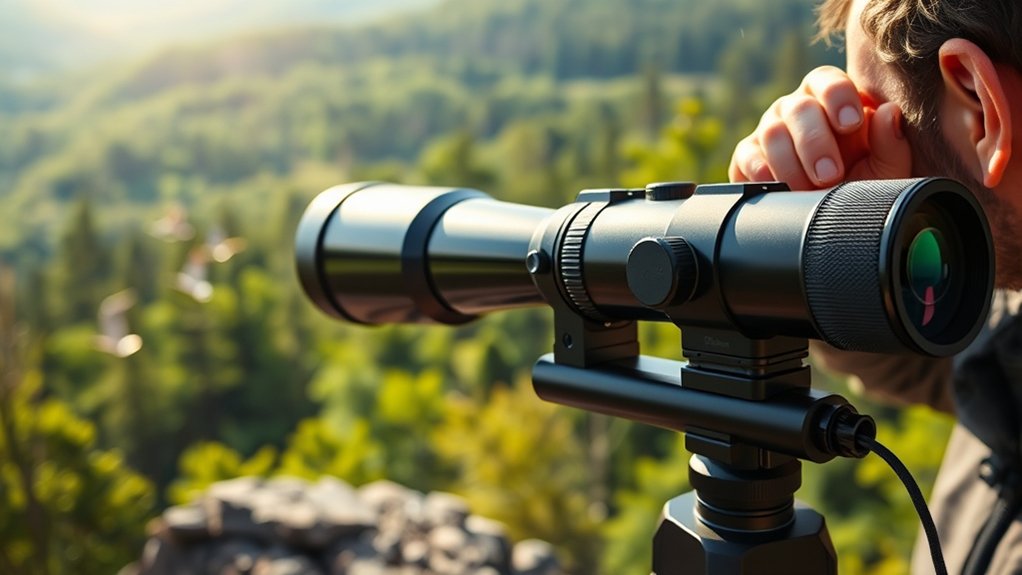
Once you know what you’ll watch most often, the next decision is the scope type that fits your style of viewing. You’ll usually choose between straight and angled bodies, each with clear tradeoffs.
A straight scope points naturally at targets on the horizon, so you can acquire subjects quickly when you’re scanning open water or distant fields. An angled model helps when you share views or spend long sessions at changing heights, because you can look downward without raising the tripod.
- Straight: faster target finding, simpler panning
- Angled: easier group viewing, less neck strain
- Body design: balance spotting scope ergonomics with your tripod setup
Check the focus ring, zoom placement, and eyecup feel before you buy, because small design details affect comfort in the field. Also verify waterproof sealing, since weather, spray, and dust can interrupt viewing.
The right type should feel stable, intuitive, and easy to use.
Frequently Asked Questions
How Do I Care for a Spotting Scope in Wet Conditions?
Dry it quickly, remove caps, and wipe the body with a microfiber cloth. You should use care tips like sealing seams and checking O-rings, plus weatherproofing routines, to keep moisture out and optics clear.
What Tripod Works Best With a Wildlife Spotting Scope?
You’ll get the best tripod with a sturdy, lightweight carbon-fiber model and fluid head; irony aside, stability matters most. Check head compatibility first, then choose adjustable legs, secure locks, and a vibration-damping design for wildlife viewing.
Can I Use a Spotting Scope for Digiscoping With a Phone?
Yes, you can use a spotting scope with a phone for digiscoping if you check spotting scope compatibility and build a stable digiscoping setup.
You’ll need an adapter, steady support, and careful alignment for sharp images.
How Much Should I Spend on a Quality Wildlife Spotting Scope?
You should spend about $300 to $1,000 for a quality wildlife spotting scope. You’ll balance budget tradeoffs and feature prioritization, since better glass, coatings, and weatherproofing usually cost more, but sharpen images and improve durability.
Are Angled Spotting Scopes Easier to Use for Long Viewing Sessions?
Yes, angled scopes usually make long viewing sessions easier because you can keep a more natural neck position and adjust tripod height less.
You’ll often get better ergonomic viewing, especially when sharing the scope or scanning uphill.
Conclusion
To choose the best spotting scope for wildlife viewing, you’ll want a balanced tool that works like a steady bridge between distance and detail. A 20–60x zoom and a 60–80 mm objective lens give you the reach and brightness you need without turning every scan into a struggle.
Pick an angled, waterproof model with smooth focus, and you’ll track birds, elk, and shorelines with less strain and clearer results, even when the light starts to fade. These features ensure comfort and durability in various outdoor conditions.
When selecting your gear, remember that the best spotting scope for wildlife viewing combines power, clarity, and ease of use to enhance every observation.