If you’re comparing outdoor optics, a spotting scope gives you more reach than binoculars in a compact form, but it also demands a tripod and careful setup.
A spotting scope’s large objective lens, internal prism system, and high magnification work together to produce a bright, upright image at long distances.
You’ll see how these features enhance your viewing experience outdoors.
The real question is which design details actually improve clarity, and that’s where the differences start to matter.
Key Takeaways
- A spotting scope is a compact, high-magnification optical instrument for viewing distant subjects in detail.
- It offers more reach than binoculars while remaining portable and stable on a tripod.
- Spotting scopes are commonly used by birders, hunters, target shooters, and surveyors.
- They use an objective lens, internal prisms, and an eyepiece to form and magnify a clear image.
- Important features include objective size, magnification range, brightness, waterproofing, and overall optical quality.
What Is a Spotting Scope?
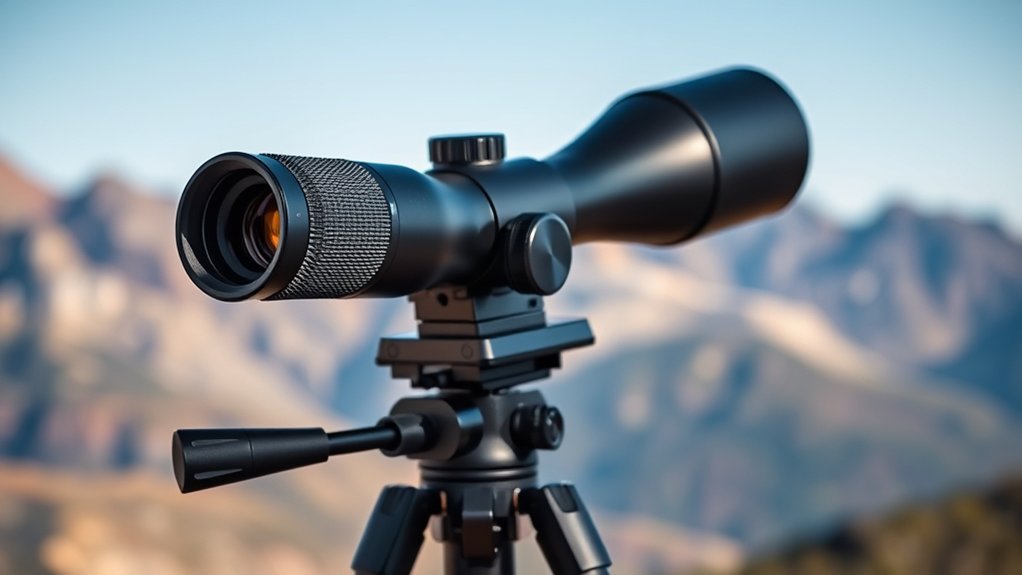
A spotting scope is a compact, high-magnification optical instrument designed for viewing distant objects in sharp detail. You use it when you need more reach than binoculars can provide, yet want portability and stable viewing.
It serves birders, hunters, target shooters, and survey users who need precise visual identification at long distances. You can assess its usefulness by checking objective size, body design, and intended magnification range, then by finding brightness in low-light conditions.
When evaluating eyepieces, you should compare fixed and interchangeable options, field of view, and eye relief to match your viewing task. A spotting scope typically mounts on a tripod, giving you the steadiness needed for detailed observation.
Its compact form helps you transport it easily, while the optical system is built to deliver clear, magnified images of remote subjects.
How Spotting Scopes Work
Understanding how a spotting scope works starts with its basic optical path: the objective lens gathers light from a distant subject and focuses it into a real image inside the tube. An internal prism system usually folds or redirects the light to keep the body compact and upright.
You then view that image through the eyepiece, which reimages it for your eye. The lens elements and prisms control brightness, sharpness, and edge fidelity by managing aberrations, while contrast mechanics depend on how efficiently the system blocks stray light and preserves tonal separation.
Optical coatings on the glass surfaces reduce reflections, increase transmission, and improve image clarity in low-light conditions. Because each component is aligned along a fixed optical axis, the scope can deliver a stable, correctly oriented view without needing electronic correction.
In practice, you’re looking through a precisely engineered relay system that converts distant detail into a usable, high-contrast image.
Spotting Scope Magnification and Zoom
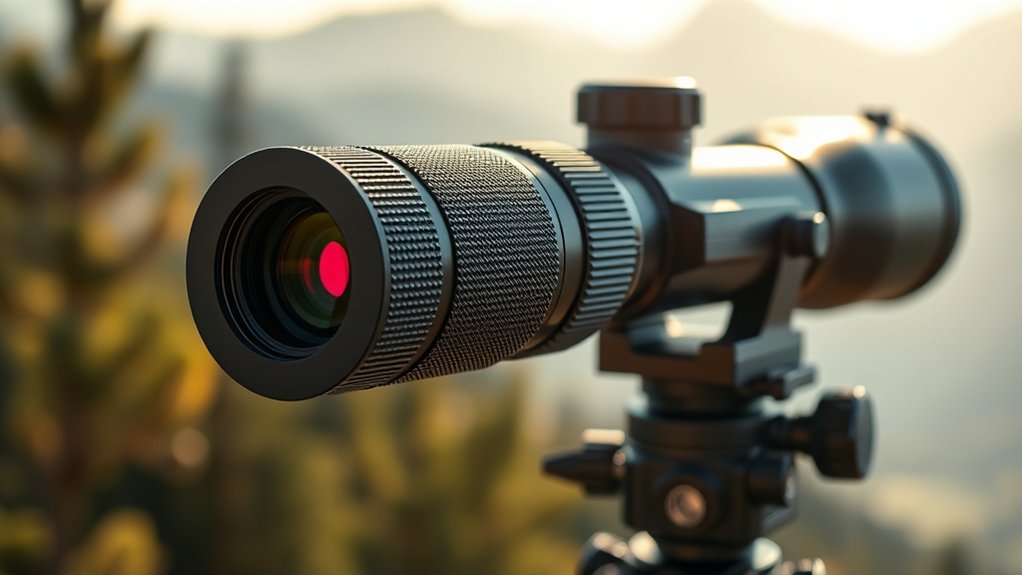
Magnification determines how large the subject appears through a spotting scope, and zoom lets you adjust that enlargement within a defined range. You’ll usually see fixed or variable magnification values, such as 20x to 60x, and each step changes image scale, field of view, and brightness.
In practice, higher magnification reveals finer detail, but it also magnifies shake, heat shimmer, and focus errors. Use this framework:
- Lower magnification gives you a wider view and easier target acquisition.
- Higher magnification supports precise inspection of distant features.
- Zoom quality affects sharpness, edge clarity, and image stability across the range.
- Aperture size influences how well the spotting scope maintains brightness as magnification rises.
You should match magnification to your task, not chase the highest number. A balanced setting often produces the clearest, most usable image because it preserves contrast and reduces optical strain.
Key Spotting Scope Features to Compare
When you compare spotting scopes, focus on the features that most directly affect image quality, usability, and durability: objective lens diameter, optical coatings, prism design, eyepiece compatibility, close-focus distance, eye relief, waterproofing, and tripod mounting options. A larger objective can improve light transmission and resolve fine detail, but it also increases size and weight.
Multilayer coatings reduce glare and boost contrast, while prism quality influences sharpness and color fidelity. Check whether the eyepiece system accepts fixed or zoom options, since that changes flexibility. Close-focus distance matters for nearby subjects, and eye relief affects comfort, especially if you wear glasses.
Waterproof sealing and internal fog resistance support field use in changing weather. Tripod compatibility and a balanced mounting foot improve stability and field ergonomics. Also examine chassis materials and control tolerances, because solid construction contributes to firmware durability in the broader sense of long-term mechanical reliability.
How to Choose a Spotting Scope?
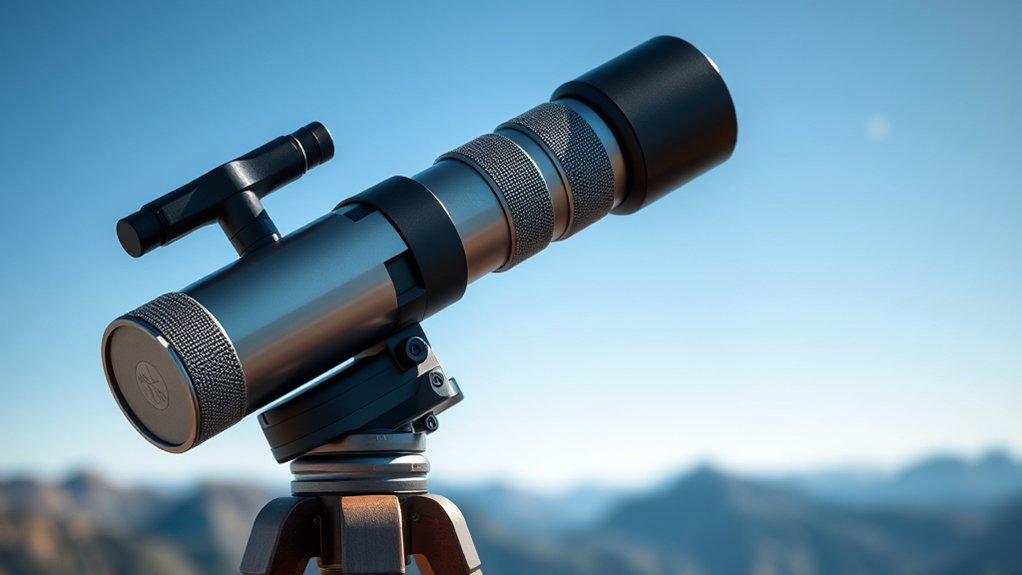
To choose a spotting scope, start by matching the optic to how and where you’ll use it: birding, target shooting, digiscoping, or long-range observation each place different demands on magnification range, brightness, field of view, and portability. You should then prioritize optical performance, build quality, and mounting options.
- Select a magnification range that balances detail and image stability.
- Check objective size and glass quality for low-light brightness and contrast.
- Verify eyepiece compatibility, because interchangeable eyepieces affect flexibility and upgrade paths.
- Evaluate range retention in the zoom mechanism and focus system, especially for repeated field use.
You also need to consider weight, weather sealing, and tripod interface. If you plan to scan wide areas, choose a wider field of view; if you need precision at distance, favor higher resolution and a rigid focus. Compare specifications against your actual viewing distances, then choose the model that best supports consistent, repeatable performance in your conditions.
Frequently Asked Questions
Can Spotting Scopes Be Used for Digiscoping With a Smartphone?
Yes, you can use spotting scopes for digiscoping with smartphones, especially through adapters. You’ll capture distant detail like a moonlit observatory.
Digiscoping with smartphones often needs low light accessories, stable mounts, and careful alignment.
Are Spotting Scopes Good for Astronomy Viewing?
Yes, you can use a spotting scope for astronomy, and it’s decent for Moon, planets, and terrestrial views. Its narrow field and lower light gathering limit deep-sky use. Digiscoping with a smartphone can help document observations.
How Much Do Spotting Scopes Typically Weigh?
You’ll usually see spotting scopes weigh 1.5 to 4 pounds; compact models are lighter, larger ones heavier. Check weight specs and design balance, since both affect portability, stability, and mounting comfort in the field.
Can Spotting Scopes Work in Low-Light or Twilight Conditions?
Yes, you can use spotting scopes in low light, but performance drops fast; only about 1% brighter optics matter. You’ll notice low light challenges, and your twilight performance improves with larger apertures and premium coatings.
What Accessories Are Useful With a Spotting Scope?
You’ll want a tripod, carrying case, lens covers, and a phone adapter; optional eyepieces and a sunshade help too.
Check accessory compatibility, then practice accessory maintenance to keep optics stable, protected, and performing reliably.
Conclusion
In the end, a spotting scope is your bridge to distant detail, turning a far-off ridge, feather, or target into a clear, usable image. You choose it by balancing magnification, objective size, coatings, and stability, because each part shapes brightness, sharpness, and comfort.
When you match the scope to your needs, you don’t just extend your sight—you refine it, like a lens polishing the edge of the world. This is the true power of a spotting scope.