To look through a rifle scope correctly, you need a stable head position, proper eye relief, and a clear sight picture before you ever think about firing. Understanding how to look through a rifle scope is essential for accuracy and consistency in shooting. You’ll also want to keep the reticle centered, manage your breathing, and avoid the small mistakes that throw off your aim.
Once you understand how each part works together, the scope becomes much easier to use—and one detail can change everything. Proper technique ensures you make the most of your scope’s capabilities and improve your shooting performance.
Key Takeaways
- Mount the rifle securely and adjust eye relief until the scope image stays steady with a normal cheek weld.
- Keep your head upright and relaxed so the full sight picture appears without shadows or edge distortion.
- Center the reticle in the scope and make small head adjustments until the image looks balanced and clear.
- Focus the eyepiece for a sharp reticle, then recheck the target and sight picture for clarity.
- Maintain a stable position, breathing control, and proper alignment before pressing the trigger.
Set Your Rifle Scope Eye Relief First

Before you do anything else, set the eye relief on your rifle scope so you can see a full, clear sight picture without crowding the optic. Mount the rifle securely, shoulder it in your normal firing position, and move the scope forward or back until the image stays steady when you open both eyes and then close one.
Keep your head upright and relaxed, because stretching your neck changes the rifle scope angle and shifts eye relief. Once you find the correct spot, tighten the rings evenly and recheck the position after each adjustment.
If the scope moves, repeat the process until it stays consistent. Proper set eye relief helps you avoid scope shadow, reduces recoil risk, and gives you a repeatable setup every time you shoulder the rifle.
Get a Full Sight Picture
Keep your eye at the correct relief position so you can see the entire field without shadows.
Center the scope view in the lens and adjust your head until the image looks even all the way around.
Check that the edge alignment is clear and complete before you aim.
Eye Relief Position
Eye relief is the distance between your eye and the scope where the full sight picture appears clearly, and you need to set your head at that point before you fire.
- Shoulder the rifle firmly.
- Move your head until the image fills the lens.
- Keep your cheek weld consistent.
- Check that the scope’s eye relief suits your stance.
- Confirm mounting stability so recoil won’t shift the optic.
If you sit too close, the view can darken and your eye can get hit by recoil. If you’re too far back, you’ll lose detail and clarity.
Keep your position natural, then lock it in through repetition. Practice mounting the rifle until you can find the same eye relief quickly every time, without straining your neck or arms.
Centered Scope View
Center the scope view so the reticle sits naturally in the middle of the image, with a full, bright sight picture around it. Keep your head behind the optic at the correct eye relief, then make small position changes until the image appears balanced and round.
You should see the entire field quickly, without shifting your cheek or stretching your neck. A centered scope helps you maintain consistency, because your eye lands in the same place each time.
Focus on the target through the reticle, not on the housing around it. When the view feels centered, settle your grip and body position. That stable alignment lets you confirm your sight picture before you make any adjustment or take the shot.
Clear Edge Alignment
Once the reticle is centered, check the outer edges of the image to make sure you’re seeing a full sight picture. You should see a clean, bright circle with no dark crescent shadows.
If the edges look clipped, adjust your head position or eye relief until the image opens up. Good edge alignment helps you keep the scope level and prevents inconsistent cheek placement.
Move your eye slightly forward or back.
Shift your head until the image fills evenly.
Keep both eyes open while you adjust.
Verify that the reticle stays centered.
Repeat until the view is clear and complete.
When the scope picture looks uniform, you’ve set the proper alignment for accurate aiming and comfortable viewing.
Focus the Reticle and Target
Adjust your scope so the reticle and target appear as crisp as possible. Turn the eyepiece until the focus reticle is sharp against a plain background, such as the sky or a wall.
Look away between adjustments, then glance back quickly so your eye doesn’t keep correcting the image. Once the reticle is clear, shift your attention to the target and confirm target alignment through the scope.
If the target still looks fuzzy, fine-tune magnification or parallax settings if your optic has them. Keep your head position consistent while you test focus, because even small changes can blur the view.
When both the reticle and target look distinct, stop adjusting and verify the sight picture again before you continue.
Keep Both Eyes Open When Needed
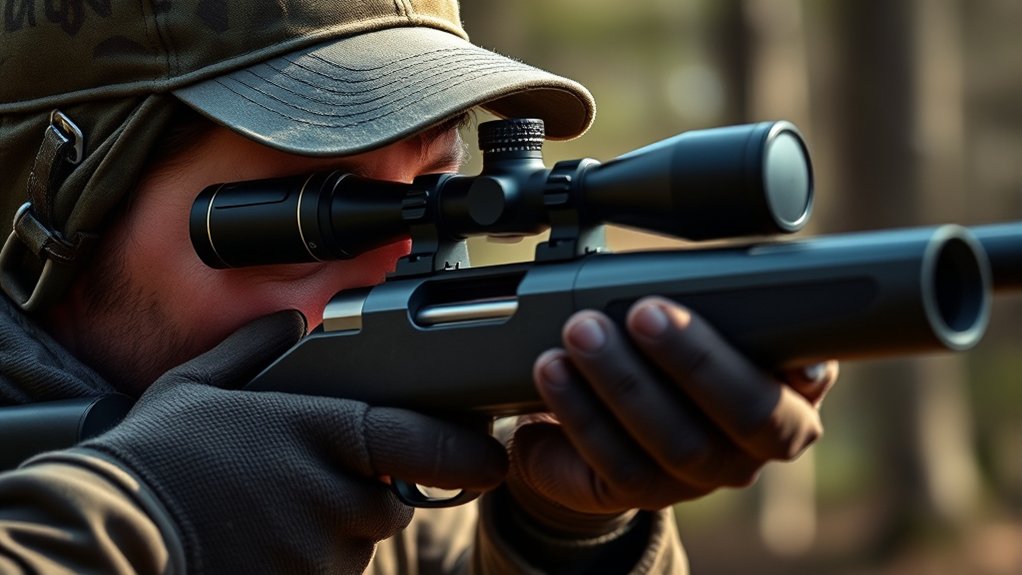
When your situation allows, keep both eyes open so you can stay aware of the target and what’s around it. This helps you maintain depth perception and track movement without losing sight of the bigger picture.
Practice switching between one-eye and both-eye viewing until it feels natural.
Both Eyes Open
Keeping both eyes open can help you stay aware of your surroundings and reduce eye strain, especially when you’re tracking moving targets. Use this method when you need a wider view and faster follow-up aim. Keep your dominant eye on the scope and let your other eye stay relaxed.
If the image feels doubled, practice until your brain blends it naturally.
- Mount the rifle firmly.
- Focus on the reticle.
- Relax your face and jaw.
- Blink normally between shots.
- Practice with short drills.
This approach also supports two word discussion ideas and avoids any unrelated subtopic distractions. You’ll shoot more smoothly when you don’t force one eye closed. Keep your breathing steady, and open both eyes again as soon as the sight picture demands it.
Target Awareness
Why keep both eyes open? You do it to preserve target awareness and react faster. With your dominant eye on the scope and the other eye open, you track movement, terrain, and nearby hazards without losing sight picture.
This helps you maintain focus safety because you spot people, animals, or obstacles before you move or fire. Keep your head steady, breathe normally, and let both images blend until the target stands out clearly.
If the scene looks crowded, lower your magnification and reassess. Practice this skill slowly until it feels natural. After each session, check scope maintenance by cleaning lenses, confirming zero, and inspecting mounts.
Good awareness depends on clear optics and disciplined habits, so use both eyes when the situation calls for faster decisions.
Aim Steady While You Breathe
How do you keep the crosshairs still while you breathe? You control your aim breathing by slowing your inhale, then pausing briefly at the natural respiratory pause. Keep a steady posture so your shoulders, neck, and hands stay relaxed.
Let the rifle settle against you instead of forcing it into position. Focus on a smooth trigger press during that quiet moment between breaths. If your sight picture drifts, don’t chase it; reset your stance and breathe again.
- Inhale through your nose.
- Exhale slowly and fully.
- Pause at the natural stop.
- Hold your steady posture.
- Press the trigger smoothly.
Avoid Common Rifle Scope Mistakes

Even a solid rifle setup won’t help if you make a few common scope errors. Keep your head position consistent, and don’t rush your setup. Check this quick guide:
| Mistake | Fix |
|---|---|
| Eye too close | Adjust distance first |
| Scope loose | Tighten mounts safely |
| Dirty lenses | Clean with proper cloth |
| Poor light checks | Test before you shoot |
| Neglected zero | Reconfirm after transport |
You should practice safety every time you handle the rifle, and never point it at anything you don’t intend to hit. Use equipment maintenance to keep the scope, rings, and lenses in good condition.
Avoid overcompensating with your body or forcing your eye into place. Instead, settle in calmly, verify alignment, and make small corrections. That discipline helps you stay accurate and consistent.
How a Rifle Scope Helps You Aim
A rifle scope helps you aim by giving you a magnified, aligned view of the target so you can place the reticle exactly where you want the shot to land. You see details more clearly, judge distance better, and correct your hold with less guesswork.
Keep both eyes open when possible, maintain range safety, and steady the rifle before you fire. Use the center crosshair as your reference, then make small windage adjustment changes if the shot drifts left or right.
Keep both eyes open when possible, steady the rifle, and use the center crosshair to correct slight horizontal drift.
- Align the reticle with the target.
- Focus on a stable shooting position.
- Check your breathing before pressing the trigger.
- Adjust for horizontal drift.
- Confirm your sight picture before firing.
Frequently Asked Questions
How Do I Clean Rifle Scope Lenses Safely?
Use a blower, then a microfiber cloth with lens-safe solution; don’t touch the glass with fingers. For cleaning safety and lens care, gently wipe in circles, avoid harsh chemicals, and store caps on when not in use.
What Magnification Is Best for Long-Range Shooting?
For long-range shooting, you’ll usually want 10x to 20x; it’s the sweet spot. Choose enough power for target detail, but not so much that mirage and muzzle velocity impacts make long range focusing harder.
How Do I Mount a Scope Correctly on a Rifle?
You align the scope mounting and secure the rings evenly. Set eye relief and level the reticle, then torque screws to specs.
Afterward, check lens maintenance by cleaning lenses gently and rechecking zero.
What Causes Scope Eye Relief to Change?
Scope eye relief changes when you adjust magnification, move your head, or shift the scope. You’ll also notice scope parallax effects if your eye position isn’t consistent.
Keep your weld steady, and you’ll avoid surprises.
How Do I Zero a Rifle Scope?
You’ll zero your rifle scope by securing proper scope mounting fundamentals, then fire a group, adjust turrets, and repeat until rounds hit point of aim.
Follow the zeroing procedure carefully and confirm at distance.
Conclusion
So there you are, finally peering through the scope like a civilized predator instead of a confused moon watcher. You’ve set eye relief, centered the reticle, and stopped treating breathing like a surprise attack.
Keep both eyes open when it helps, stay steady, and don’t jerk the rifle around like you’re trying to win an argument with it.
If the sight picture looks right, trust your setup—and let the scope do its very unglamorous job.
Remember, knowing how to look through a rifle scope properly is key to making every shot count.