You’re looking for the best cellular trail camera that combines sharp 4K resolution or higher with dependable 4G LTE or emerging 5G connectivity for instant uploads.
Prioritize models offering adjustable motion sensitivity, no-glow infrared for stealthy night shots, and robust weatherproof housing rated IP65 or above.
Long-lasting rechargeable batteries or solar options minimize downtime in remote locations.
The best choices balance image quality, network reliability, and power efficiency—key factors that as you explore further will clarify how to match a camera to your specific needs.
Key Takeaways
- Choose a cellular trail camera with 4G LTE for reliable coverage and consider 5G only if available in your area for faster uploads.
- Prioritize high image resolution, night vision quality, and motion detection sensitivity for clear wildlife identification and effective triggering.
- Select cameras with durable, weatherproof construction (IP65+) and power options like rechargeable batteries or solar panels for extended use.
- Optimize camera placement by mounting at chest height, clearing obstructions, and ensuring strong cellular signal or using external antennas.
- Research reputable brands with positive reviews, user-friendly interfaces, and efficient data transmission to balance image quality and timely updates.
How Cellular Trail Cameras Work and Why They Matter
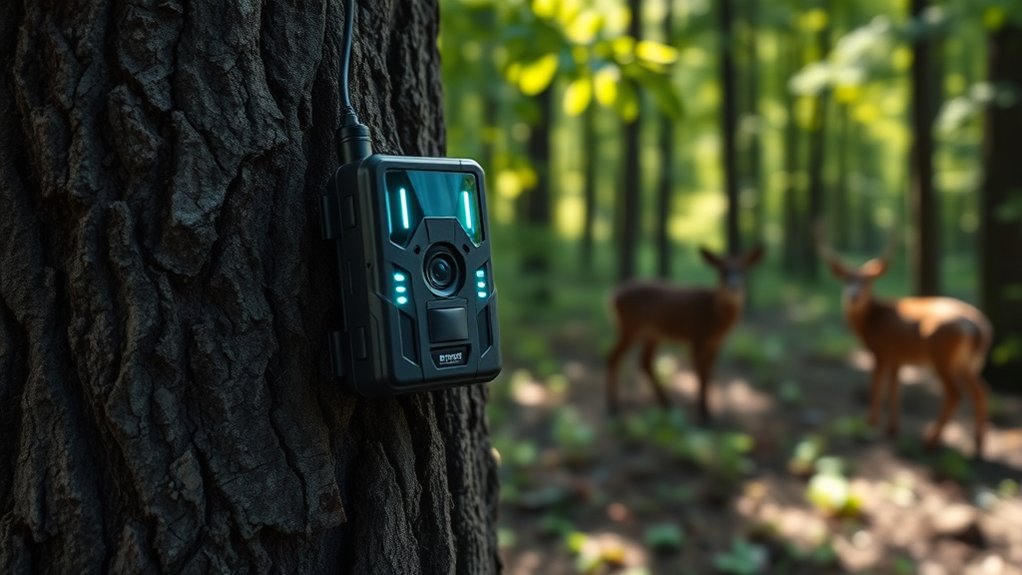
Although traditional trail cameras have served hunters and wildlife enthusiasts well, cellular trail cameras have revolutionized remote monitoring by sending real-time images and data directly to your device via cellular networks. These cameras integrate advanced cellular technology, enabling them to transmit photos and videos instantly without needing physical retrieval.
When motion triggers the camera’s sensor, it captures an image and uses a built-in SIM card to upload the file through 3G, 4G, or LTE networks. This seamless connectivity enhances wildlife monitoring by allowing you to track animal activity remotely and adjust camera settings on the fly.
You’ll appreciate how cellular trail cameras save time and increase efficiency, providing immediate insights into animal behavior and movements in challenging or inaccessible environments.
Essential Features of the Best Cellular Trail Cameras
To get the most out of your cellular trail camera, you need to understand the key features that define its performance and reliability. Image resolution is vital; higher resolution captures finer details, making wildlife identification easier. Motion detection sensitivity directly affects how well the camera triggers on movement without false alarms.
Battery life guarantees long-term monitoring without frequent replacements. Night vision capabilities allow clear images in low light. Finally, storage capacity impacts how many photos or videos your camera can save before needing retrieval.
| Feature | Importance |
|---|---|
| Image Resolution | Sharpness and detail of captures |
| Motion Detection | Accuracy in triggering events |
| Battery Life | Duration of uninterrupted use |
| Night Vision | Clear images in darkness |
| Storage Capacity | Amount of data saved on device |
Comparing Connectivity: 4G LTE vs. 5G for Trail Cameras
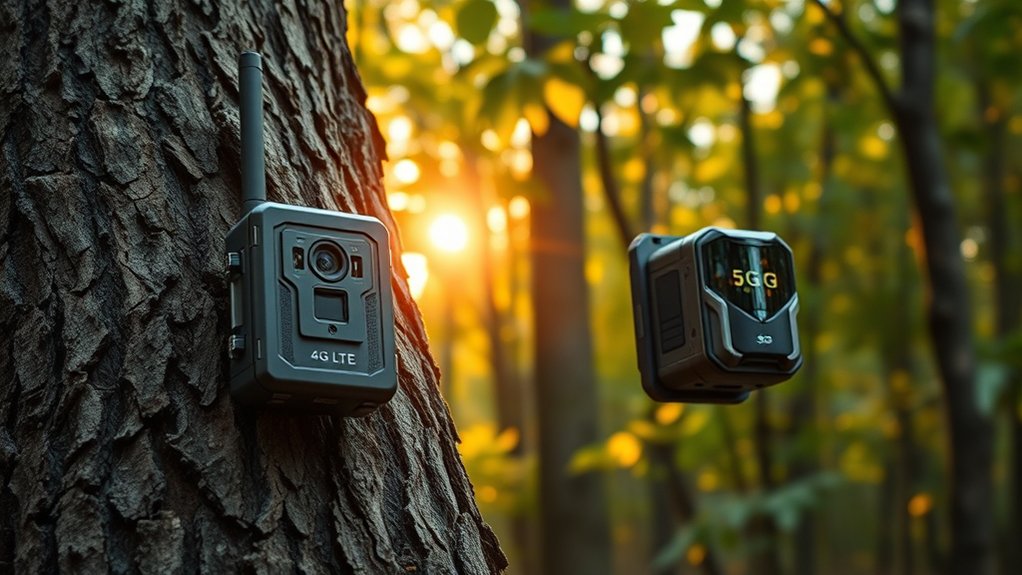
Many trail camera users find that choosing between 4G LTE and 5G connectivity hinges on factors like signal strength, data speed, and coverage area. 4G LTE offers widespread compatibility and reliable transmission speeds sufficient for most wildlife monitoring tasks, while 5G promises significantly faster data transfer and lower latency, enabling near-instant image uploads and real-time alerts.
You’ll appreciate 4G advantages such as broader coverage in rural areas and proven connectivity reliability, critical when signal strength fluctuates. However, 5G’s limitations include limited range and inconsistent availability in remote locations, which can compromise your camera’s performance.
When selecting your trail camera, weigh the dependable 4G network against the emerging 5G infrastructure, especially if you prioritize consistent connectivity over cutting-edge speed.
Image Quality and Night Vision in Cellular Trail Cameras
When evaluating cellular trail cameras, image quality and night vision capabilities play an essential role in capturing clear, actionable wildlife data. You’ll want to focus on image resolution, as higher megapixels deliver sharper photos and allow you to identify species and behaviors more reliably.
Pay close attention to how the camera performs in low light performance; many models use infrared LED arrays or no-glow black LEDs to balance illumination without startling animals. The sensor’s sensitivity and lens quality also impact night image clarity, reducing noise and motion blur.
You should test how well the camera maintains detail and contrast in darkness, as some excel with enhanced IR tech or variable flash intensity. Ultimately, superior image resolution coupled with effective night vision guarantees you never miss critical moments.
Battery Life and Power Options for Cellular Trail Cameras
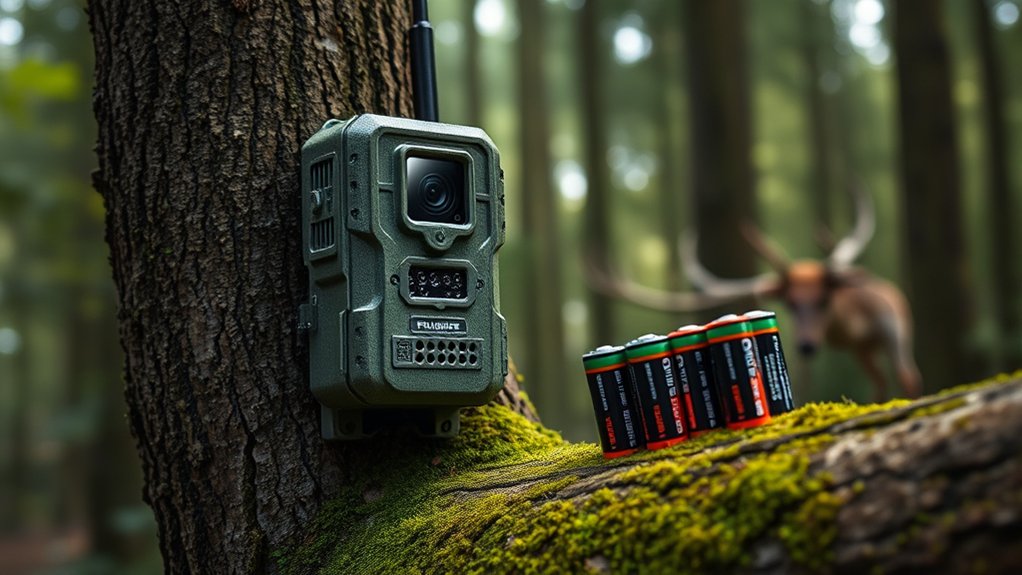
Although advanced features can enhance a cellular trail camera’s functionality, its battery life and power options often determine how effectively it performs in the field. You’ll want to evaluate cameras equipped with high-capacity rechargeable batteries, which offer the flexibility to recharge on the go and reduce replacement frequency. Some models integrate solar power panels, extending operational time by harnessing sunlight, ideal for remote locations where changing batteries frequently isn’t feasible.
Pay attention to the camera’s power consumption rates during standby and active modes, as these impact longevity. Combining rechargeable batteries with solar power can optimize uptime, but guarantee the solar panel is efficient in your environment’s typical weather conditions. Ultimately, robust battery life and versatile power sources keep your trail camera reliable and continuously monitoring wildlife activity.
Durability and Weather Resistance for Outdoor Use
Since cellular trail cameras operate in harsh outdoor environments, their durability and weather resistance are critical factors to evaluate. You’ll want a camera constructed from weatherproof materials like reinforced plastics and sealed rubber gaskets that prevent moisture and dust intrusion. A rugged design guarantees the camera withstands impacts from wildlife or accidental knocks.
Look for models with IP65 or higher ratings, indicating solid protection against rain and dirt. Additionally, corrosion-resistant coatings on metal components extend the camera’s lifespan in humid or snowy conditions. The housing should also dissipate heat efficiently to avoid damage from temperature fluctuations.
How to Choose the Right Cellular Trail Camera for Your Needs
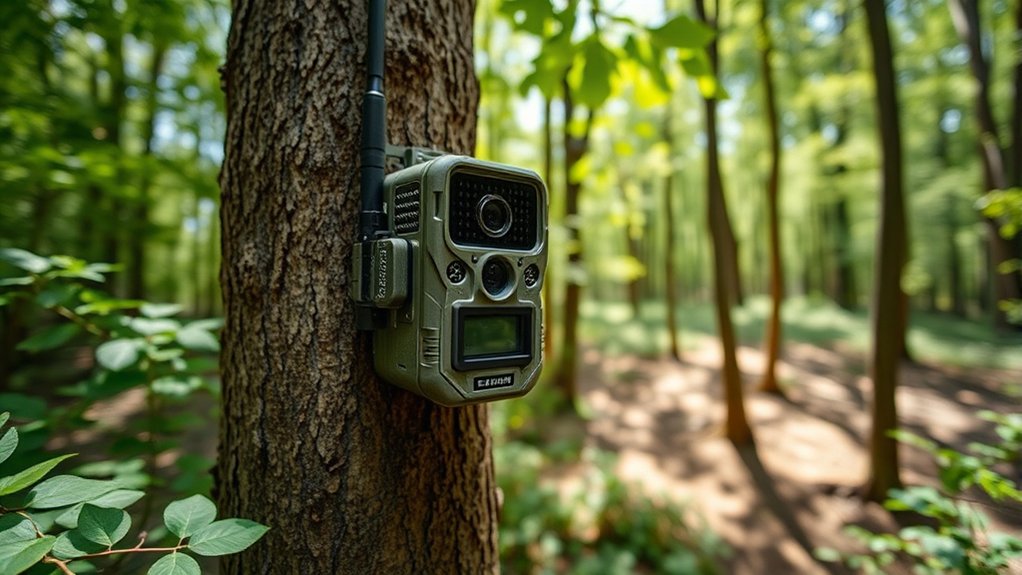
Ensuring your cellular trail camera holds up against harsh outdoor conditions is just one piece of the puzzle. To choose the right camera, you’ll need to evaluate cellular technology advancements, like 4G LTE and 5G compatibility, which affect signal strength and image transmission speed. Consider battery life in relation to network demands—higher tech often means quicker power drain.
Analyze camera brand comparisons focusing on sensor quality, trigger speed, and app interface usability. Don’t overlook data plan options and coverage areas; the best camera is useless without reliable connectivity. Also, pay attention to storage capacity and image resolution to match your monitoring goals.
Top Cellular Trail Cameras: Best Picks and Budget-Friendly Options
Choosing from the top five cellular trail cameras on the market can streamline your decision-making process by highlighting options that excel in connectivity, image quality, and durability. Leading models leverage the latest cellular technology trends, including 4G LTE and emerging 5G capabilities, ensuring rapid image transfer and reliable remote access.
Cameras like the Spypoint Link-S provide sharp 24MP images with fast trigger speeds, ideal for serious wildlife monitoring. If you’re budget-conscious, budget camera reviews consistently recommend the Browning Strike Force for balancing cost with respectable resolution and battery life. Meanwhile, the Bushnell Core offers rugged build quality and solid cellular reception, perfect for varied terrains.
Setting Up and Optimizing Your Cellular Trail Camera
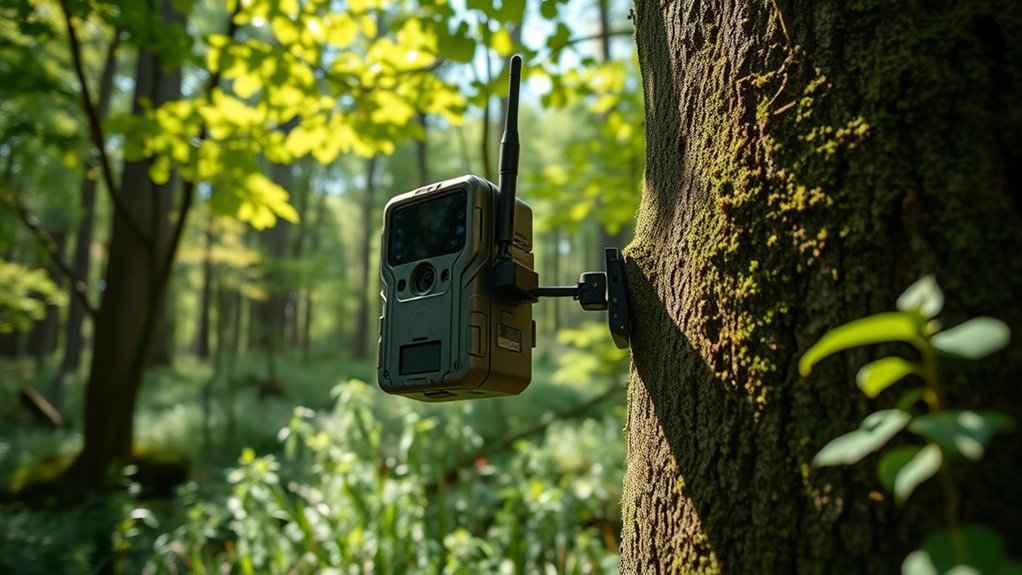
You’ll want to position your cellular trail camera where it captures clear, unobstructed views of animal paths while minimizing false triggers from moving branches or sunlight.
Check signal strength at the site to guarantee reliable data transmission, and consider using external antennas or signal boosters if coverage is weak.
Proper placement combined with optimized connectivity will maximize your camera’s performance and data accuracy.
Camera Placement Tips
Placing your cellular trail camera in the right spot can make all the difference in capturing clear, actionable images. Start by studying wildlife patterns—note trails, feeding areas, and water sources animals frequent. These prime locations increase the likelihood of activity in your camera’s field of view.
Mount your camera at chest height, angled slightly downward to maximize detection range and reduce false triggers from vegetation movement. Verify the lens points north or south to avoid glare from direct sunlight, which can wash out images. Clear any obstructing foliage within 10 feet to maintain an unobstructed view and prevent false triggers.
Finally, test your camera’s motion sensor zone before finalizing placement to confirm it covers key wildlife routes effectively without excessive false alarms.
Network Connectivity Optimization
Once your camera is positioned suitably, ensuring reliable network connectivity becomes the next priority to guarantee timely image transmission. You should assess signal strength at the site using your phone or a signal meter before installation.
Ideal network performance depends on minimizing obstructions like thick foliage or terrain that degrade cellular signals. Adjust the camera’s orientation or height to boost reception. Consider external antennas if built-in ones underperform.
Verify your service provider offers strong coverage in that area.
| Factor | Recommendation |
|---|---|
| Signal Strength | Use signal meter; reposition if low |
| Antenna Type | External antenna for weak signals |
| Obstruction | Remove or avoid physical barriers |
| Network Provider | Choose provider with best coverage |
| Camera Orientation | Adjust to maximize signal reception |
Tips for Getting the Most From Your Cellular Trail Camera
Although cellular trail cameras offer advanced features, maximizing their effectiveness requires strategic setup and maintenance. You need to focus on camera maintenance and efficient image storage to guarantee reliable performance and clear data transmission.
- Regularly clean lenses and sensors to prevent dirt or moisture from degrading image quality.
- Check and update firmware to leverage the latest features and security patches.
- Optimize image storage settings by adjusting resolution and compression to balance quality with data usage.
- Position your camera to minimize obstructions and maximize cellular signal strength, improving transmission reliability.
Implementing these practices helps maintain your device’s operational integrity while guaranteeing you capture and store high-quality images essential for monitoring wildlife or security.
Frequently Asked Questions
Can Cellular Trail Cameras Be Used for Home Security?
Yes, you can use cellular trail cameras for home surveillance. They enable remote monitoring by sending real-time alerts and images to your phone, offering detailed observation and technical advantages over traditional security systems.
These cameras are especially useful in areas without Wi-Fi access since they rely on cellular networks. Additionally, their motion detection features help capture suspicious activity instantly. This makes them a flexible and effective option for enhancing home security.
Are Cellular Trail Cameras Legal to Use in All States?
You’ll find cellular trail cameras legal in most states, but state regulations vary widely. You’ve got to respect hunting ethics and privacy laws, ensuring your camera placement and usage comply locally to avoid legal issues or ethical conflicts.
Always check the specific laws in your state before setting up a trail camera. Some states have restrictions on where and how cameras can be used. Being informed helps protect your rights and the privacy of others.
How Do Cellular Trail Cameras Handle Data Privacy?
Think of data encryption as a digital lockbox; cellular trail cameras use it to protect your images. They guarantee user consent before transmitting data, giving you full control over your privacy and who accesses your wildlife snapshots.
Can Cellular Trail Cameras Operate in Extreme Cold Temperatures?
Yes, cellular trail cameras can operate in extreme cold temperatures, but cold weather performance often reduces battery life efficiency.
You’ll want models with insulated batteries or external power options to maintain consistent function in freezing conditions.
Do Cellular Trail Cameras Require a Data Plan Subscription?
Yes, you’ll need a data plan subscription; over 70% of cellular trail cameras rely on it to transmit images. Subscription costs vary, so carefully examine coverage options and data limits to optimize performance and avoid surprises.
Choosing the right plan ensures your camera functions smoothly without unexpected charges. Always consider your specific usage needs when selecting a data plan.
Conclusion
You might think faster 5G always means better cellular trail cameras, but real-world tests show 4G LTE often provides more reliable coverage in remote areas.
When choosing your camera, focus on balancing connectivity, image quality, and battery life to fit your terrain and needs.
By understanding these technical nuances and optimizing your setup, you’ll capture sharper, timely images and make the most of your investment—turning every trigger into valuable, actionable data.
For the best results, selecting the best cellular trail camera means prioritizing consistent performance over just speed.