Do trail cameras scare deer? Many hunters and wildlife enthusiasts wonder about this.
Fortunately, modern no-glow infrared technology and silent operation greatly reduce disturbances.
Deer can notice flash or sounds from older cameras, which might cause alertness or avoidance. However, they typically habituate with repeated exposure and resume natural behavior over time.
Strategic placement—such as setting cameras three to four feet high along trails—also minimizes detection.
Understanding these factors helps you balance monitoring deer effectively while limiting their stress. There’s more to explore about how cameras shape deer reactions.
Key Takeaways
- Older trail cameras with visible flashes and mechanical sounds often startle deer, causing increased alertness and avoidance behavior.
- Modern no-glow infrared cameras minimize visual and auditory cues, reducing deer disturbance and promoting natural behavior.
- Deer initially react cautiously to cameras but typically habituate with repeated exposure if no negative stimuli occur.
- Camera placement, height (3-4 feet), and angle (slightly downward) significantly influence deer detection and stress levels.
- Sudden sounds and bright flashes trigger flight responses, but silent operation and subtle flash pulses lower the risk of scaring deer.
Do Trail Cameras Scare Deer? An Overview of Their Reactions
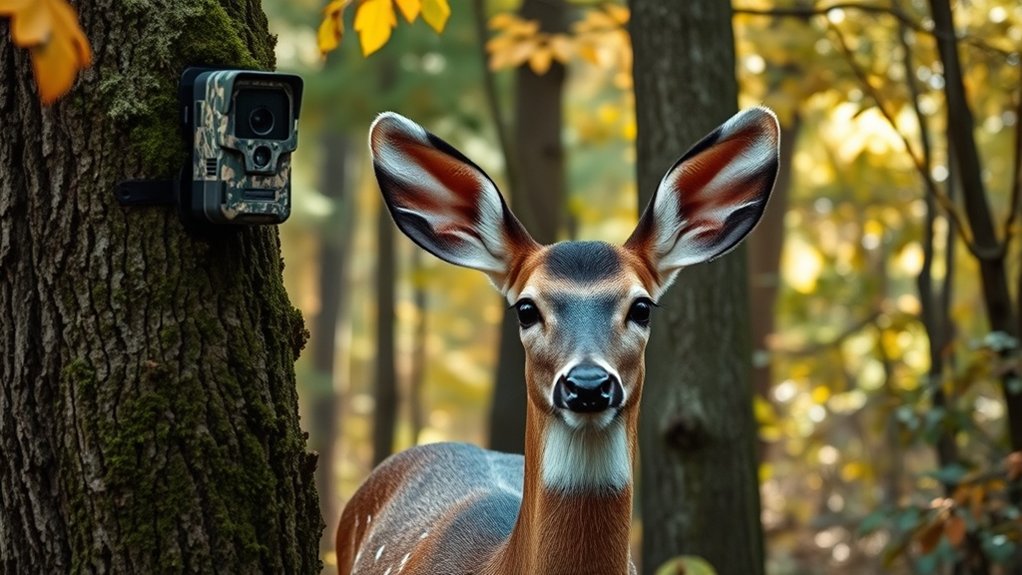
Although trail cameras are designed to be as unobtrusive as possible, deer may still detect their presence through visual, auditory, or olfactory cues. You should understand that these sensory detections can induce varying degrees of deer stress, depending on the camera technology used. For example, older models with visible flash or mechanical sounds might increase deer alertness and stress responses.
In contrast, modern cameras utilize infrared or no-glow technology, minimizing visual disturbance and associated stress. Additionally, subtle sounds from camera mechanisms or human scent during installation can also contribute to deer stress. By evaluating camera specifications and placement, you can reduce sensory cues that might alert deer.
Understanding these factors helps you balance effective monitoring with minimizing unintended impacts on deer behavior and well-being.
How Deer React Behaviorally to Trail Cameras
When deer detect trail cameras, they often exhibit specific behavioral changes that reflect their level of awareness and discomfort. You’ll notice that deer may alter their movement patterns, often increasing vigilance or hesitating near camera zones. These shifts can disrupt normal deer socialization patterns, as individuals may avoid areas where cameras are perceived as potential threats.
Environmental influences, such as habitat density and human activity levels, further modulate these reactions. For example, deer in heavily wooded areas might show less overt behavioral change compared to those in open spaces where cameras are more conspicuous.
How Camera Flashes and Infrared Lights Affect Deer
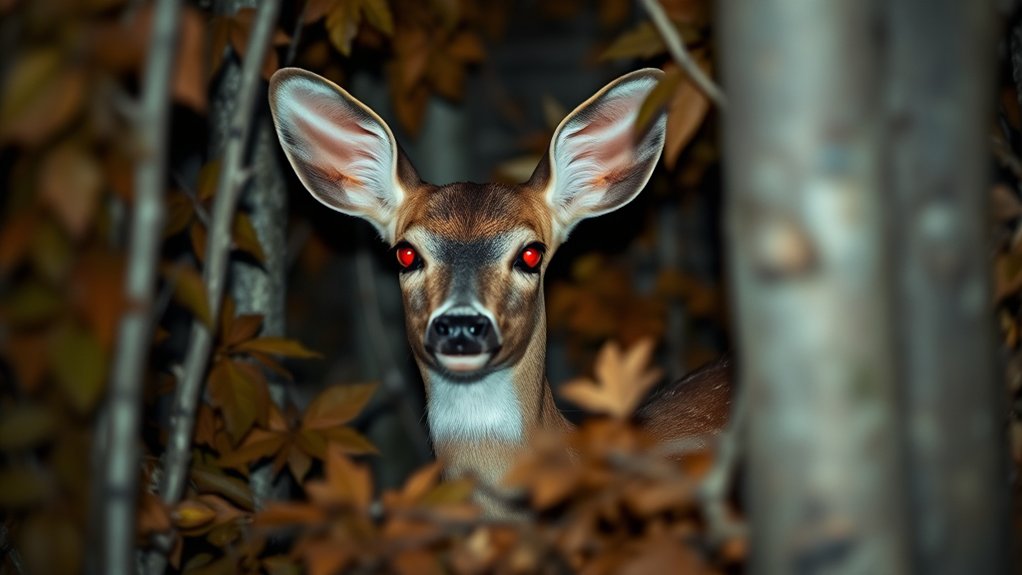
You need to understand how different flash types influence deer behavior, as some flashes emit visible light while others use infrared. Deer have varying sensitivity to infrared wavelengths, which can affect whether they notice the camera’s presence.
These light emissions may cause subtle behavioral changes, such as hesitation or avoidance, impacting the accuracy of your observations.
Impact Of Flash Types
Since different trail camera flash types emit varying light wavelengths and intensities, they can influence deer behavior in distinct ways. You should understand that white flash cameras produce a bright, visible light that can startle deer due to their flash sensitivity, often causing avoidance. In contrast, infrared (IR) flashes emit light outside the visible spectrum, minimizing disturbance.
However, the light duration also matters; longer flash durations may increase the chance of detection and subsequent behavioral changes, while shorter pulses reduce this risk. When selecting a trail camera, consider how flash type and its parameters affect deer.
Balancing image quality with minimizing disturbance requires understanding these factors, as deer may respond differently depending on flash sensitivity and exposure time, influencing the effectiveness of your wildlife monitoring.
Deer Sensitivity To Infrared
Understanding how different flash types influence deer behavior naturally leads to examining their sensitivity to infrared light specifically. Deer infrared sensitivity plays a critical role in how they respond to trail cameras using infrared illumination.
Unlike visible flashes, infrared is mostly invisible to humans but can be perceived by deer due to their eye structure. When you use cameras with infrared or thermal imaging effects, consider these points:
- Deer detect near-infrared wavelengths, potentially causing mild startle responses.
- Thermal imaging uses far-infrared radiation, which deer cannot see but might sense as heat changes.
- The intensity and duration of infrared exposure affect the likelihood of behavioral disruption.
Behavioral Changes From Lights
Although deer often rely on their acute senses to detect predators, sudden flashes or infrared lights from trail cameras can trigger noticeable behavioral changes. You should know that deer eyesight is highly adapted to low-light conditions, making them particularly sensitive to artificial light sources. When a camera flash activates, it introduces an abrupt, intense light that can startle deer, causing them to flee or hesitate in the area.
Similarly, infrared lights, although less intrusive, can still contribute to localized light pollution, subtly altering deer movement patterns and feeding behavior. Over time, repeated exposure may condition deer to avoid camera-monitored zones, reducing the effectiveness of your surveillance.
Understanding these effects helps you select appropriate camera settings and placement, minimizing disturbance while gathering accurate data on deer activity.
Do Trail Camera Sounds Scare Deer?
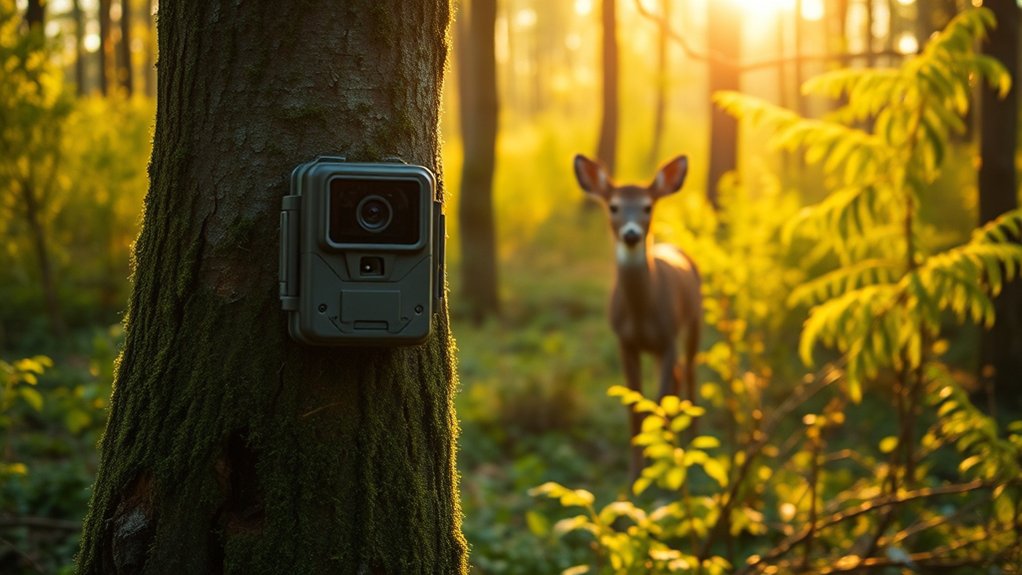
You might wonder if the sounds produced by trail cameras affect deer behavior. Deer have acute hearing and can detect subtle noises, so even minimal camera sounds could trigger alertness or avoidance.
Understanding the specific impact of these noises helps you assess whether your camera setup influences deer presence.
Camera Noise Impact
When trail cameras emit sounds such as shutter clicks or focus beeps, they can influence deer behavior depending on the species’ auditory sensitivity and prior exposure to human-made noises. Understanding the impact of camera sounds on deer reactions is essential for effective monitoring.
- Startle Effect: Sudden noises can cause immediate flight or freeze responses, disrupting natural patterns.
- Habituation: Repeated exposure to consistent sounds may reduce sensitivity, leading to diminished avoidance behaviors.
- Contextual Factors: Environmental noise levels and time of day affect how noticeable camera sounds are to deer.
You’ll find that minimizing camera noise helps reduce disturbance, increasing the reliability of behavioral data collected while ensuring deer remain undisturbed in their habitat.
Deer Sensory Sensitivity
Deer possess highly developed auditory and olfactory senses that play essential roles in detecting potential threats in their environment. When you consider deer sensory sensitivity, it’s important to note that deer olfaction is especially acute, allowing them to detect unfamiliar scents from considerable distances.
Their deer vision, adapted for low-light conditions, primarily detects movement rather than fine details. Trail cameras emit minimal sound, but any sudden or unusual noises can trigger a deer’s alertness due to their sensitive hearing. While most modern cameras operate quietly, you should be aware that mechanical sounds—like shutter clicks or infrared flashes—may briefly startle deer.
Understanding these sensory limitations helps you position and operate trail cameras to minimize disturbance and avoid inadvertently scaring deer away.
Trail Camera Features That Minimize Deer Disturbance
Although trail cameras are invaluable for monitoring wildlife, certain features can greatly reduce their impact on animal behavior. You should consider the following to minimize disturbance to deer:
- Adjustable Camera Sensitivity: Lowering sensitivity prevents false triggers from non-target movements, reducing unnecessary flashes or sounds that might spook deer, facilitating better deer habituation.
- No-Glow or Black-Flash LEDs: Infrared LEDs that emit no visible light are less likely to alert deer, avoiding startle responses linked to visible flashes.
- Silent Operation: Cameras designed to operate quietly minimize noise disturbances, which are critical since deer have acute hearing.
Implementing these features helps maintain natural deer behavior by reducing stress and promoting habituation, thereby yielding more accurate and reliable wildlife data.
Where to Place Your Trail Camera to Avoid Spooking Deer
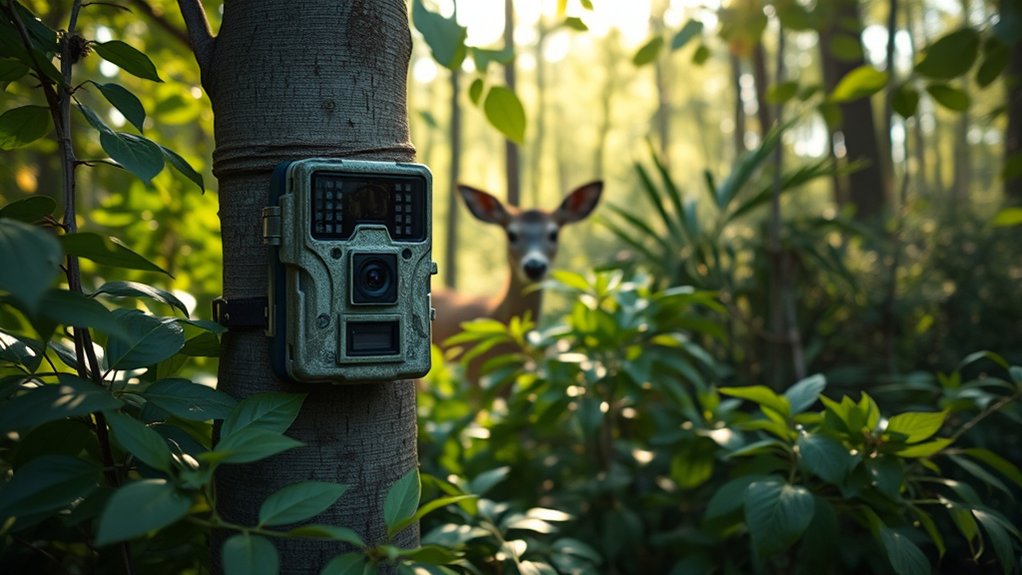
You should position your trail camera at an ideal height of about 3 to 4 feet to align with a deer’s natural line of sight, reducing the chance of detection.
Placing cameras along established game trails, feeding areas, or bedding sites maximizes data collection while minimizing disturbance. Careful placement based on these factors helps maintain natural deer behavior and improves monitoring accuracy.
Ideal Camera Height
Selecting the right height for your trail camera is vital to minimize disturbance and avoid spooking deer. Positioning the camera at an ideal height guarantees natural behavior capture and reduces detection risk. Scientific studies recommend:
- Place the camera 3 to 4 feet above ground level, aligning with the average chest height of deer.
- Use secure mounting techniques, such as adjustable straps or brackets, to maintain camera stability despite environmental conditions.
- Avoid low placements, which can increase the chance of detection and trigger false alarms from smaller animals or vegetation movement.
Maintaining camera stability is important; unstable cameras produce blurred images and may emit noise that unsettles deer. Proper mounting techniques paired with correct height placement will maximize your trail camera’s effectiveness without disturbing wildlife.
Optimal Placement Locations
Three key factors determine the ideal placement locations for trail cameras to minimize deer disturbance: natural travel paths, concealment, and environmental conditions. You should position your camera along frequently used trails or feeding areas to capture authentic behavior without startling deer.
Best camera angles matter; set your camera at a slight downward angle, about 3-4 feet high, to cover a broad field while reducing detection risk. Concealment is vital—use natural cover like branches or leaves to obscure the device’s outline and avoid direct sunlight, which can cause glare and alert deer.
Additionally, effective bait placements should be downwind and out of the camera’s immediate vicinity to prevent deer from associating the camera with the bait, thereby reducing spooking and ensuring more natural footage.
How Deer Habituate to Trail Cameras Over Time
Although deer initially respond cautiously to trail cameras, they gradually habituate to their presence over time. This deer adaptation occurs as animals become more familiar with the stationary objects in their environment.
You’ll notice camera familiarity develops through:
- Repeated exposure: Deer encounter the camera multiple times, reducing novelty and fear responses.
- Lack of negative stimuli: Cameras do not emit threatening sounds or movements, encouraging acceptance.
- Behavioral adjustment: Deer modify their movement patterns, eventually ignoring the device during routine activities.
How to Interpret Deer Behavior on Trail Camera Footage
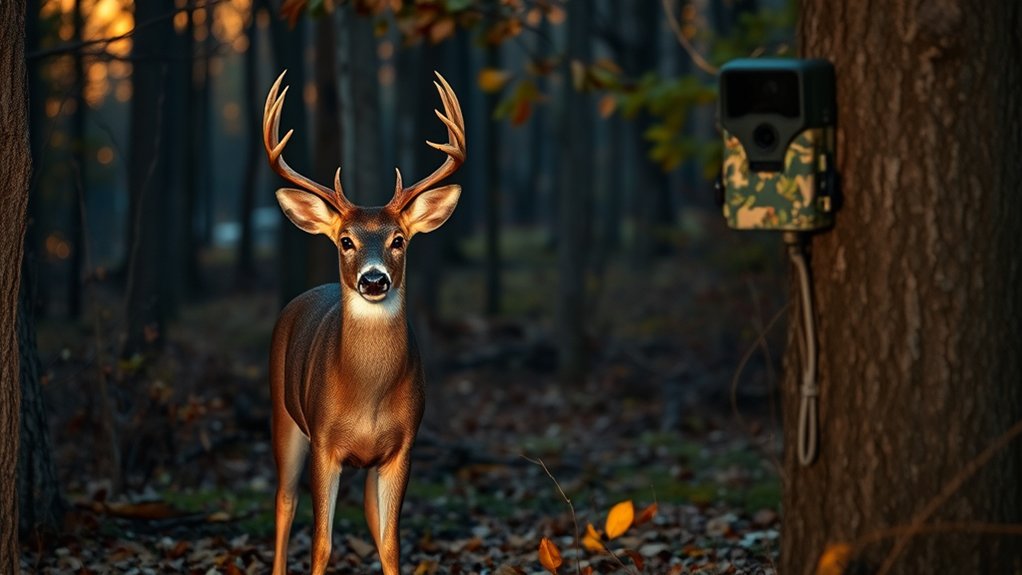
Understanding how deer acclimate to trail cameras lays the groundwork for accurately interpreting their behavior on captured footage. When analyzing your videos, observe whether deer exhibit natural activities such as deer feeding or signs of alertness like sudden stops or head lifts. Consistent feeding behavior near the camera often indicates successful acclimation, while repeated avoidance or agitation might suggest sensitivity to the device.
Consider trail camera placement carefully—cameras positioned along established deer trails or feeding areas tend to capture more typical behaviors. Pay attention to body language: relaxed postures and unhurried movements generally suggest habituation, whereas frequent scanning or sudden flight responses imply disturbance.
Tips for Setting Up Trail Cameras Without Scaring Deer
When setting up trail cameras, minimizing disturbances to deer requires careful attention to placement and handling techniques. You need to optimize camera positioning and practice strict scent control to reduce deer alertness.
Follow these three steps:
- Position cameras at a 45-degree angle to deer trails to avoid direct eye contact and minimize infrared reflection, ensuring natural behavior.
- Use scent-free gloves and wipe down equipment with scent-eliminating sprays before placement, preventing human odor from alerting deer.
- Set cameras during low activity periods, like midday, to reduce the chance of disturbing deer routines and increasing their wariness.
How Trail Camera Features Influence Deer Responses
Since deer possess acute senses, the specific features of trail cameras—such as trigger speed, flash type, and noise level—can greatly affect their behavior and likelihood of detection. You should consider cameras with fast trigger speeds to capture deer movement without delay, reducing the chance of startling animals.
Infrared flash technology, especially no-glow or black flash models, minimizes visible light emissions that might alert deer. Additionally, quieter mechanisms help prevent noise from disturbing their natural patterns. Proper camera camouflage is essential; blending the device with the environment decreases visual detection by deer, promoting natural movement near the camera.
Frequently Asked Questions
Can Trail Cameras Affect Other Wildlife Besides Deer?
Yes, trail cameras can affect other wildlife besides deer. You’ll notice changes in wildlife behavior, especially if your camera placement is intrusive or emits flashes.
This can potentially cause animals to avoid the area or alter their natural activities.
What Is the Best Time of Day to Use Trail Cameras for Deer?
You’ll capture the most accurate morning activity and evening patterns by setting trail cameras during dawn and dusk. Deer are crepuscular, so monitoring these peak movement times enhances data reliability and behavioral insights.
This approach ensures you observe the natural behavior of deer during their most active periods. Adjusting camera settings to these times can significantly improve the quality of your footage.
How Long Do Trail Camera Batteries Typically Last in the Field?
Your trail camera’s battery life typically lasts 3 to 6 months, depending on power sources like lithium batteries or solar panels.
Factors such as temperature, usage frequency, and camera settings also scientifically impact its endurance in the field.
Are There Legal Restrictions on Using Trail Cameras for Hunting?
Yes, you must follow legal requirements and hunting regulations when using trail cameras. These vary by location, so you should research local laws to guarantee compliance.
Avoiding fines or penalties related to unauthorized surveillance or hunting practices is important.
How Do Weather Conditions Impact Trail Camera Performance?
Weather effects are the double-edged sword for your trail camera; seasonal changes influence battery life, sensor sensitivity, and image quality.
You must protect your device against moisture, extreme temperatures, and fog to guarantee peak performance.
Conclusion
So, do trail cameras scare deer? Not really—unless your camera sounds like a rock concert or flashes like a disco ball.
Deer are surprisingly chill, quickly ignoring these devices once they realize no one’s handing out snacks. By choosing low-glash, silent models and placing them thoughtfully, you’ll get natural behavior on film without turning your woods into a wildlife haunted house.
Science says: less flash, less fuss, more deer drama captured. In conclusion, well-placed and quiet trail cameras do not scare deer and help you observe their natural habits.