You can put trail cameras on public land, but you must follow specific rules and often get permits first. Different public lands—like national forests, state parks, and wildlife management areas—have varying regulations.
It’s important to understand these rules before setting up your camera. You should place cameras carefully to avoid disturbing wildlife and respect privacy laws to prevent unauthorized recording of people.
Proper setup and responsible use guarantee ethical, legal monitoring. If you want to learn how to select spots, handle permits, and maintain your cameras, there’s more to understand.
Taking the time to follow guidelines ensures a positive experience with trail cameras on public land.
Key Takeaways
- Trail camera use on public land varies by land type, often requiring permits, especially in National Forests. Some State Parks prohibit trail cameras or require written permission for installation.
- Cameras must be placed responsibly to avoid habitat damage, trail obstruction, and high visitor areas. Privacy laws restrict capturing images of people, necessitating careful camera positioning and compliance with local regulations.
- Always check and follow specific rules and obtain necessary permits before placing trail cameras on public land.
What Are Trail Cameras and Why Use Them on Public Land?
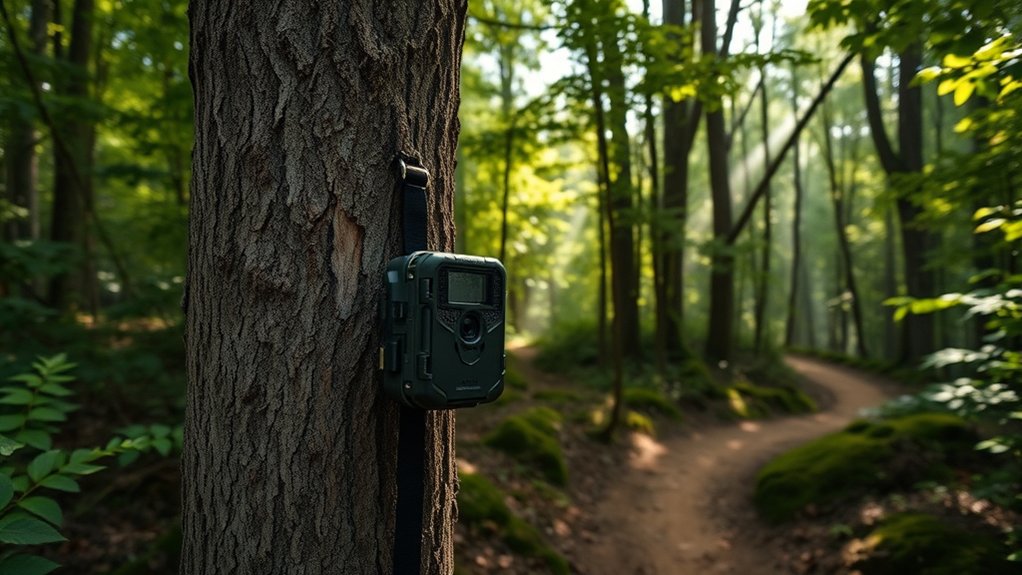
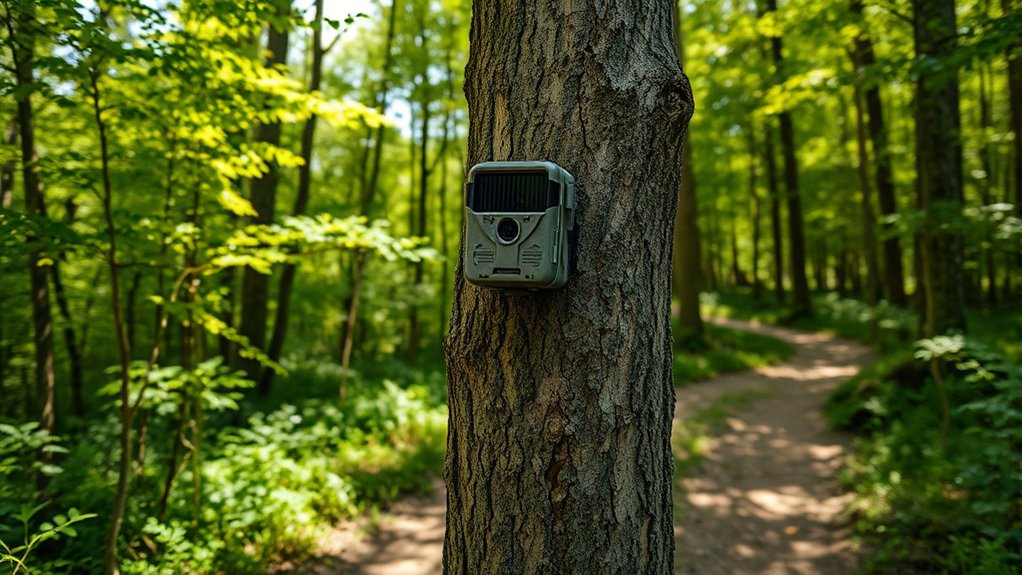
Trail cameras are compact, motion-activated devices designed to capture images or videos of wildlife with minimal human interference. When you use these devices on public land, you gain several trail camera benefits, such as non-intrusive monitoring and data collection on animal behavior, population, and movement patterns.
Key trail camera features include infrared sensors for low-light detection, rapid trigger speeds, and weather-resistant housing, ensuring reliable performance in diverse outdoor environments. By deploying trail cameras, you efficiently gather valuable ecological information without disturbing natural habitats.
This method supports wildlife research, hunting management, and conservation efforts on public land by providing accurate, real-time observations. Understanding these benefits and features helps you make informed decisions about responsible trail camera use in public spaces.
What Types of Public Land Allow Trail Cameras?
You can place trail cameras on certain types of public land, but regulations vary widely. National forests often permit them with specific restrictions, while state parks may have more stringent policies or prohibit their use entirely.
Wildlife management areas typically allow trail cameras, but you’ll need to check local rules before setting one up.
National Forest Regulations
Although public lands vary widely in their regulations, national forests generally permit the use of trail cameras under specific conditions. You’ll need to adhere strictly to national forest guidelines, which often require you to obtain a permit before placing any camera. These guidelines emphasize responsible camera placement to minimize environmental impact and avoid disturbing wildlife or other visitors.
Typically, cameras must be positioned on trees or posts without damaging the natural habitat and should not obstruct trails or public access. Additionally, you must check for any seasonal restrictions or special use areas where cameras might be prohibited. By following these precise rules on camera placement and obtaining necessary permissions, you can legally and ethically use trail cameras in national forests.
State Park Policies
National forests often allow trail cameras under regulated conditions, but state parks have their own distinct policies that you need to understand. State park regulations vary widely by location, often restricting camera placement to protect natural resources and visitor privacy.
Before installing a camera, verify specific park rules. Typically, you must:
- Obtain written permission from park authorities.
- Avoid placing cameras on trees or structures that could be damaged.
- Refrain from using cameras in areas with high visitor traffic.
- Guarantee cameras do not interfere with park wildlife management programs.
Following these guidelines guarantees compliance and minimizes ecological disturbance. Always check the state park’s official website or contact park management directly to confirm camera placement policies and any permit requirements before proceeding.
Wildlife Management Areas
When considering public lands for trail camera placement, Wildlife Management Areas (WMAs) often provide opportunities under specific regulations designed to balance recreational use with conservation goals. You’ll need to review the WMA’s rules carefully, as many require permits for camera placement to guarantee minimal disturbance to wildlife behavior.
Strategic camera placement is essential; positioning cameras near natural travel corridors or feeding sites helps capture accurate behavioral data without disrupting the animals. Keep in mind, some WMAs restrict camera use during sensitive periods like breeding or migration.
Getting Permission to Use Trail Cameras on Public Land
Before setting up trail cameras on public land, you need to obtain proper permission from the managing authorities. Understanding permission requirements is essential to guarantee compliance with regulations and ethical considerations. Typically, you must:
- Identify the specific agency responsible for the land (e.g., National Forest Service, state wildlife department).
- Submit a formal request outlining your purpose, camera locations, and duration of use.
- Adhere to guidelines that protect wildlife and minimize habitat disturbance.
- Respect any restrictions on camera types, placement, and data usage.
Securing permission helps maintain ecological balance and fosters responsible wildlife monitoring. By following these steps, you contribute to scientific research and conservation efforts while avoiding unauthorized activities that could harm ecosystems or violate policies.
Always verify current regulations before deploying trail cameras on public land.
Legal Restrictions and Privacy Rules for Trail Cameras
You need to understand the legal restrictions governing trail cameras on public land, which vary by jurisdiction and often include specific rules about placement and usage. Privacy laws protect individuals from unauthorized recording, so you must avoid capturing images of people without consent.
Being aware of these regulations helps guarantee your trail camera use remains lawful and respectful of others’ privacy.
Public Land Camera Laws
Although trail cameras offer valuable tools for wildlife observation and research, their use on public land is governed by specific legal restrictions and privacy rules that you must understand. Adhering to public land ethics and proper camera placement is crucial to comply with regulations and respect natural habitats.
When deploying cameras, consider these key points:
- Obtain necessary permits from land management agencies before installation.
- Place cameras only in areas designated for such use to avoid trespassing or disturbing sensitive zones.
- Avoid interfering with wildlife behavior or habitat integrity to uphold ethical standards.
- Adhere to state and federal laws regarding equipment and data collection on public lands.
Following these guidelines guarantees your trail camera use remains lawful and ethically responsible.
Privacy Considerations and Limits
Respecting privacy concerns plays a significant role when setting up trail cameras on public land. You must recognize ethical considerations that govern the use of surveillance devices in natural areas, especially where the public expects a reasonable degree of privacy. Legal restrictions often prohibit recording in locations where individuals have a justified privacy expectation, such as near homes, campsites, or trailheads.
To comply, place cameras strategically to monitor wildlife without capturing identifiable images of people. Additionally, avoid audio recording, which typically has stricter regulations. Understanding and adhering to these privacy limits helps prevent legal violations and maintains public trust.
Always research specific jurisdictional rules, as privacy laws vary by state and locality, ensuring your trail camera use respects both ethical and legal standards.
Choosing the Best Spots for Trail Cameras on Public Land
When selecting locations for trail cameras on public land, understanding animal behavior and habitat preferences is essential. Effective trail camera placement hinges on strategic public land scouting to maximize wildlife detection while minimizing disturbance.
Focus on these key factors:
- Animal travel corridors: Identify well-used paths like game trails or water sources where animals frequently pass.
- Habitat edges: Target boundary zones between different vegetation types which attract diverse species.
- Feeding and bedding areas: Cameras near natural food sources or sheltered resting spots increase capture rates.
- Terrain features: Elevation changes or natural funnels concentrate animal movement, improving camera efficiency.
Selecting the Right Equipment for Public Land Trail Cameras
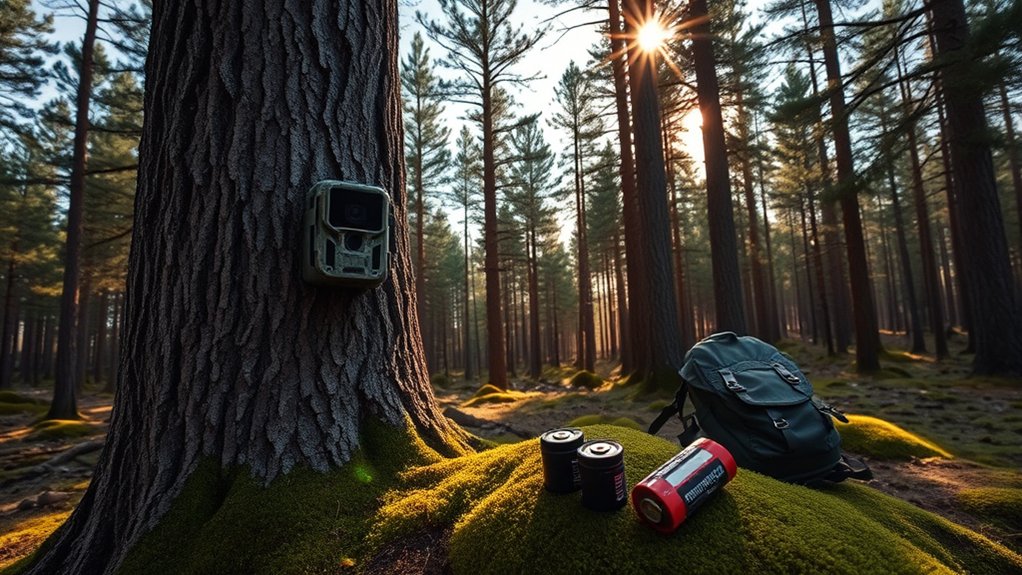
After pinpointing ideal locations for your trail cameras on public land, selecting the appropriate equipment becomes the next step to guarantee reliable data collection. You should evaluate various camera types, such as infrared, no-glow, and cellular models, based on your monitoring objectives. Infrared cameras provide clear night images without disturbing wildlife, while cellular types offer real-time data access but require network coverage.
Consider essential equipment features like trigger speed, detection range, image resolution, and battery life to maximize performance. Weather resistance and camouflage design are critical for durability and concealment in public land environments. Choosing equipment tailored to your specific field conditions secures effective monitoring, minimizes maintenance frequency, and enhances your ability to capture accurate wildlife activity data consistently.
Setting Up Trail Cameras Without Disturbing Wildlife
Although setting up trail cameras on public land can be straightforward, you must carefully position them to avoid disturbing wildlife behavior. Proper camera placement is essential to capture natural activity without causing stress or altering animal patterns.
Here are key considerations:
- Choose locations with minimal human scent by wearing gloves and minimizing direct contact.
- Avoid placing cameras on frequently used wildlife paths to prevent interference.
- Position cameras at appropriate heights (2-3 feet) aligned with target species’ typical movement.
- Use natural vegetation to camouflage cameras, reducing visibility and minimizing curiosity or avoidance.
Checking and Maintaining Trail Cameras on Public Land
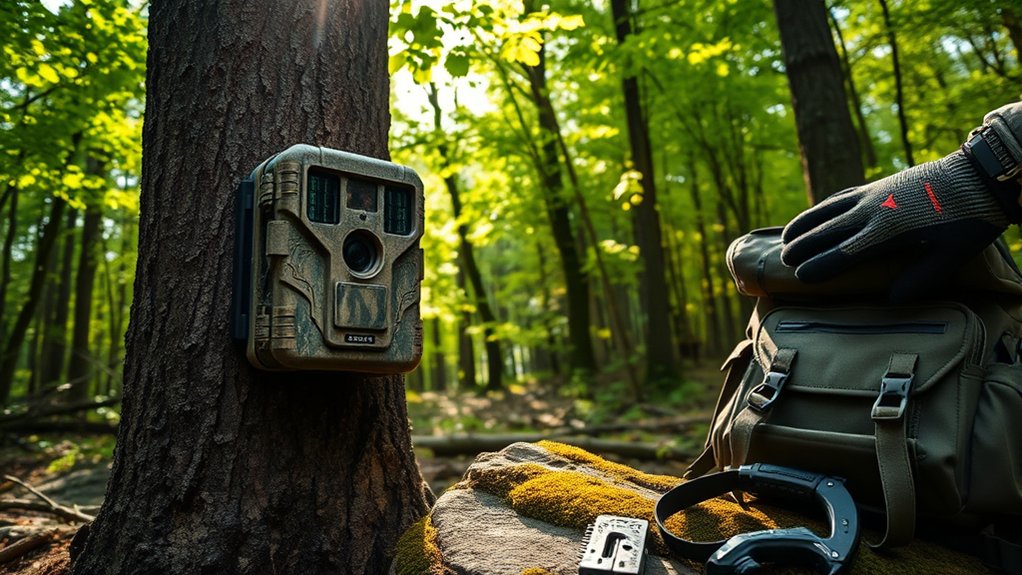
When checking and maintaining trail cameras on public land, you must first ascertain you have the necessary legal access permits to avoid violations.
Regularly inspect your cameras for battery life, lens cleanliness, and proper mounting to guarantee accurate data collection. Following these best maintenance practices helps preserve both your equipment and the integrity of the environment.
Legal Access Requirements
Before placing or retrieving trail cameras on public land, you must understand and comply with specific legal access requirements designed to protect wildlife and public resources. Fulfilling your legal obligations guarantees you respect access rights and avoid penalties.
Key considerations include:
- Obtain necessary permits or permissions from relevant land management agencies.
- Adhere strictly to designated access routes and times to minimize disturbance.
- Avoid placing cameras in restricted or sensitive ecological zones.
- Regularly check updated regulations, as legal access rights can change.
Best Camera Maintenance Practices
After securing the proper permissions and understanding access requirements, maintaining your trail cameras effectively guarantees reliable data collection and prolongs equipment lifespan. Regularly inspect your cameras for physical damage or moisture intrusion, especially after adverse weather. Prioritize battery care by using high-quality batteries and replacing them before depletion to prevent data loss.
Remove batteries during extended storage periods to avoid corrosion. Ascertain camera storage is dry and temperature-controlled to preserve electronic components. Clean lenses gently with a microfiber cloth to maintain image clarity.
Additionally, verify memory card functionality and format cards periodically to prevent data corruption. By following these precise maintenance steps, you’ll optimize your trail cameras’ performance on public land, ensuring consistent, accurate wildlife monitoring while respecting environmental conditions and legal constraints.
Using Trail Camera Photos Responsibly and Legally
Although trail cameras provide valuable insights into wildlife behavior, you must use the photos responsibly and legally to respect privacy and comply with regulations. Ethical considerations are paramount to guarantee your trail camera usage aligns with conservation goals and public trust.
Responsible usage involves limiting camera placement to avoid capturing images of people without consent, securing data storage to protect sensitive information, and using images solely for scientific, educational, or authorized recreational purposes.
Additionally, it is essential to abide by all federal, state, and local laws governing public land surveillance.
Understanding Privacy Laws and Ethics for Trail Cameras
Respecting privacy and adhering to ethical standards go hand in hand when using trail cameras, especially on public land. You need to balance your interest in wildlife monitoring with ethical considerations and privacy concerns to avoid legal issues and maintain public trust.
Understanding local laws and regulations is vital, as they vary widely and often restrict camera placement near private property or public pathways.
| Ethical Considerations | Privacy Concerns | Legal Implications |
|---|---|---|
| Avoid capturing humans | Inform public when possible | Comply with state laws |
| Limit data retention | Do not intrude on private spaces | Obtain necessary permits |
| Use cameras for research | Respect cultural sensitivities | Report unauthorized captures |
Frequently Asked Questions
How Do Trail Cameras Affect Wildlife Behavior on Public Land?
You might notice wildlife disturbance initially, but many animals develop habituation to trail cameras over time. This reduces behavioral changes, ensuring your monitoring minimally impacts natural activities.
At the same time, trail cameras provide accurate data on public land ecosystems. This balance helps in effective wildlife management and conservation efforts.
Can Trail Cameras Capture Images of Protected or Endangered Species?
You can capture images of endangered species with trail cameras, but you must consider ethical considerations like minimizing disturbance and respecting privacy.
These precise snapshots help monitor populations while protecting vulnerable wildlife effectively and responsibly.
What Is the Typical Battery Life of Trail Cameras in Outdoor Conditions?
You’ll typically get 3 to 12 months of battery performance from trail cameras under outdoor conditions, depending on usage, temperature, and settings.
Cold weather and frequent triggers can reduce battery life considerably.
How Can I Prevent Theft or Vandalism of Trail Cameras on Public Land?
You can prevent theft or vandalism by enhancing camera security with lockboxes, camouflage, and tamper-proof screws.
Using GPS tracking and motion alerts further supports theft prevention, ensuring your trail cameras remain protected in remote public areas.
Are There Smartphone Apps to Monitor Trail Camera Footage Remotely?
Yes, you can use smartphone-compatible apps for remote monitoring of trail camera footage. These apps enable real-time access, alerts, and data management, enhancing surveillance efficiency through seamless connectivity and user-friendly interfaces.
They allow you to view images and videos directly on your phone without needing to retrieve the memory card physically. Many apps also offer customizable notifications for motion detection or specific time intervals, keeping you updated instantly.
Conclusion
Just like a scientist carefully sets up experiments to observe nature without interference, you need to place trail cameras on public land thoughtfully and legally.
Remember, one study found that improperly placed cameras can disturb wildlife behavior by up to 30%. By securing permissions, respecting privacy, and maintaining your equipment, you’ll gather valuable data while protecting both the environment and public trust.
Trail cameras, when used responsibly, become your eyes in the wild without leaving a footprint. Therefore, you can put trail cameras on public land as long as you follow the rules and guidelines established for their use.