The AR-15 stands for “ArmaLite Rifle, Model 15,” named after its original manufacturer, ArmaLite, and its place in their product line. It’s a lightweight, modular, semi-automatic rifle designed by Eugene Stoner in the late 1950s for versatility and ease of use.
Contrary to popular belief, AR doesn’t mean “assault rifle.” Understanding this name clarifies many misconceptions and opens up the context of its design, purpose, and cultural impact.
Key Takeaways
- AR-15 stands for ArmaLite Rifle, model number 15, named after its original manufacturer ArmaLite.
- The “AR” does not mean “assault rifle,” a common misconception.
- It is a lightweight, magazine-fed, gas-operated semi-automatic rifle.
- Designed by Eugene Stoner in the late 1950s for versatility and modularity.
- Civilian AR-15s are semi-automatic only, while military versions have select-fire capability.
What Does AR-15 Stand For?
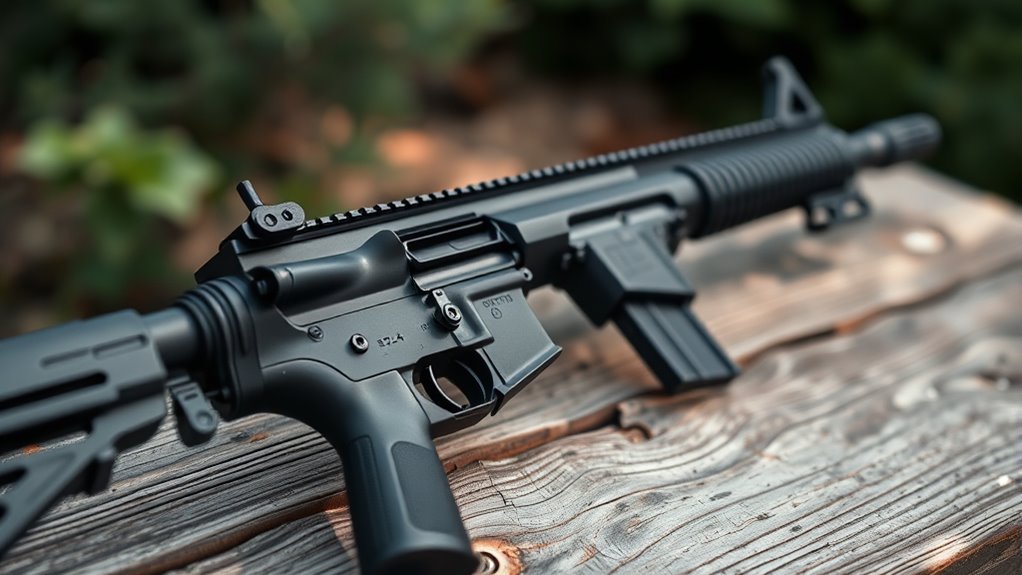
What exactly does AR-15 stand for? The term “AR” in AR-15 stands for “ArmaLite Rifle,” referencing the original manufacturer, ArmaLite, which developed this firearm design. The number “15” designates the model number within ArmaLite’s product line.
It’s important not to confuse “AR” with “assault rifle”—a common two word discussion idea that often leads to misconceptions. The AR-15 is a lightweight, magazine-fed, gas-operated semi-automatic rifle, distinct from unrelated topic firearms. Understanding this abbreviation helps clarify technical discussions and avoids conflating terminology with unrelated subjects.
Who Created the AR-15 and Why?
You should know that the AR-15 was designed by Eugene Stoner in the late 1950s to create a lightweight, reliable infantry rifle. Its purpose was to improve upon existing military firearms by incorporating innovative materials and a modular design.
Understanding its origins helps clarify why the AR-15 remains influential in both military and civilian markets today.
Origins Of The AR-15
How did the AR-15 come into existence, and who was behind its creation? The origins of manufacturing the AR-15 trace back to the early rifle development phase in the mid-20th century. It was designed to meet the need for a lightweight, reliable, and accurate infantry weapon.
The AR-15’s production began after extensive research on modern materials and gas-operated firearm mechanisms. Its development marked a shift from traditional rifles to innovative designs emphasizing modularity and ease of maintenance.
You’ll find that the AR-15’s manufacturing process integrated advanced aluminum alloys and synthetic components, setting it apart from earlier models. Understanding these origins provides insight into how this rifle became a foundational firearm in both military and civilian sectors.
Designer And Purpose
The AR-15 was designed by Eugene Stoner in the late 1950s as a response to the U.S. military’s demand for a lightweight, high-velocity infantry rifle. As the primary designer, Stoner aimed to create a firearm that combined modularity, ease of use, and reliability. The rifle’s purpose was to replace heavier, less efficient weapons, enhancing soldier mobility and firepower.
Understanding the naming origins is essential: “AR” stands for ArmaLite Rifle, the company that developed the prototype, not “assault rifle” as commonly misconstrued. This distinction clarifies the rifle’s initial intent as a civilian and military design.
When you consider the designer and purpose, you see how innovation and functional requirements drove the AR-15’s development, making it a significant milestone in modern firearm technology.
How the AR-15 Got Its Name
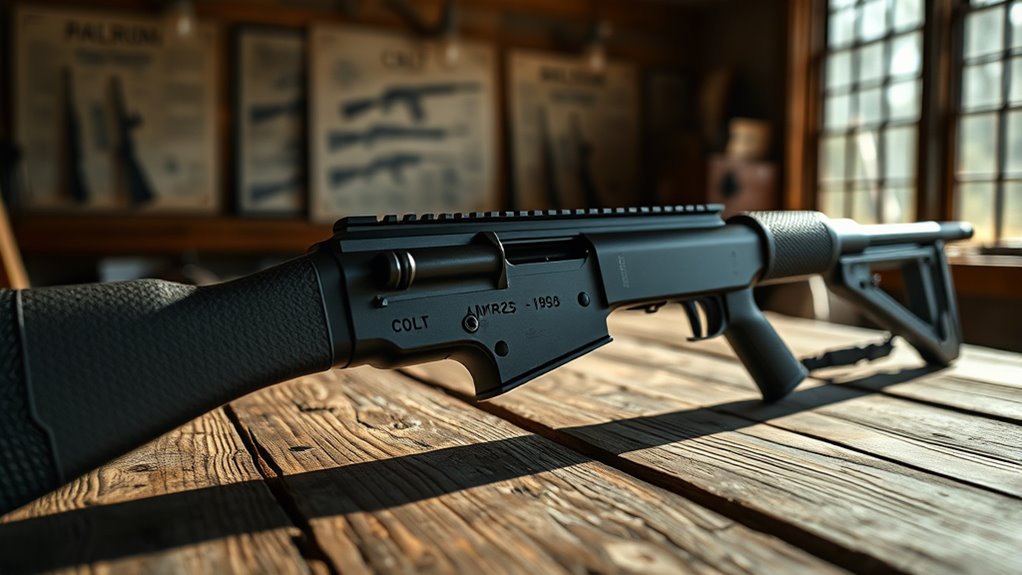
One essential aspect to understand about the AR-15 is the origin of its name, which often causes confusion. Contrary to common two word discussion ideas like “Assault Rifle,” the “AR” stands for “ArmaLite Rifle,” named after the company that designed it in the 1950s. The number “15” denotes the model number in the ArmaLite series.
This technical naming convention clears up many naming myths surrounding the firearm.
| Term | Meaning | Year Introduced |
|---|---|---|
| AR | ArmaLite Rifle | 1956 |
| 15 | Model Number | 1959 |
| ArmaLite | Company Name | 1954 |
| Model 1-14 | Previous Versions | 1950s |
This precise naming reflects its design lineage, not functionality or use.
Common Misconceptions About the AR-15 Name
You might assume “AR” stands for “assault rifle,” but it actually represents “ArmaLite Rifle,” the company that designed it.
Many confuse the name with military designations, though the AR-15 is a civilian semi-automatic firearm distinct from military models.
Understanding these differences clears up common errors about the rifle’s name and use.
Meaning Behind “AR”
How exactly did the “AR” in AR-15 come about? Contrary to popular belief, “AR” doesn’t mean “assault rifle” or “automatic rifle.” It stands for “ArmaLite Rifle,” referencing the company that designed the firearm in the 1950s. Understanding this clears up many discussion ideas1 and discussion ideas2 about the rifle’s naming.
To clarify:
- “AR” = ArmaLite Rifle, not a type of operation or firing mode
- The number “15” indicates the model number in ArmaLite’s product line
- ArmaLite was a small arms engineering company, not a descriptor
Knowing this technical origin helps you avoid common misconceptions and better engage in informed discussions about the AR-15’s designation and design history.
Common Naming Errors
Why do so many people mistakenly believe that “AR” in AR-15 stands for “assault rifle” or “automatic rifle”? The confusion arises from two-word ideas linking “AR” to unrelated topics. In reality, “AR” stands for “Armalite Rifle,” referencing the original manufacturer, Armalite. This technical detail is often overshadowed by assumptions tied to firearm classifications.
You might encounter these misconceptions because the term “AR” is frequently misinterpreted through the lens of automatic or military-style weapons, despite the AR-15 being a semi-automatic civilian rifle. Understanding this helps you separate the firearm’s actual nomenclature from common but inaccurate associations.
Recognizing the distinction between the correct origin and unrelated topics prevents the spread of misinformation surrounding the AR-15’s name.
Military Vs. Civilian Use
Understanding that “AR” stands for “Armalite Rifle” rather than “assault rifle” clears up some confusion, but misconceptions about the AR-15’s role persist, especially regarding its military and civilian versions.
You should know the military AR-15 variant is select-fire capable, allowing both semi-automatic and fully automatic modes. Civilian AR-15s, however, are semi-automatic only, adhering to strict legal regulations. This distinction is critical when discussing usage, ownership, and hunting ethics.
Consider these key points:
- Military AR-15s prioritize combat adaptability with select-fire modes.
- Civilian AR-15s comply with legal regulations limiting firing capabilities.
- Hunting ethics often favor semi-automatic rifles for precision and control.
Understanding these nuances helps you navigate debates around the AR-15’s function and legal status accurately.
How the AR-15 Differs From Other Firearms
What sets the AR-15 apart from other firearms is its modular design and lightweight construction. The AR 15 naming reflects its origin as ArmaLite’s 15th design, which has influenced its firearm branding. Unlike traditional rifles, the AR-15 allows you to customize components such as barrels, stocks, and optics easily, making it highly adaptable.
Its direct impingement gas system reduces recoil and improves accuracy. Here’s a comparative overview:
| Feature | AR-15 |
|---|---|
| Weight | Approximately 6.5 lbs |
| Modularity | Highly customizable |
| Operating System | Direct impingement gas |
| Branding Focus | Versatile civilian use |
This modularity and branding make the AR-15 distinct from fixed-design firearms.
Why the AR-15 Became Popular in the U.S
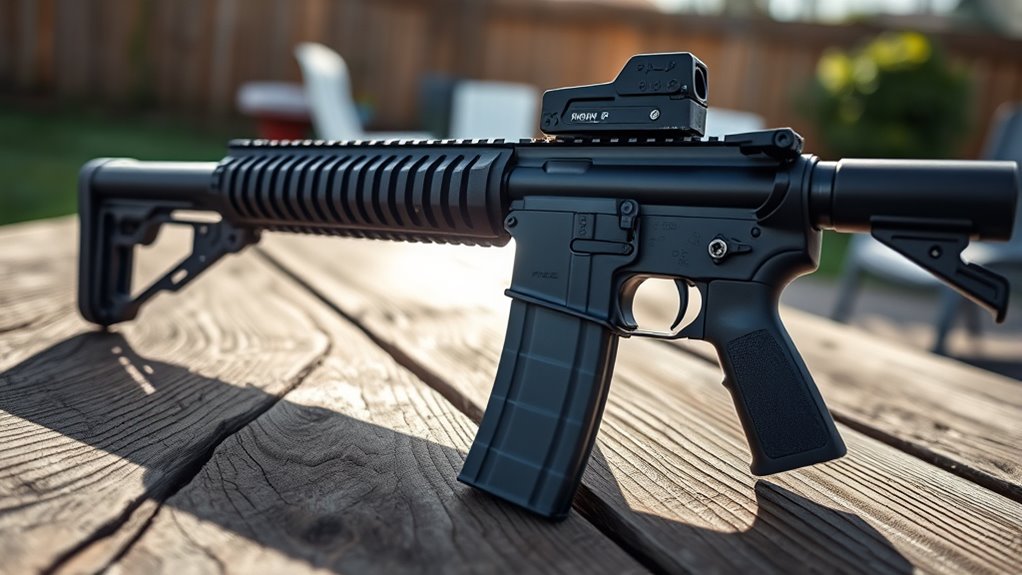
The AR-15’s modularity and lightweight design aren’t just technical features—they’ve played a key role in its widespread adoption across the U.S. When you consider why the AR-15 became popular, you’ll notice it’s not just about performance; it’s also about versatility and ease of customization. You can tailor the rifle for various purposes without extensive gunsmithing.
This flexibility often sparks two word discussion ideas like “custom configurations” and “user adaptability,” separating it from unrelated topics in firearm debates.
Key factors include:
- Modular components allow quick swaps and upgrades.
- Lightweight materials enhance maneuverability.
- Broad aftermarket support offers endless accessories.
These aspects make the AR-15 appealing for self-defense, sport shooting, and hunting, contributing to its dominant presence in American firearm culture.
Why the AR-15 Name Matters in Gun Culture
Why does the AR-15 name hold such significance in gun culture? The designation “AR-15” is more than a label; it embodies a complex naming culture that influences perception and identity among firearm enthusiasts. You need to understand that “AR” stands for “ArmaLite Rifle,” not “assault rifle,” a common branding myth that distorts the rifle’s intended purpose.
This precise nomenclature affects how the firearm is marketed, discussed, and regulated. By recognizing the distinction, you gain clearer insight into debates surrounding the AR-15, separating technical facts from misconceptions. The name also serves as a symbol within communities, representing technological innovation and personal freedom.
Ultimately, the AR-15’s name anchors its cultural relevance and shapes ongoing discussions about firearms in society.
Frequently Asked Questions
What Are the Legal Restrictions on Owning an AR-15?
You’ll face varying legal restrictions depending on your state; background checks, waiting periods, and magazine capacity limits are common.
Two word discussion ideas like “state laws” and “federal regulations” help clarify ownership requirements precisely.
How Do You Safely Maintain and Clean an AR-15?
You should guarantee cleaning safety by unloading the AR-15 and working in a well-ventilated area. Use proper maintenance tips: disassemble correctly, clean the barrel, bolt carrier, and lubricate moving parts to prevent malfunctions.
What Accessories Are Compatible With the AR-15?
Over 80% of AR-15 accessories fit universally, but always verify AR 15 compatibility and accessory legality in your area.
Common options include optic sights, grips, stocks, and rail systems, enhancing customization and performance precisely.
What Are the Common Calibers Available for AR-15 Rifles?
You’ll find a caliber variety for AR-15s including .223 Remington, 5.56 NATO, and .300 Blackout, ensuring broad accessory compatibility.
This versatility lets you customize performance and attachments for specific shooting needs efficiently.
How Does the AR-15 Perform in Hunting Versus Sport Shooting?
You’ll find the AR-15 excels in hunting ergonomics, offering customizable features for comfort and precision.
Its sport efficiency shines through rapid follow-up shots and modularity, making it versatile for both competitive shooting and field applications.
Conclusion
Now that you know what AR-15 stands for, you see how design, designation, and development intertwine. You understand how the name reflects its origin, purpose, and legacy. You recognize how it differs from other firearms and why it resonates in American culture.
The AR-15 isn’t just a label; it’s a symbol of innovation, function, and controversy. Knowing its name means grasping the firearm’s technical identity and cultural significance. In conclusion, understanding what AR-15 stands for is key to appreciating its role in both history and modern discussions.