You might think the AR-15 is automatic, but it’s actually a semi-automatic firearm.
This means it fires one round each time you pull the trigger, unlike automatic guns that keep firing as long as the trigger is held.
Its design cycles a new round automatically, but requires a separate trigger pull for every shot.
The confusion often comes from its military-style appearance, but understanding these distinctions helps clarify its function and legal status.
There’s more to uncover about how it works and ownership rules.
Key Takeaways
- The AR-15 is a semi-automatic firearm, not automatic, firing one round per trigger pull.
- Automatic firearms fire continuously while the trigger is held, unlike the AR-15’s single-shot mechanism.
- The AR-15’s appearance resembles military rifles like the fully automatic M16, causing common confusion.
- Legal AR-15s do not have fully automatic capabilities without special licensing under the National Firearms Act.
- Understanding the AR-15’s semi-automatic function clarifies its operational and legal classification.
What Does “Automatic” Really Mean?
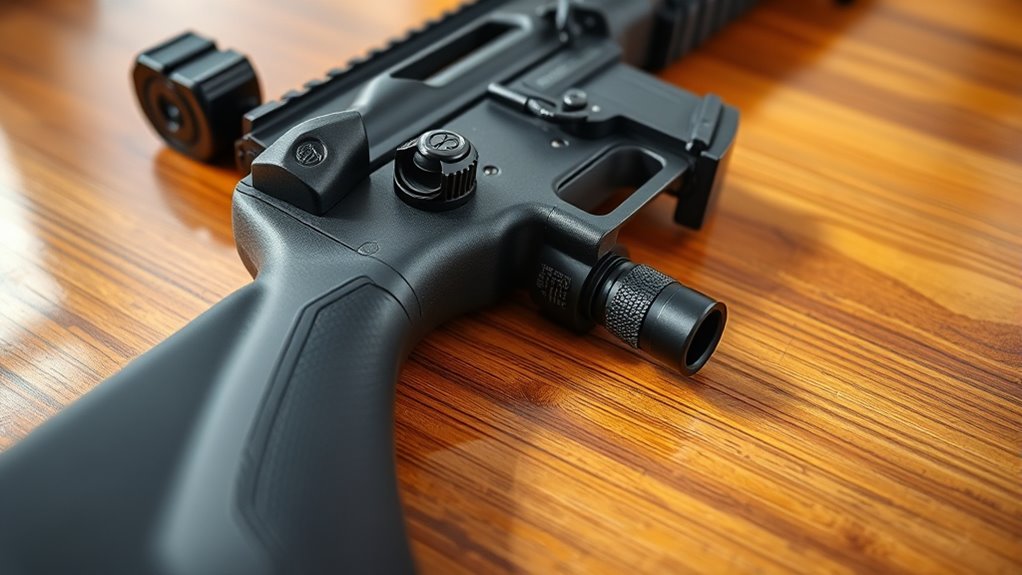
Although the term “automatic” is often used loosely, it specifically refers to firearms that continue to fire rounds as long as the trigger is held down, without the need for repeated trigger pulls. In firearm terminology, the automatic definition distinguishes these weapons from semi-automatic firearms, which fire one round per trigger pull. Understanding this distinction is essential when discussing firearm capabilities and classifications.
Automatic firearms utilize a mechanism that cycles the action and chambers the next round automatically, enabling continuous fire. This definition is standardized in legal and technical contexts to avoid confusion. When you encounter the term “automatic” related to firearms, remember it implies uninterrupted firing capability controlled solely by the trigger’s position, differentiating it clearly from other firing modes in the broader spectrum of firearm terminology.
Is the AR-15 an Automatic Rifle?
Understanding what defines an automatic firearm helps clarify common misconceptions about the AR-15. The AR-15 is not an automatic rifle; it is a semi-automatic firearm. This distinction is essential because automatic rifles continuously fire rounds with a single trigger pull, whereas semi-automatic weapons require one trigger pull per shot.
Many people experience semi-automatic confusion, mistakenly believing the AR-15 fires automatically due to its appearance and name. This confusion fuels rifle misconceptions that can lead to inaccurate conclusions about the firearm’s function and legal status.
When evaluating the AR-15, you must recognize it operates by cycling one round per trigger pull, not in continuous automatic mode. This precision helps separate fact from fiction in discussions about the AR-15’s firing capabilities.
How the AR-15’s Semi-Automatic Firing Works
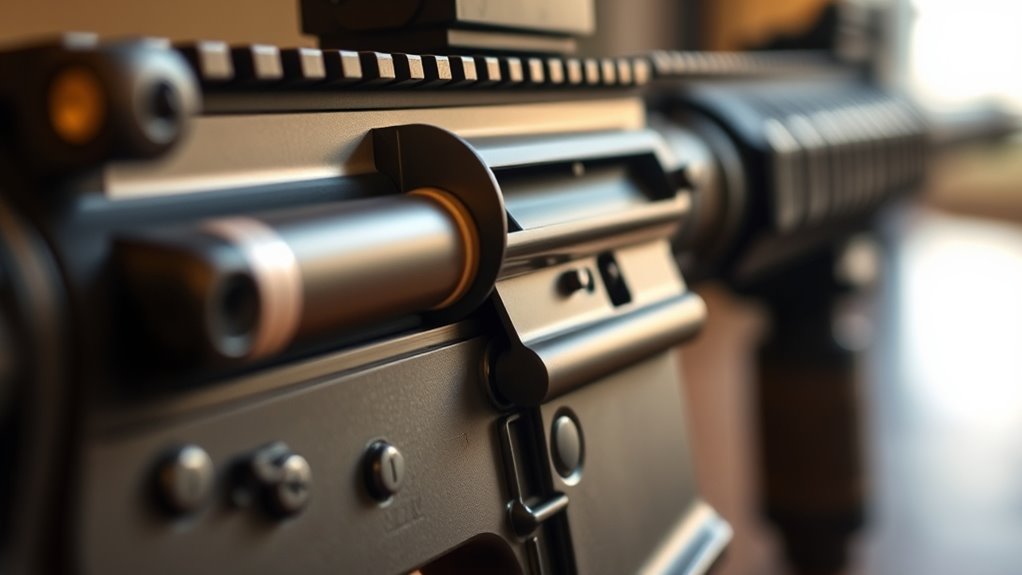
One key aspect of the AR-15’s semi-automatic firing mechanism is its ability to cycle a single round each time you pull the trigger. When you engage the trigger operation, the hammer strikes the firing pin, igniting the cartridge. The expanding gases propel the bullet forward while simultaneously driving the bolt carrier rearward.
This rearward motion ejects the spent casing and compresses the buffer spring. The buffer spring then pushes the bolt carrier forward, chambering a new round from the magazine. This semi automatic mechanism guarantees that the firearm does not fire continuously with a single trigger pull, requiring you to release and pull the trigger again for each shot.
The design allows for rapid, controlled firing while maintaining precision and safety inherent to semi-automatic operation.
Why People Confuse the AR-15 With Automatic Guns
Why do so many people mistake the AR-15 for an automatic weapon? The confusion largely stems from its appearance and association with assault rifles, which often are fully automatic or select-fire.
In gun terminology, an assault rifle is defined by its capability for fully automatic fire, a feature the civilian AR-15 lacks. However, the AR-15’s design closely resembles military rifles like the M16, which are capable of automatic fire, leading to misconceptions.
Additionally, media portrayal frequently blurs these distinctions, using “AR-15” and “assault rifle” interchangeably. Without familiarity with precise gun terminology, you might assume the AR-15 functions automatically.
Understanding that the AR-15 is a semi-automatic rifle, not an assault rifle, clarifies the key difference and reduces confusion.
Key Facts About AR-15 Ownership and Legal Use
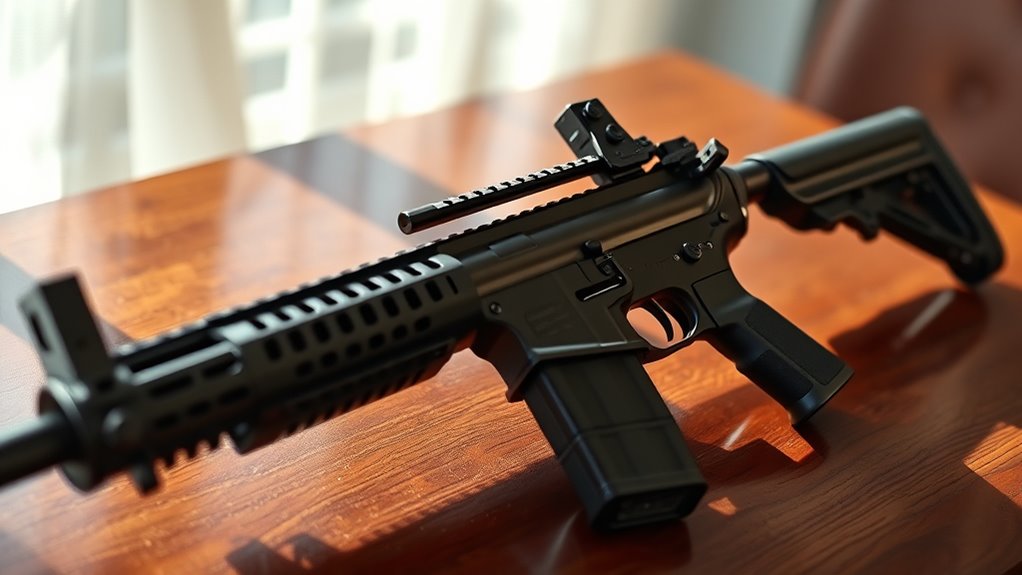
Although AR-15 ownership is regulated differently across states, federal law sets baseline requirements including background checks and age restrictions. When you consider acquiring an AR-15, you must comply with these gun regulations to legally possess the firearm. Ownership responsibilities extend beyond purchase; safe storage, proper maintenance, and adherence to local laws are vital to avoid legal issues.
You should also be aware that fully automatic AR-15 variants are tightly restricted and require special licensing under the National Firearms Act. Understanding the distinction between semi-automatic and automatic operation is important for lawful use. Staying informed about evolving regulations in your jurisdiction helps guarantee responsible ownership.
Ultimately, your compliance with legal standards protects both your rights and public safety.
Frequently Asked Questions
What Is the History Behind the Development of the AR-15?
You’ll find the AR-15 originated from military origins in the 1950s, designed by Eugene Stoner. Its design evolution focused on lightweight materials and modularity, influencing modern rifles and civilian firearm adaptations worldwide.
How Does the AR-15 Compare to Other Popular Rifles?
You might think recoil management is lacking, but the AR-15 actually offers superior control compared to many rifles. Its accuracy comparison often favors it, thanks to lightweight design and modular components enhancing precision and shooter comfort.
What Are Common Uses for the AR-15 Besides Self-Defense?
You’ll find the AR-15 widely used in hunting applications due to its modularity and caliber options.
It’s also popular for competitive shooting, offering precision, customization, and reliability that enhance performance in various match formats.
What Maintenance Is Required to Keep an AR-15 Functioning Properly?
Think of your AR-15 as a finely tuned engine; regular cleaning techniques guarantee peak function, while timely parts replacement prevents wear-related failures.
Focus on the bolt carrier group, barrel, and trigger assembly for precise maintenance.
Are There Different Models or Variations of the AR-15 Available?
Yes, you’ll find various AR 15 models with different AR 15 calibers and configurations.
You can also customize them extensively using AR 15 accessories to suit specific purposes like competition, hunting, or tactical use.
Conclusion
In short, the AR-15 isn’t automatic—it’s semi-automatic, firing one round per trigger pull like clockwork. You might picture it as a precise tool, not a spray hose of bullets. Understanding this distinction helps clear up common misconceptions and highlights the rifle’s regulated use and ownership.
Knowing how it functions guarantees you see the AR-15 for what it truly is, not just what it’s often mistaken to be. So, to clarify, the AR-15 is semi-automatic, not automatic.