To lube your AR-15 properly, start by thoroughly cleaning it to remove dirt and residue. Proper lubrication is essential for maintaining the firearm’s performance and reliability.
Apply a high-quality firearm lubricant sparingly to key moving parts like the bolt carrier group and charging handle. Use small drops to avoid attracting debris and ensure smooth operation.
Lubricate your AR-15 after every 200-300 rounds or whenever the action feels stiff. Choose synthetic oils or firearm-specific greases that can handle heat well.
Avoid over-lubrication, as less is more when it comes to reliability.
Keep reading to uncover expert tips and best practices for maintaining your AR-15.
Key Takeaways
- Clean the AR-15 thoroughly, removing all dirt and residue before applying any lubricant.
- Use firearm-specific synthetic oils and grease for the bolt carrier group and high-friction areas.
- Apply small drops of lubricant to pivot points, rails, and sliding surfaces without over lubricating.
- Lubricate after every 200-300 rounds or each shooting session, increasing frequency in harsh conditions.
- Wipe away excess lubricant to prevent dirt buildup and ensure smooth, reliable firearm operation.
Why Lubrication Is Essential for Your AR-15
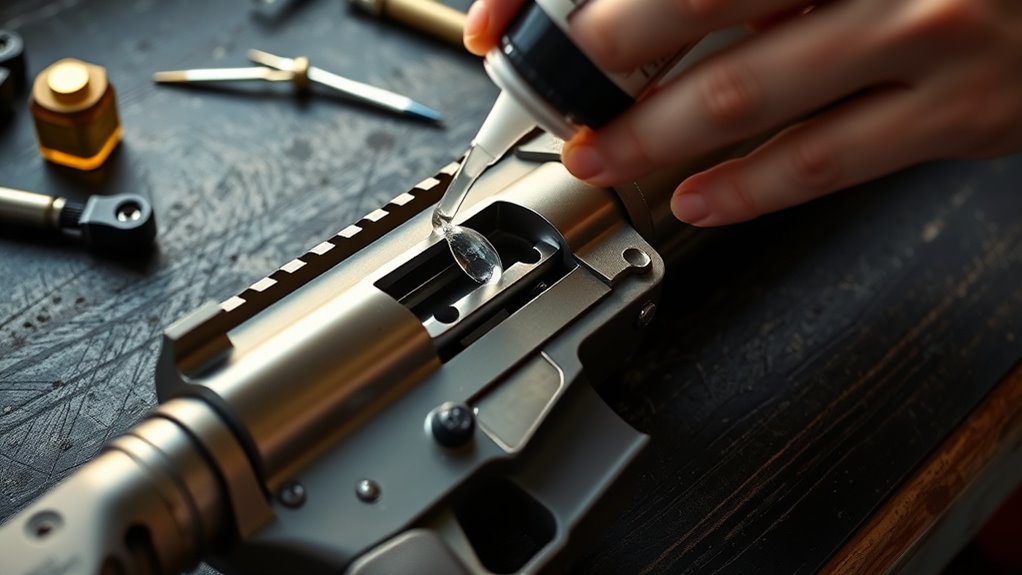
Lubrication is the key to keeping your AR-15 functioning reliably and extending its lifespan. Proper lubrication benefits your rifle by reducing friction, preventing wear, and minimizing the risk of malfunctions caused by dirt or residue buildup.
You want to apply lubrication techniques that guarantee critical moving parts, like the bolt carrier group and charging handle, operate smoothly under pressure. Using the right lubricant in appropriate amounts prevents excess buildup that can attract debris or cause sluggish operation. Focus on light, even coatings rather than heavy layers.
When to Lubricate Your AR-15
How often should you lube your AR-15 to keep it running smoothly? The answer depends on frequency intervals and environmental factors. Typically, lubricate your rifle after every 200-300 rounds or after each shooting session.
If you use your AR-15 in harsh conditions—such as rain, dust, or extreme temperatures—you’ll need to lube it more often to prevent corrosion and wear. Pay attention to signs like increased friction or unusual noise, which indicate lubrication is needed.
Establish a routine based on your usage and surroundings, adjusting as necessary. Sticking to proper lubrication intervals guarantees reliable performance and extends your AR-15’s lifespan. Remember, consistent maintenance tailored to your environment is key to peak firearm function.
Cleaning Your AR-15 Before Lubrication
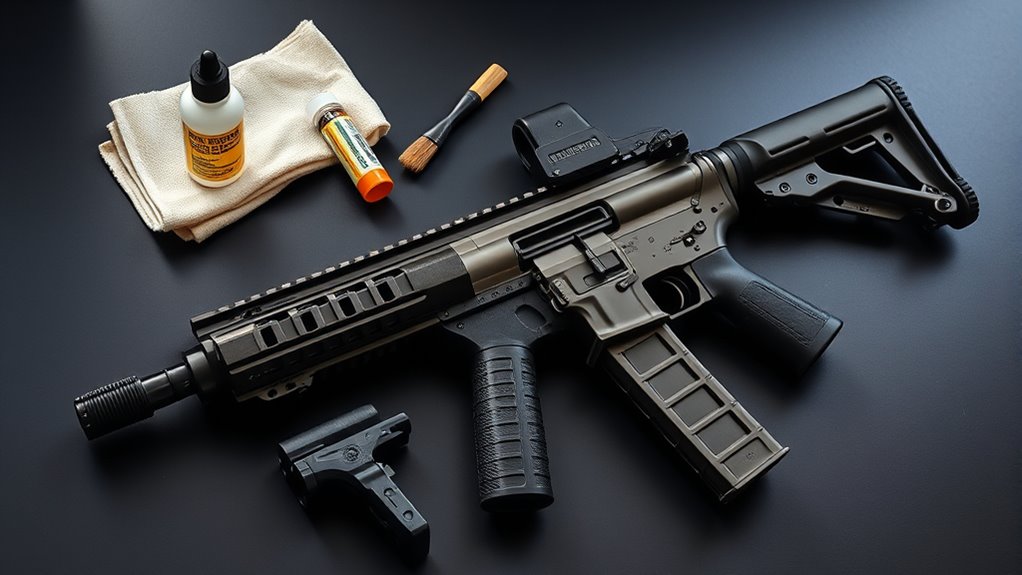
Before you apply any lubricant, make certain your AR-15 is thoroughly cleaned. Proper cleaning guarantees that dirt, carbon buildup, and old lubricant don’t interfere with the new lubricant’s effectiveness.
Start by disassembling your rifle according to the manufacturer’s instructions. Use recommended cleaning techniques, such as brushing the barrel and chamber with a bore brush and cleaning patches. Employ maintenance tools like nylon brushes, cleaning rods, and quality solvent to remove fouling.
Disassemble your rifle and use proper tools like bore brushes and solvents to thoroughly clean all fouling.
Wipe down all metal surfaces, including the bolt carrier group and charging handle, to clear grime and residue. After cleaning, inspect parts for wear or damage before proceeding.
A clean firearm optimizes performance and longevity, so taking the time with proper cleaning techniques and maintenance tools is essential before lubrication.
Choosing the Best Lubricants for Your AR-15
When selecting a lubricant for your AR-15, you’ll want one that balances protection, consistency, and temperature tolerance to guarantee reliable performance under various conditions. Synthetic oils are excellent for this because they resist breakdown, handle heat well, and provide smooth operation without attracting excessive dirt.
For high-friction parts like the bolt carrier group and charging handle, choose appropriate grease types to ascertain long-lasting lubrication and minimize wear. Avoid heavy greases that can gum up in colder weather or light oils that evaporate quickly.
Always pick lubricants specifically designed for firearms to maintain your AR-15’s reliability and longevity. By combining quality synthetic oils with the right grease types, you’ll keep your rifle running smoothly in any environment.
Avoiding Common Lubrication Mistakes
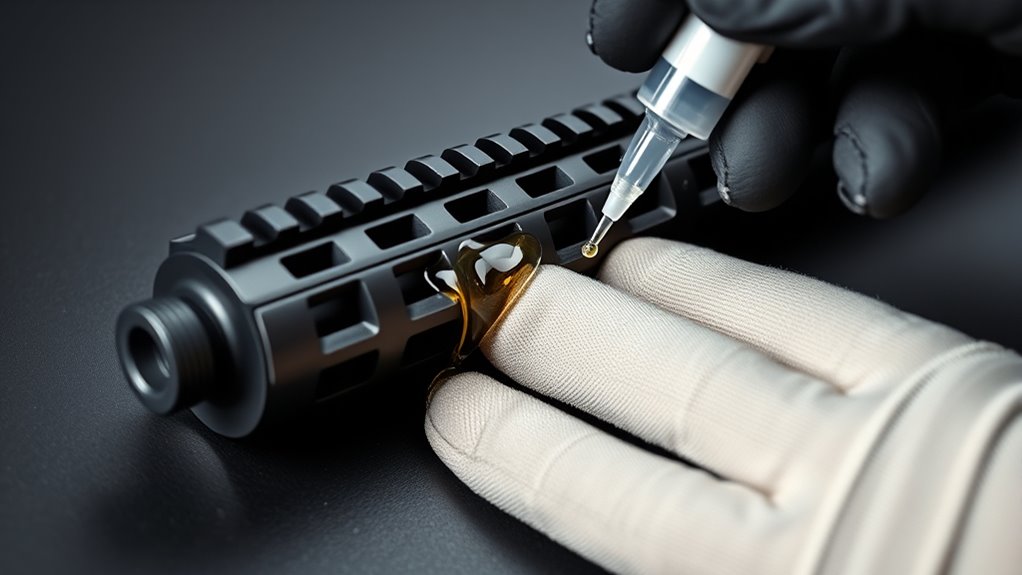
Although proper lubrication is essential, many shooters make avoidable mistakes that compromise their AR-15’s performance and durability. One common error is over lubrication, which leads to excess residue attracting dirt and debris, increasing wear and risking malfunctions. You need to apply just enough lubricant to moving parts; less is often more.
Mastering lubricant application techniques is key—use a small drop on pivot points and sliding surfaces, then spread it evenly. Avoid saturating parts like the bolt carrier group, which can cause sluggish cycling. Also, never skip cleaning before lubrication; old grime will trap lubricant improperly.
Frequently Asked Questions
Can I Use Automotive Grease on My AR-15?
You shouldn’t use automotive grease on your AR-15; it’s too thick and can attract debris.
Stick to recommended lubricant types like CLP or gun-specific oils for best performance and reliability.
How Often Should I Reapply Lubricant During Extended Shooting Sessions?
You should reapply lubricant every 200-300 rounds or sooner if shooting conditions are harsh. Choosing the right lube type guarantees peak performance, so monitor heat and debris accumulation and adjust maintenance accordingly during extended sessions.
Does Lubrication Affect the Accuracy of My AR-15?
Yes, lubrication types can influence your AR-15’s accuracy by ensuring smooth operation and reducing wear. Proper lubrication minimizes friction, one of many accuracy factors, helping maintain consistent performance during shooting sessions.
Can Lubricants Cause Corrosion if Applied Incorrectly?
Think of lubricants as a shield—if you use the wrong types or apply them improperly, they can trap moisture, causing corrosion.
Always choose quality lubricant types and follow corrosion prevention steps meticulously to protect your firearm.
Is It Safe to Lubricate My AR-15 Immediately After Firing?
Yes, you can perform immediate lubrication after firing, but make certain the firearm is cool to prevent damage.
Prompt lubrication is essential for firearm maintenance, reducing wear and corrosion while keeping your AR-15 reliable and functioning smoothly.
Conclusion
Think of lubricating your AR-15 like oiling a well-oiled machine—without it, parts grind and wear out faster. By lubricating regularly, especially after cleaning, you guarantee smooth function and reliability when it counts.
Choose the right lubricant and avoid common mistakes to keep your rifle performing at its best. Make lubrication a consistent part of your maintenance routine, and your AR-15 will reward you with lasting precision and dependability.
Properly learning how to lube AR-15 ensures your firearm operates smoothly and extends its service life.