To clean your AR-15, first make certain it’s unloaded and on a stable surface. Proper cleaning of your AR-15 is essential for maintaining its performance and safety.
Disassemble key parts like the bolt carrier group, charging handle, and upper receiver. Use quality solvents and bore brushes to clean the barrel and chamber thoroughly, removing carbon buildup.
Wipe and lightly lubricate moving components to prevent wear. Reassemble carefully and perform a function check. Regular cleaning keeps your rifle reliable and safe.
Keep following for detailed tips on maintenance and care.
Key Takeaways
- Ensure the AR-15 is unloaded, safety engaged, and work in a well-ventilated area with protective gloves and glasses.
- Disassemble the rifle by separating the upper and lower receivers, removing the bolt carrier group and charging handle.
- Clean the barrel with a solvent-soaked bore brush and patches, and scrub the chamber with a chamber brush and solvent.
- Remove carbon buildup from the bolt carrier group using solvent and nylon brushes, then wipe dry and inspect for wear.
- After cleaning, apply firearm-specific lubricant sparingly on moving parts, reassemble, and perform a function check to ensure proper operation.
Gather Essential AR-15 Cleaning Tools and Supplies
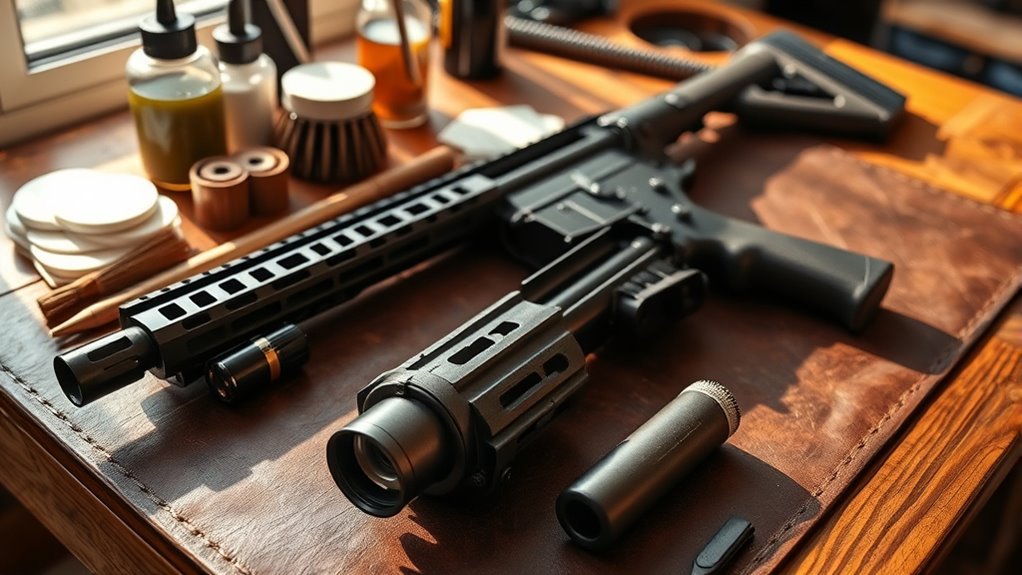
Before you begin cleaning your AR-15, you’ll need to gather the right tools and supplies to guarantee the process is efficient and thorough. Essential items include quality cleaning solvents designed specifically for firearms to break down carbon, powder residue, and fouling.
You’ll also require a cleaning rod with appropriate brushes and patches that match the caliber of your AR-15. Don’t forget protective gloves to shield your hands from harsh chemicals and ensure safe handling of cleaning solvents.
Additionally, have a durable cleaning mat or cloth to protect your workspace and small tools like picks or brushes for detailed cleaning. Organizing these supplies before starting will streamline the process and help maintain your AR-15’s reliability and performance.
How to Safely Prepare Your AR-15 for Cleaning
With your cleaning tools and supplies ready, the next step is to prepare your AR-15 safely to prevent accidents and guarantee effective maintenance. First, always wear appropriate safety gear—this includes safety glasses and gloves—to protect against harmful cleaning solvents and debris. Make certain you’re in a well-ventilated area to avoid inhaling fumes from cleaning solvents.
Before proceeding, clear the firearm by removing the magazine and visually inspecting the chamber to confirm it’s completely unloaded. Engage the safety if applicable. Place the rifle on a stable surface with adequate lighting to maintain control throughout the process.
Disassemble Your AR-15 for Effective Cleaning
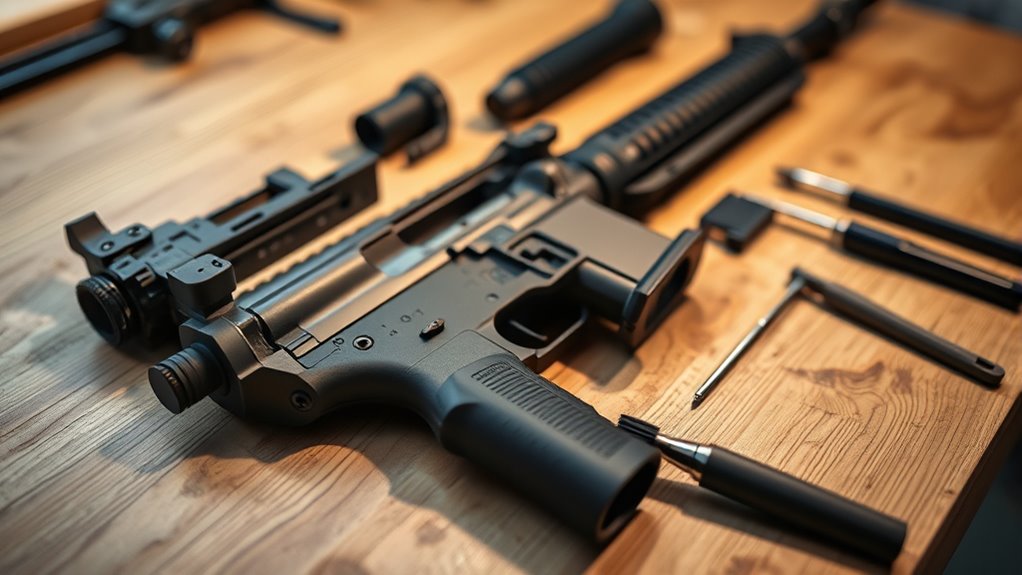
Once you’ve confirmed your AR-15 is completely unloaded and secured, you’ll need to disassemble it to access all critical components for cleaning. Begin by separating the upper and lower receivers using the takedown pins. Remove the bolt carrier group and charging handle from the upper receiver carefully.
Next, detach the handguard if your model allows, exposing the barrel and gas system. Use appropriate cleaning accessories to avoid damaging delicate parts. Keep small components like springs and pins organized by employing effective storage solutions, such as compartmentalized trays or magnetic mats.
This prevents loss and streamlines reassembly. Disassembling your AR-15 thoroughly ensures each part can be cleaned properly, maintaining ideal performance and longevity. Always follow manufacturer guidelines to avoid unnecessary wear or damage during this process.
Clean the Barrel and Chamber Properly
Having disassembled your AR-15, you can now focus on cleaning the barrel and chamber, areas that directly impact accuracy and reliability. Start with a thorough barrel inspection to check for any obstructions, rust, or wear. Using a bore brush soaked in solvent, run it through the barrel multiple times to loosen fouling.
Follow with clean patches until they come out spotless. For chamber cleaning, use a chamber brush with solvent to scrub the chamber walls and extractor recess thoroughly, ensuring no carbon or debris remains. Wipe the chamber dry with clean patches to prevent corrosion.
Proper barrel inspection and chamber cleaning are vital steps to maintain your AR-15’s performance, ensuring each shot is consistent and safe. Don’t rush these steps—they’re key to reliable operation.
Remove Carbon Buildup From the Bolt Carrier Group
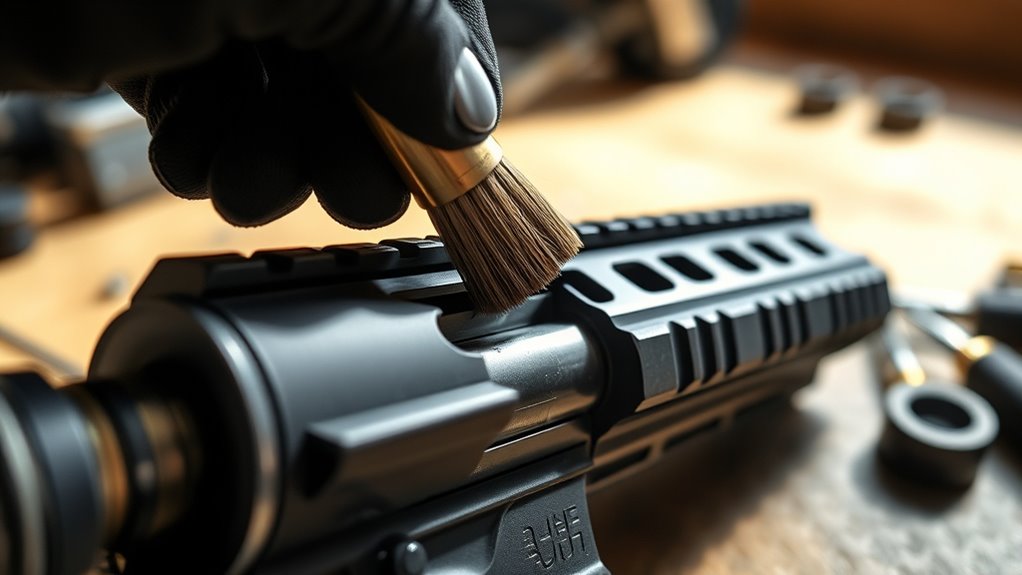
Because the bolt carrier group (BCG) experiences intense heat and pressure during firing, carbon buildup is inevitable and must be removed regularly. Start by disassembling the bolt carrier from the AR-15’s upper receiver. Use a quality carbon removal solvent to soak the bolt carrier, focusing on areas like the bolt tail and gas key where carbon accumulates most.
Employ a nylon brush to scrub away stubborn carbon deposits without damaging the metal. Pay special attention to the bolt carrier’s interior surfaces and gas rings. After scrubbing, wipe the bolt carrier with a clean cloth to remove loosened residue.
Ensuring thorough carbon removal not only maintains reliable cycling but also extends the service life of your AR-15’s bolt carrier group. Always inspect parts for wear before reassembly.
Wipe and Lubricate AR-15 Moving Parts
Although cleaning removes dirt and residue, wiping and lubricating the AR-15’s moving parts guarantees smooth operation and prevents wear. Focus on the bolt carrier, firing pin, and other critical components where friction occurs. Use a clean cloth to thoroughly wipe down these areas, removing any remaining solvent or debris.
Next, apply a high-quality gun lubricant sparingly to the bolt carrier rails, cam pin, and firing pin channel. Avoid over-lubrication, which can attract dirt and cause malfunctions. Ensure the lubricant forms a thin, even layer to reduce metal-on-metal contact during cycling.
Proper lubrication enhances reliability and extends the lifespan of your AR-15. Remember, consistent maintenance of these moving parts is vital for peak performance and safety in the field or at the range.
Reassemble Your AR-15 and Perform a Function Check
How do you guarantee your AR-15 is ready for reliable use after cleaning? Reassembling your rifle correctly and performing a thorough function check is essential. Begin by carefully putting all components back together in the correct order, ensuring no debris or misalignment.
Remember, scope maintenance should be done separately to avoid damage during reassembly. Follow these critical steps:
- Verify the bolt carrier group cycles smoothly without obstruction.
- Engage the safety and pull the trigger to confirm it doesn’t fire.
- Disengage the safety and fire the weapon dry to ensure proper function.
- Inspect all controls and moving parts for secure fit and smooth operation.
Always follow strict safety precautions throughout the process to prevent accidents and maintain your AR-15’s reliability.
How Often to Clean Your AR-15 and Signs It’s Needed
Knowing when to clean your AR-15 is essential for maintaining its performance and longevity. Regular cleaning prevents malfunctions and ensures smooth operation, especially after heavy use.
You should clean your rifle after every range session or combat training, but certain signs indicate immediate attention. Pay attention to magazine maintenance and stock adjustment issues, as dirt and debris can cause feeding problems or hinder adjustments.
| Condition | Cleaning Frequency |
|---|---|
| After heavy shooting | Clean immediately |
| Light range use | Clean every 300-400 rounds |
| Visible dirt or fouling | Clean immediately |
| Issues with magazine or stock | Inspect and clean |
Monitoring these signs helps you maintain your AR-15’s reliability and accuracy. Don’t wait for failures—stay proactive with cleaning.
Tips to Maintain Your AR-15 Between Cleanings
To keep your AR-15 functioning reliably, perform a regular inspection checklist focusing on critical components for wear and cleanliness.
You should also follow lubrication best practices to protect moving parts without over-applying oil. These steps will help maintain peak performance between full cleanings.
Regular Inspection Checklist
Although thorough cleanings are essential, regular inspections between sessions can prevent minor issues from becoming serious problems. You should routinely check your AR-15 to verify it functions reliably and safely. Focus on these key areas:
- Scope Inspection – Verify that your optics are clear, securely mounted, and zeroed. Any wobble or dirt can affect accuracy.
- Stock Adjustment – Confirm that the stock is firmly adjusted to your preference and all locking mechanisms engage properly.
- Bolt Carrier Group – Look for signs of wear, carbon buildup, or damage that could impede cycling.
- Magazine Condition – Inspect magazines for cracks, springs tension, and clean feed lips to prevent feeding issues.
Consistent attention to these points will keep your AR-15 ready without waiting for a full cleaning session.
Lubrication Best Practices
Since proper lubrication directly impacts your AR-15’s performance and longevity, you should apply it carefully and consistently between cleanings. After using appropriate cleaning solvents to remove fouling, ensure the firearm is dry before applying lubricant. Follow a strict lubrication schedule—this prevents buildup of debris and reduces wear on moving parts.
Focus on critical areas like the bolt carrier group, charging handle, and trigger assembly. Use a high-quality lubricant designed for firearms, applying sparingly to avoid excess that can attract dirt. Remember, over-lubrication is as detrimental as under-lubrication.
Regularly inspect your AR-15 for any signs of corrosion or friction, adjusting your lubrication schedule based on usage and environmental conditions. Proper lubrication between cleanings maintains reliability and extends your rifle’s service life.
Frequently Asked Questions
Can I Use Household Oils Instead of Gun Lubricants?
You shouldn’t use household oils instead of gun lubricants because they lack the proper viscosity and additives. Gun lubricants are specifically designed to protect your firearm from wear, corrosion, and fouling under high stress and heat.
Using household oils can lead to inadequate lubrication, which may cause increased wear and potential malfunctions. They also do not provide the necessary protection against rust and residue buildup that gun lubricants offer.
For optimal performance and longevity of your firearm, it is best to use products specifically formulated for guns. This ensures safety and reliability during use.
What’s the Best Way to Store My AR-15 Long-Term?
You should prioritize storage safety and maintain long-term preservation by storing your AR-15 in a cool, dry place. Use a gun safe or lockbox to ensure secure storage.
Apply protective oil to prevent rust and corrosion. Regularly inspect your firearm to guarantee it remains in ideal condition and secure.
Are There Specific Cleaning Tools for Different AR-15 Brands?
Yes, you’ll find brand specific tools designed for different AR-15 manufacturers, but most cleaning kits offer broad compatibility.
Always check kit compatibility with your AR-15’s brand to guarantee proper fit and effective maintenance.
How Do Temperature and Humidity Affect Cleaning Frequency?
Like a Renaissance scholar noting climate’s effect on ink, you’ll find temperature and humidity vital in your maintenance schedule. Harsh climate considerations mean you’ll need to clean more often to prevent corrosion and guarantee reliable performance.
Can I Clean My AR-15 Without Disassembling It Fully?
You can perform basic cleaning without fully disassembling your AR-15, but for thorough maintenance, follow your maintenance schedule.
Cleaning frequency depends on use; partial cleaning helps, but full disassembly guarantees proper function and longevity.
Conclusion
Just as a knight sharpens his sword before battle, you must keep your AR-15 clean and well-maintained to guarantee peak performance. Following these steps will help your rifle run smoothly and reliably, ready whenever duty calls. Remember, regular care isn’t just about function—it’s about respect for your tool and safety.
Stay diligent, and your AR-15 will serve you faithfully, just as a trusted companion stands by your side through every challenge. Proper cleaning routines ensure your rifle performs at its best and extends its lifespan. Maintaining your firearm with care is essential for reliable operation and personal safety.
In conclusion, taking the time to learn how to clean AR-15 properly will pay off in dependable performance and longevity.