An AR-15 typically weighs between 6.5 and 7.5 pounds, but your rifle’s exact weight depends on barrel length, materials, and added accessories.
A 16-inch barrel usually places it near 6.8 pounds, while longer barrels increase weight significantly.
Components like steel barrels or heavy optics add mass, whereas aluminum alloys and polymer parts reduce it.
Weight directly impacts handling, recoil control, and accuracy.
Keep exploring to understand how these factors affect your rifle’s performance and selection.
Key Takeaways
- An AR-15 typically weighs between 6.5 and 7.5 pounds, depending on configuration and materials used.
- A 16-inch barrel AR-15 usually weighs about 6.8 pounds, while a 20-inch barrel version can weigh up to 7.5 pounds.
- Barrel length and profile significantly influence weight; longer and thicker barrels add more mass.
- Material choices like aluminum alloys reduce weight, whereas steel barrels and metal accessories increase it.
- Added accessories such as optics, lights, and grips can add several ounces, affecting overall rifle weight and balance.
How Much Does an AR-15 Weigh? Typical Weight Range
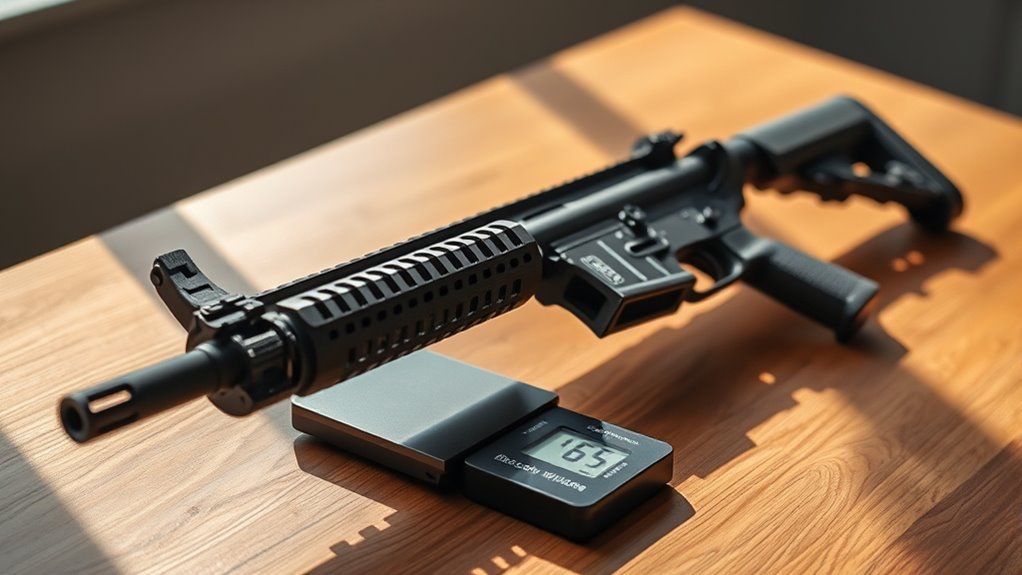
An AR-15 typically weighs between 6.5 and 7.5 pounds, depending on its configuration and materials used. When evaluating AR 15 configurations, it is crucial to recognize that barrel length, handguard type, and stock material directly influence the weapon’s overall weight. For instance, lightweight aluminum or carbon fiber components reduce mass, whereas steel parts increase it.
Weight comparisons among standard models reveal that a 16-inch barrel variant commonly weighs around 6.8 pounds, while a 20-inch barrel version may approach 7.5 pounds. Additionally, accessories like optics and bipods affect total weight but aren’t included in base rifle measurements.
Understanding these distinctions allows you to select an AR-15 tailored to your operational needs without compromising on performance or handling due to unnecessary weight.
Why AR-15 Weight Matters for Handling and Accuracy
Because weight directly influences recoil management and balance, understanding how much your AR-15 weighs is essential for optimizing handling and accuracy. A properly weighted AR-15 enhances your ability to maintain a stable shooting stance, reducing muzzle rise and allowing quicker follow-up shots.
The rifle’s ergonomic design works synergistically with its weight, guaranteeing the firearm sits comfortably in your hands and shoulders, improving control. If the AR-15 is too light, recoil can become more pronounced, disrupting your shooting stance and precision.
Conversely, an overly heavy rifle may cause fatigue, impairing your ability to maintain consistent accuracy over extended use. By selecting an AR-15 with an appropriate weight that complements its ergonomic design, you guarantee superior handling, stability, and shot placement.
How Barrel Length Affects AR-15 Weight
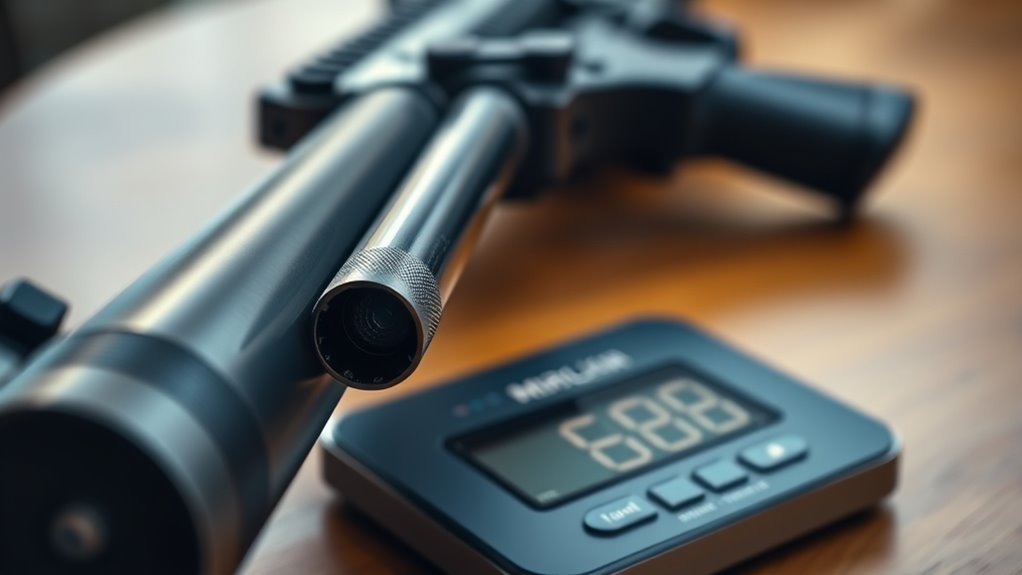
When you choose a longer barrel for your AR-15, you’ll notice a direct increase in the rifle’s overall weight due to the additional material. The barrel length directly correlates with weight because more barrel material is required, impacting handling and balance. While barrel material and barrel profile considerably influence weight, length remains a primary factor.
For instance, a 20-inch barrel will weigh more than a 16-inch barrel of the same material and profile. Additionally, thicker barrel profiles add weight, but even with a lightweight profile, increased length adds mass. Understanding this relationship helps you select a barrel length that balances weight and performance based on your intended use, whether for precision shooting or maneuverability in close quarters.
How Materials Affect AR-15 Weight
Although barrel length significantly impacts an AR-15’s weight, the materials used in its construction play an equally critical role. When you evaluate an AR-15, the material composition of its key components—such as the upper and lower receivers, barrel, and handguard—directly influences overall weight and balance.
Aluminum alloys, commonly used for receivers, reduce weight without compromising strength. Conversely, steel barrels add durability but increase mass. Polymer parts can further lighten the firearm, altering weight distribution and handling characteristics.
Understanding material composition allows you to anticipate how weight is distributed across the rifle, affecting maneuverability and fatigue during use. Selecting an AR-15 with optimized materials guarantees you get a balance between durability and manageable weight tailored to your operational needs.
How Accessories Affect AR-15 Weight
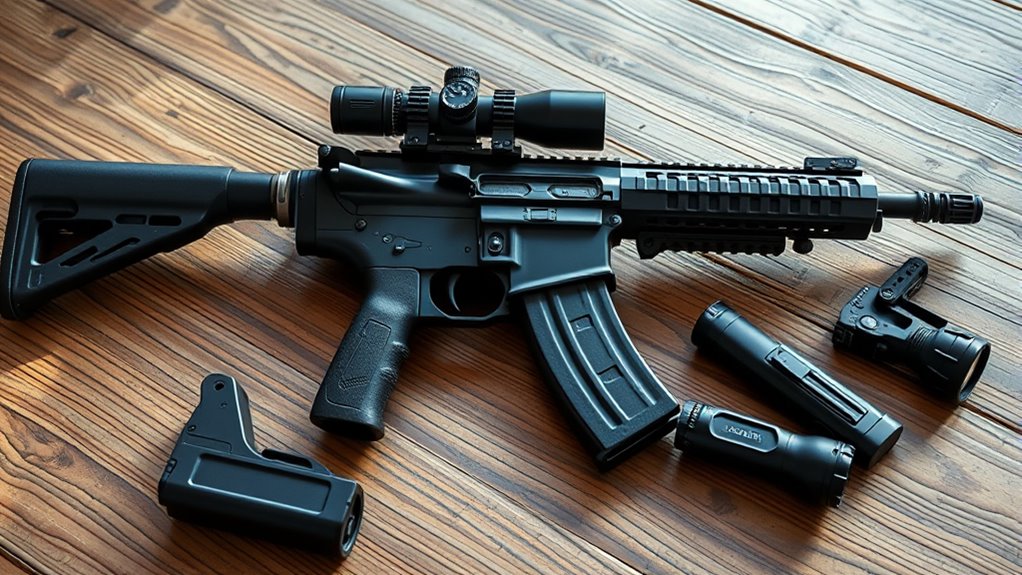
When you add accessories like optics, lights, and foregrips, each component increases your AR-15’s overall weight, sometimes considerably. Choosing lightweight alternatives made from advanced materials can help mitigate this added mass without sacrificing functionality.
Understanding these trade-offs is essential for optimizing your rifle’s balance and handling.
Common Weight Adding Accessories
Several common accessories can significantly increase the overall weight of your AR-15. Understanding these additions helps you manage the rifle’s balance and handling.
Key components that add weight include:
- Aftermarket grips – These often use denser materials or ergonomic designs, adding several ounces compared to standard grips.
- Tactical slings – While seemingly light, heavy-duty slings with metal hardware can cumulatively add weight, especially when combined with attachment points.
- Optics and mounts – High-quality scopes and their mounting systems can add substantial mass, impacting your rifle’s front-end weight.
Each accessory affects the rifle’s center of gravity and maneuverability. You must consider these factors carefully when customizing your AR-15 to maintain peak performance without compromising your mobility or endurance during extended use.
Lightweight Alternatives Impact
Adding accessories to your AR-15 can quickly increase its weight, but opting for lightweight alternatives helps maintain maneuverability and reduces fatigue during extended use. When selecting components, prioritize those fabricated from advanced lightweight materials such as carbon fiber, aluminum alloys, or polymer composites. These materials greatly reduce the overall mass without compromising structural integrity or durability.
Additionally, ergonomic designs contribute by optimizing shape and placement, guaranteeing accessories add minimal bulk while enhancing handling efficiency. For example, lightweight handguards with integrated rail systems and slim-profile grips reduce weight and improve balance. By incorporating these innovations, you guarantee your AR-15 remains agile, enhancing both performance and user comfort during prolonged operation.
Choosing lightweight materials and ergonomic designs is essential to managing the cumulative impact of added accessories effectively.
Comparing Weight: Lightweight vs. Standard AR-15 Models
Weight plays a critical role in the functionality and handling of AR-15 rifles, especially when comparing lightweight models to standard versions. You’ll notice that lightweight builds considerably reduce carrying fatigue without severely compromising durability. However, standard features often add weight due to reinforced components and accessory compatibility.
Here’s what you should consider:
- Material Composition: Lightweight builds utilize advanced alloys and polymers, whereas standard models rely on traditional steel and aluminum.
- Barrel Profile: Thinner barrels reduce weight but may affect heat dissipation and accuracy over extended firing.
- Accessory Integration: Standard AR-15s support a wider range of attachments, increasing weight but enhancing modularity and performance.
Understanding these distinctions helps you appreciate how weight impacts operational efficiency and tactical utility.
How to Choose the Right AR-15 Weight for You
You’ll want to match your AR-15 weight to your specific use case, whether it’s for tactical operations, competition, or casual shooting. Prioritize a balance between manageable weight and overall comfort to maintain control and reduce fatigue.
Assess how the rifle’s weight affects your handling and endurance before making a decision.
Consider Intended Usage
Although the weight of an AR-15 particularly impacts handling, selecting the appropriate weight depends largely on how you plan to use the rifle. Your intended purpose and shooting style dictate the ideal balance between portability and control.
Consider these factors:
- Tactical or Home Defense: A lighter AR-15 enhances maneuverability, allowing for quick target acquisition and sustained mobility in close quarters.
- Precision Shooting or Competition: Heavier models improve stability and recoil management, aiding accuracy during rapid or extended firing sequences.
- Hunting or Field Use: Moderate weight balances endurance and steadiness, accommodating long carries without sacrificing shot precision.
Understanding your shooting style and intended purpose guarantees you choose an AR-15 weight that maximizes performance and efficiency in your specific applications.
Balance Weight And Comfort
When selecting an AR-15, striking the right balance between mass and comfort is essential to guarantee ideal control and reduce fatigue during use. You need to evaluate how the balance distribution affects handling; an evenly weighted rifle minimizes muzzle rise and enhances stability.
Consider models featuring an ergonomic design that aligns naturally with your shooting posture, promoting comfort during prolonged sessions. Heavier AR-15s may offer recoil mitigation but can induce quicker fatigue, while lighter variants improve maneuverability but might compromise steadiness.
Assess your physical strength and shooting style to determine the best weight that maintains control without sacrificing comfort. Ultimately, choosing an AR-15 with precise balance distribution and ergonomic design guarantees you maintain accuracy, reduce strain, and enhance performance tailored to your needs.
Effective Ways to Lighten Your AR-15
Since every ounce counts in optimizing your AR-15’s performance, focusing on key components for weight reduction is essential. You can greatly lighten your rifle by integrating lightweight components without compromising durability or reliability. Consider these effective strategies:
- Switch to an Aluminum or Carbon Fiber Handguard: These materials reduce weight compared to traditional steel or polymer options.
- Use a Lightweight Barrel: Select barrels made from chrome-moly or lightweight stainless steel alloys, which offer strength with less mass.
- Replace Standard Bolt Carrier Group (BCG) with a Lightweight Version: Titanium or coated aluminum BCGs provide substantial weight savings.
Frequently Asked Questions
What Is the History of the AR-15 Rifle?
You’ll find the AR 15 design evolution started in the 1950s, with its AR 15 military origins rooted in Armalite’s lightweight rifle for the US military, influencing modern civilian and tactical firearm development.
How Do AR-15 Safety Features Work?
You might think AR-15 safety mechanisms are complicated, but they’re straightforward: the selector switch enables safe, semi-auto, or off.
Trigger locking prevents accidental firing by physically blocking trigger movement, ensuring precise, reliable control.
What Calibers Are Available for the AR-15?
You’ll find various caliber options for the AR-15, including .223 Remington, 5.56 NATO, .300 Blackout, and 6.5 Grendel.
These choices allow you to select ammunition types tailored for specific performance and applications.
How Does AR-15 Maintenance Affect Performance?
Imagine your AR-15 firing flawlessly; consistent cleaning frequency and proper lubrication techniques prevent fouling and wear, ensuring peak performance, reliability, and longevity.
Neglecting maintenance leads to jams, corrosion, and decreased accuracy, undermining your rifle’s effectiveness.
What Are Common Legal Regulations for Owning an AR-15?
You must comply with federal and state firearm regulations, including background checks, age restrictions, and registration requirements for legal ownership of an AR-15.
Some states impose additional bans or limitations on features and magazine capacity.
Conclusion
Choosing the right AR-15 weight isn’t just about numbers—it’s like selecting Excalibur; the perfect balance defines your effectiveness. You’ve seen how barrel length, materials, and accessories all tip the scales. Remember, a lighter rifle offers agility, while a heavier one can enhance stability and accuracy.
Ultimately, your ideal AR-15 weight aligns with your handling preferences and mission demands. Mastering this balance guarantees you wield a tool, not a burden. Understanding how much does an AR-15 weigh helps you make an informed choice that suits your needs perfectly.