Are AR-15 legal to own? In most U.S. states, you can legally own an AR-15 if you meet federal requirements such as background checks and age limits.
However, state laws vary widely, with some states imposing restrictions on features, magazine capacity, or requiring registration.
Modifications like short barrels or fully automatic capabilities are heavily regulated and may require special registration or permits.
It’s important to stay informed about the specific laws in your state to ensure compliance.
Understanding these regulations will help you navigate AR-15 ownership responsibly and avoid potential legal issues.
Always check local laws regularly, as firearm regulations can change.
Key Takeaways
- AR-15 rifles are federally legal for civilian ownership in the United States with required background checks and age restrictions.
- Some states impose additional restrictions or bans on AR-15 ownership, magazine capacity, or features.
- Modifications like short barrels or fully automatic functions are regulated and require registration under the National Firearms Act.
- Compliance with local, state, and federal laws, including registration and licensing where applicable, is mandatory for legal possession.
- Violating AR-15 laws can lead to criminal charges, fines, confiscation, and loss of ownership rights.
What Is an AR-15?

An AR-15 is a lightweight, magazine-fed semi-automatic rifle that has become one of the most popular firearms in the United States. You’ll find its design traces back to the late 1950s when Eugene Stoner developed it for ArmaLite, marking a significant milestone in firearm technology. The AR 15 history reflects its evolution from a military prototype to a civilian sporting rifle.
Regarding AR 15 specifications, it typically features a 5.56×45mm NATO or .223 Remington caliber, a detachable magazine usually holding 20 or 30 rounds, and a gas-operated, rotating bolt mechanism. Its modular construction allows you to customize barrels, stocks, and optics, enhancing versatility.
Understanding these fundamentals helps you grasp why the AR-15 remains a prominent choice among firearm enthusiasts.
Is the AR-15 Legal Under Federal Law?
You need to understand how federal regulations govern the ownership of AR-15 rifles. These laws set specific requirements for legal possession, including background checks and age restrictions.
Knowing these rules helps clarify when and how you can lawfully own an AR-15 under federal law.
Federal Regulations Overview
Although federal law permits civilian ownership of AR-15 rifles, specific regulations govern their features and transfer. Understanding federal definitions and legal terminology is essential for compliance. The National Firearms Act (NFA) classifies certain modifications as regulated items, impacting legality.
You should pay attention to:
- Barrel length and overall dimensions restrictions
- Prohibition on fully automatic capabilities without proper licensing
- Registration requirements for short-barreled rifles or suppressors
- Background checks mandated during transfer or sale
These federal regulations guarantee that while you can legally own an AR-15, its configuration and transfer must adhere to established legal frameworks. Staying informed about these standards helps you avoid violating federal law and promotes responsible firearm ownership.
Legal Ownership Requirements
Several key requirements determine whether you can legally own an AR-15 under federal law. First, you must be at least 18 years old to purchase a rifle from a licensed dealer and not be prohibited due to criminal history, mental health status, or other disqualifying factors. You’ll need to complete a background check, which involves submitting legal documentation verifying your eligibility.
Ownership responsibilities include safe storage, adherence to transportation laws, and compliance with local restrictions. Federal law mandates that you retain proof of purchase and any transfer documents. Additionally, certain AR-15 configurations may require registration under the National Firearms Act, involving further legal documentation and approval.
How Do State Laws Regulate AR-15 Ownership?
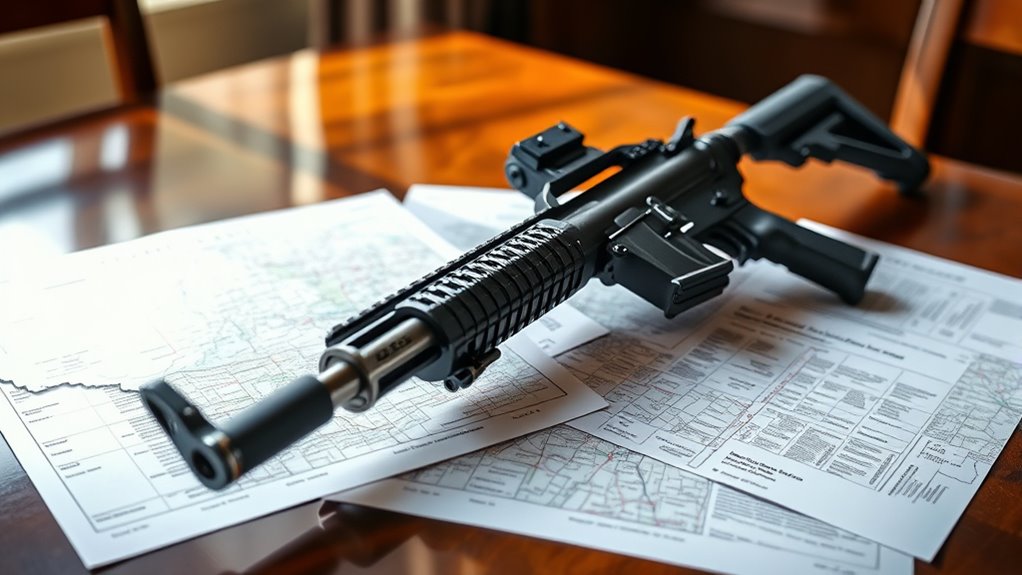
You’ll find that state laws vary widely when it comes to AR-15 ownership, with some states imposing specific restrictions on who can possess them. Many states also require registration or licensing to legally own these rifles.
Additionally, limits on magazine capacity often affect how you can use or carry an AR-15 depending on your location.
State-Specific Ownership Restrictions
Because firearm regulations vary widely across the United States, AR-15 ownership is subject to different state-specific restrictions that can affect who can legally possess these rifles and under what conditions. You’ll encounter significant state variations that create ownership challenges, especially if you move between states or buy firearms online.
Some key restrictions include:
- Bans on certain features like detachable magazines or pistol grips
- Limits on magazine capacity, often capped at 10 rounds
- Age requirements beyond federal minimums
- Prohibitions for individuals with specific criminal or mental health histories
Understanding these restrictions is essential for legal compliance. You must review your state’s laws carefully to guarantee lawful possession and avoid penalties. These state-specific rules reflect varied approaches to balancing public safety with firearm rights.
Registration And Licensing Requirements
How do different states regulate the registration and licensing of AR-15 rifles? The registration process varies markedly. Some states require you to register your AR-15 with local or state authorities, often involving background checks and submitting firearm details. Licensing fees accompany these procedures and differ widely, ranging from nominal charges to higher fees reflecting administrative costs.
In states mandating registration, failure to comply can result in legal penalties. Other states may not require registration but still impose licensing requirements, such as obtaining a firearms owner’s identification card or a specific rifle license. These licensing steps typically include safety training and eligibility verification.
Understanding your state’s specific registration process and licensing fees is essential to legally owning an AR-15 and avoiding inadvertent violations.
Magazine Capacity Limits
Where do states draw the line on magazine capacity for AR-15 rifles? Magazine capacity limits vary considerably, reflecting different regulatory approaches to magazine types and capacity restrictions. You’ll find that some states impose strict limits, while others allow higher capacities or no restrictions at all.
Key considerations include:
- Maximum allowed rounds per magazine, often capped between 10 and 15 rounds
- Definitions of prohibited magazine types, including detachable and high-capacity magazines
- Legal exceptions for law enforcement or military personnel
- Penalties for possession or transfer of magazines exceeding capacity limits
Understanding these rules is essential if you own or plan to acquire an AR-15, as violating capacity restrictions can lead to legal consequences. Always check current state laws to verify compliance with magazine types and capacity regulations.
Which States Have the Strictest AR-15 Restrictions?
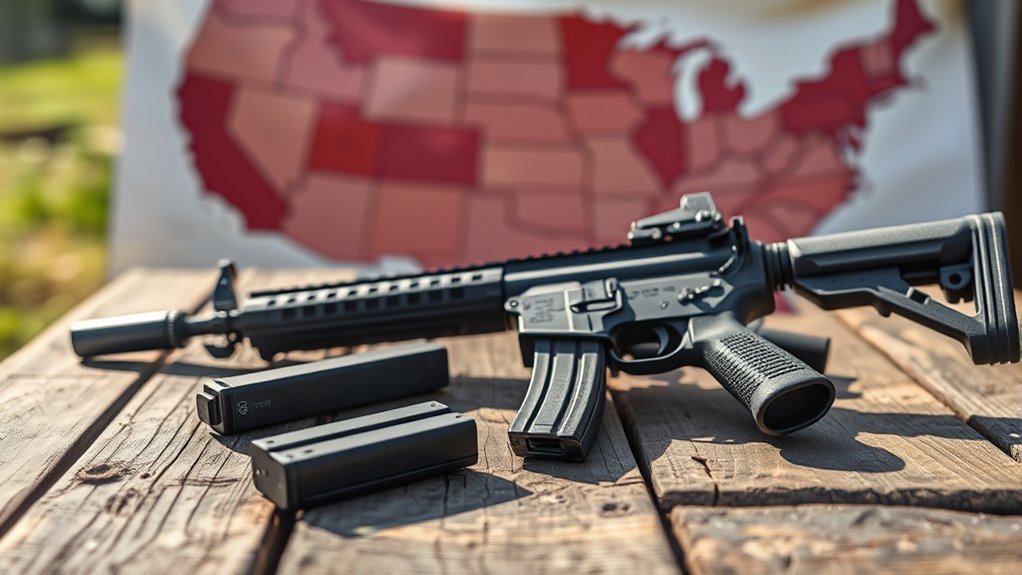
When considering AR-15 regulations, you might wonder which states impose the strictest restrictions. States like California, New York, and New Jersey have some of the most rigorous state regulations, often including bans on certain features, mandatory registration, and limitations on magazine capacity. These measures aim to enhance firearm safety by reducing access to high-capacity or rapid-fire components.
In contrast, other states have more lenient laws, reflecting different approaches to balancing rights and safety. Understanding these varying state regulations is vital if you plan to own or transport an AR-15, as compliance guarantees you avoid legal complications. Always stay informed about local laws since they frequently change, affecting how firearm safety policies are enforced where you live or travel.
What Are the Legal Requirements to Buy an AR-15?
Although federal law sets baseline requirements for purchasing an AR-15, specific criteria vary depending on your state and local jurisdiction. To navigate the purchasing process effectively, you should understand both federal mandates and local regulations. Typically, you must:
- Be at least 18 years old to buy a rifle federally, though some states require you to be 21
- Pass a background check conducted through the National Instant Criminal Background Check System (NICS)
- Comply with any waiting periods or registration requirements imposed by your state
- Ascertain the firearm complies with local restrictions concerning features or configurations
Adhering to these requirements is essential for legal ownership and promotes responsible gun safety. Familiarizing yourself with your jurisdiction’s nuances will help you complete the purchasing process without legal complications.
How Can You Stay Compliant Owning an AR-15?
How do you guarantee ongoing compliance while owning an AR-15? You must adopt strict compliance strategies and understand your ownership responsibilities fully.
Staying informed on federal, state, and local laws is essential. Regularly review legal updates, secure your firearm properly, and maintain accurate documentation.
Here’s a concise guide:
| Compliance Strategies | Ownership Responsibilities |
|---|---|
| Stay updated on laws | Secure storage to prevent access |
| Register firearm if required | Complete background checks |
| Follow transport regulations | Keep detailed purchase records |
| Attend safety training | Report transfers or sales |
What Are the Consequences of Breaking AR-15 Laws?
Failing to adhere to AR-15 laws can result in serious legal repercussions that affect your rights and freedom. Violating these regulations may trigger enforcement actions and legal penalties that vary by jurisdiction but often include significant consequences.
You could face:
- Criminal charges ranging from misdemeanors to felonies
- Heavy fines and potential restitution payments
- Confiscation of the firearm and related property
- Revocation of firearm ownership rights or licenses
These enforcement actions aim to uphold public safety and guarantee compliance. Understanding the specific AR-15 laws in your area is essential to avoid inadvertent violations. Ignoring these laws not only jeopardizes your legal standing but may also lead to long-term restrictions on your ability to possess firearms.
Staying informed and compliant helps you steer clear of these severe consequences.
Frequently Asked Questions
Can AR-15S Be Modified With Silencers or Bump Stocks?
You can modify AR-15s with silencers, but silencer regulations require federal approval and tax stamps.
Bump stock legality is restricted in many areas, so you’ll need to verify local laws before considering such modifications.
Are AR-15 Accessories Like Magazines Regulated Differently?
Yes, you’ll find magazine capacity often faces stricter accessory restrictions, varying by state. Some places limit magazines to 10 rounds, so you must check local laws to verify your AR-15 accessories comply with regulations.
Is It Legal to Transport an AR-15 Across State Lines?
You should know that 20% of firearm owners face challenges due to varying interstate laws. When transporting an AR-15 across state lines, you must strictly follow transport regulations, including federal and state-specific requirements to avoid legal issues.
Understanding these rules is crucial because laws can differ significantly from one state to another. Always check both the state you are leaving and the state you are entering to ensure compliance. Failure to do so can result in serious legal consequences.
Can Non-Citizens Legally Own an AR-15 in the U.S.?
You can’t legally own an AR-15 as a non-citizen unless you meet specific criteria, like having a valid hunting license. Non-citizen ownership faces strict legal restrictions under federal and state laws.
These laws are designed to regulate firearm possession and ensure public safety. It is important to understand both federal guidelines and the specific laws in your state. Always check the latest regulations before attempting to purchase or own any firearm.
How Do Local Ordinances Affect AR-15 Storage Requirements?
Local regulations vary, so storage laws for your AR-15 depend on where you live. You’ll need to follow specific requirements like locked containers or trigger locks, ensuring compliance with both state and local ordinances to avoid penalties.
It’s important to check your local laws carefully, as some areas may have stricter rules than others. Staying informed helps prevent legal issues and keeps your firearm secure.
Conclusion
So, you want an AR-15 but wonder about legality? Ironically, while it’s federally legal, the maze of state laws might make you feel like you’re preparing for a covert mission, not a simple purchase. Staying compliant requires more research than assembling the rifle itself.
Breaking the rules isn’t just a slap on the wrist—it carries serious consequences. In the end, knowing the law is your best defense, even if it feels more complicated than the firearm. When it comes to whether AR-15s are legal, understanding both federal and local regulations is crucial.