To safely uncock a crossbow, first engage the safety and point it in a safe direction. This initial step ensures that you minimize the risk of accidental discharge.
Always handle the crossbow with care to maintain control.
Use a rope cocking device or crank for a controlled tension release. These tools help you lower the string slowly and evenly, preventing sudden movements.
Alternatively, you can carefully press the string down manually on a stable surface with a soft backstop to catch the bolt.
Always keep your hands clear of the string’s path to avoid injury. Avoid dry firing, as it can cause significant damage to your crossbow.
Proper tools and slow, steady motion protect your equipment and ensure your safety.
Explore further to master safe uncocking techniques and proper crossbow care. With practice, you will develop confidence and skill in handling your crossbow responsibly.
Key Takeaways
- Secure the crossbow on a stable surface and engage the safety catch before starting the uncocking process.
- Use a rope cocking device or crank to slowly and safely release string tension without sudden movements.
- Always point the crossbow in a safe direction and wear safety glasses to protect against potential string snaps.
- Avoid dry firing by ensuring an arrow is properly nocked or using a soft target or backstop for uncocking.
- Seek professional help if the safety mechanism jams or if you encounter unusual resistance or damage during uncocking.
Why It’s Important to Uncock Your Crossbow Safely
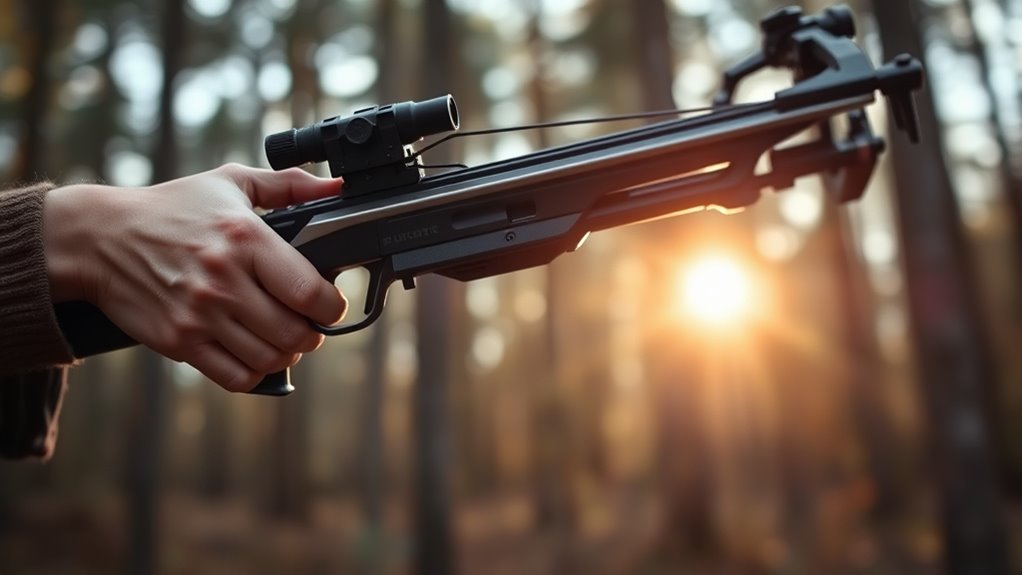
Although uncocking a crossbow might seem straightforward, doing it safely is vital to prevent accidents and damage. When you uncock your crossbow properly, you reduce the risk of unintentional discharge, which can cause serious injury. Following safety precautions protects both you and those nearby.
Additionally, safe uncocking is an important part of crossbow maintenance. It helps prevent strain on the bowstring and trigger mechanism, extending your crossbow’s lifespan. Avoid shortcuts or forcing the mechanism, as this can lead to costly repairs or failure during use.
Always use the recommended method and tools for uncocking, and double-check that the area is clear. By prioritizing safety and proper maintenance, you guarantee your crossbow remains reliable and safe for every use.
How to Tell If Your Crossbow Is Cocked Before Uncocking
How can you quickly determine if your crossbow is cocked before attempting to uncock it? First, engage in crossbow safety by guaranteeing the crossbow is pointed in a safe direction. Next, inspect the cocking mechanism: if the string is pulled back and securely latched into the trigger assembly, your crossbow is cocked.
Many models have a visual or audible indicator, such as a cocking status flag or a distinct click when fully cocked. If you’re unsure, gently try to move the string by hand—if it resists firmly, it’s cocked. Never assume the crossbow is uncocked without checking, as this guarantees your safety and prevents accidental discharge.
Understanding these signs helps you handle your crossbow responsibly before proceeding to uncock it.
Tools You’ll Need to Uncock Your Crossbow
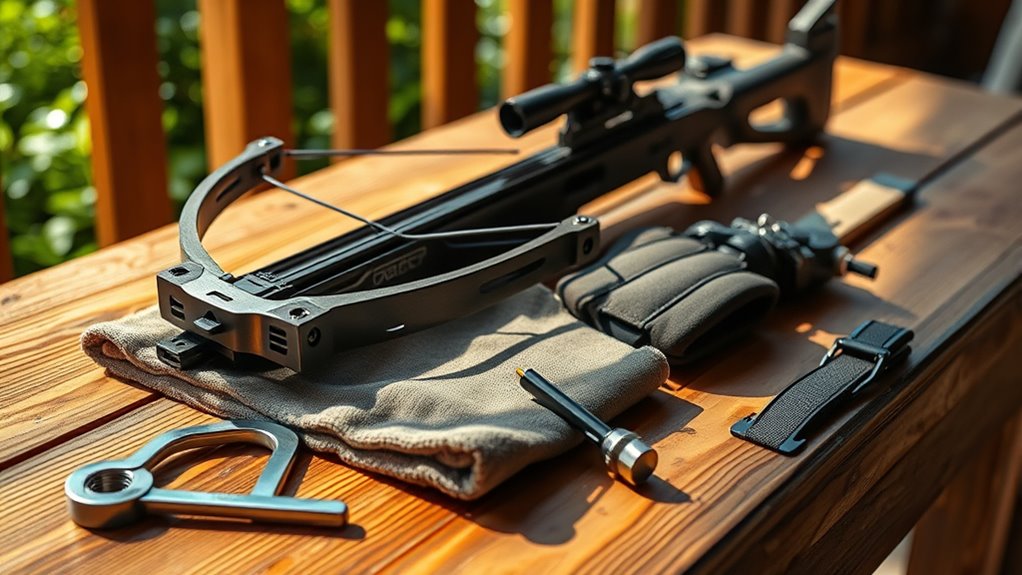
Before you start uncocking your crossbow, make certain you have the right tools on hand to do the job safely and effectively. Essential tools include a rope cocking device or crank, which helps control tension during uncocking techniques and reduces strain. You’ll also need a sturdy, flat surface to rest your crossbow on, preventing slips.
Safety glasses are vital to protect your eyes from accidental string snaps. Additionally, have a soft target or a block of wood to catch the bolt or string safely. Carrying a basic toolkit with screwdrivers and lubricant supports ongoing crossbow maintenance.
Having these tools ready guarantees you can perform uncocking techniques smoothly and safely, minimizing the risk of damage or injury.
Step-by-Step Guide: How to Uncock Your Crossbow Manually
With your tools ready and safety measures in place, you can begin uncocking your crossbow manually. First, secure the crossbow on a stable surface. Place your foot firmly on the stock to prevent movement.
Next, locate the safety catch and make certain it’s engaged to avoid accidental firing. Slowly and evenly, press down on the string, guiding it forward while maintaining control. Use your hands to gradually release the tension, making sure the string moves smoothly into the uncocked position.
Avoid sudden releases to prevent damage. This method is essential for proper crossbow maintenance, preserving the bow’s integrity and safety. Mastering these uncocking techniques will help you handle your crossbow confidently and safely every time.
How to Use a Bolt or String Backstop to Uncock Your Crossbow
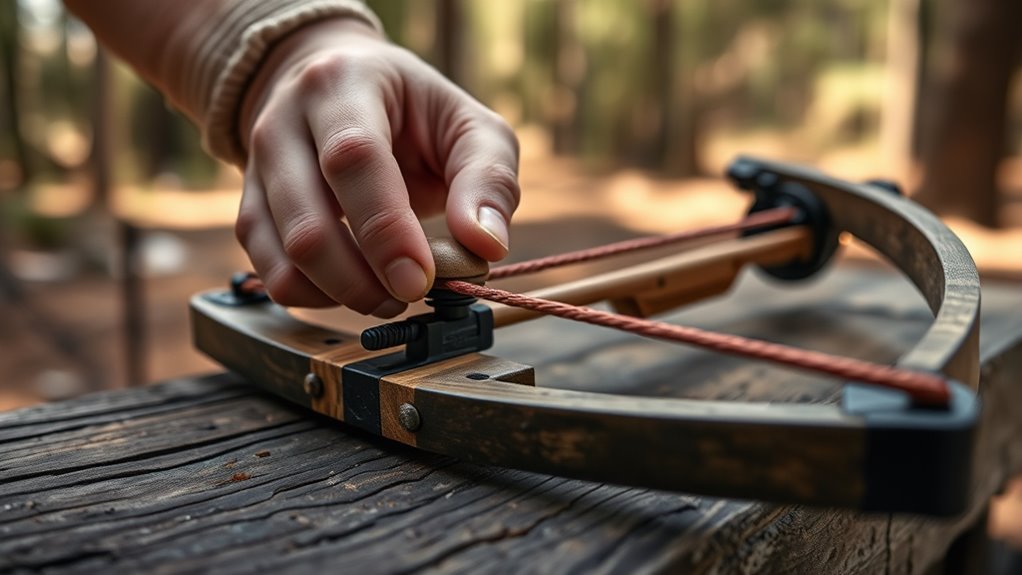
To uncock your crossbow safely, you’ll need to choose a suitable bolt or string backstop that can absorb the energy without damage.
Make sure the backstop is sturdy and positioned correctly before firing the bolt into it. Once the bolt is lodged securely, carefully remove it to complete the uncocking process.
Choosing the Right Backstop
Although uncocking a crossbow can seem tricky, choosing the right backstop makes the process safer and more effective. Start by selecting backstop materials that can reliably absorb the bolt’s energy without damage. Dense foam, layered cardboard, or specialized archery mats work well.
Avoid materials that are too hard or too soft, as they can cause ricochets or fail to stop the bolt.
Next, focus on backstop placement. Position it directly in front of your crossbow, ensuring it covers the bolt’s full trajectory. The backstop should be stable and secure to prevent shifting during uncocking.
Proper alignment and distance will protect you and your surroundings while allowing for safe, controlled uncocking every time.
Safely Removing the Bolt
Two main methods help you safely remove the bolt when uncocking your crossbow: using a bolt backstop or a string backstop. Both methods offer reliable bolt removal techniques, but each requires specific uncocking precautions to guarantee safety and efficiency.
| Method | Key Precaution |
|---|---|
| Bolt Backstop | Position the bolt firmly against the backstop before releasing the string. |
| String Backstop | Confirm the string hits the backstop gradually to prevent damage. |
| Both Methods | Always wear safety glasses and keep hands clear of the string path. |
| General Tip | Check equipment integrity before starting the uncocking process. |
Using these bolt removal techniques with proper uncocking precautions will help you remove the bolt safely every time.
How to Release Your Crossbow String Safely Without an Arrow
When you need to uncock your crossbow without an arrow, it’s crucial to do so safely to prevent injury or damage. Understanding crossbow mechanics helps you manage string tension properly. First, engage the safety to avoid accidental firing.
Then, place the crossbow on a stable surface with the string facing away from you. Use a rope cocking device or a string release tool designed for your model to gradually lower the string’s tension. Never release the string abruptly, as sudden tension loss can damage the limbs or cause injury.
Slowly and evenly ease the string back into its resting position, maintaining control throughout. By respecting the mechanics and tension involved, you guarantee a safe uncocking process without an arrow in place.
How to Avoid Damage When Uncocking Various Crossbow Types
When uncocking your crossbow, it’s essential to use safe techniques tailored to your specific model to prevent damage. Different crossbow types, like recurve or compound, require unique handling to avoid stressing the limbs or string.
Always consult your crossbow’s manual and follow recommended steps to guarantee a smooth and secure uncocking process.
Safe Uncocking Techniques
Although uncocking a crossbow may seem straightforward, using improper techniques can cause damage to both the weapon and yourself. To guarantee safe handling, always point the crossbow in a safe direction and keep your fingers clear of the string’s path. Use a proper uncocking bolt or a target designed for uncocking; never dry fire, as it can damage the limbs and trigger mechanism.
When releasing the tension, do it slowly and steadily to avoid sudden jerks that might harm the crossbow’s components. Regular crossbow maintenance, including cleaning and inspecting the string and limbs, helps prevent malfunctions during uncocking.
Crossbow Type Considerations
Protecting your crossbow during uncocking goes beyond general safety—it depends on the specific type you’re handling. Recurve crossbows have a simpler design, making manual uncocking straightforward but requiring steady control to avoid string damage.
Compound crossbows use cams and cables, so you’ll need to follow manufacturer instructions closely to prevent mechanical harm.
| Crossbow Type | Uncocking Tips |
|---|---|
| Recurve Crossbows | Slowly lower bolt, maintain tension |
| Compound Crossbows | Use cocking device or follow manual |
| Both Types | Always point in safe direction |
| Both Types | Wear safety glasses |
How to Store Your Crossbow After Uncocking
A properly stored crossbow stays in good condition and lasts longer after you’ve uncocked it. Start by ensuring the crossbow is completely dry to prevent rust or damage. Use a protective case designed for crossbow storage to shield it from dust, moisture, and impact.
Store it in a cool, dry place away from direct sunlight and extreme temperatures. Always keep the limbs relaxed to avoid warping over time. For proper maintenance, clean the rail and trigger mechanism regularly before storage, and apply a light coat of lubricant to moving parts.
Avoid placing heavy objects on the crossbow while stored. Following these crossbow storage steps will maintain your equipment’s integrity and readiness for future use.
Common Safety Mistakes to Avoid When Uncocking Your Crossbow
When uncocking your crossbow, always keep your hands clear of the string’s path to prevent injury. Never dry fire your crossbow, as it can cause serious damage to the weapon and put you at risk.
Following these safety tips guarantees a safer and smoother uncocking process every time.
Maintain Proper Hand Position
Although it might seem straightforward, maintaining proper hand position is essential to safely uncock your crossbow and preventing injury. Paying attention to hand grip techniques and finger placement tips guarantees control and avoids accidental misfires.
Follow these steps to maintain proper hand position:
- Firmly grip the stock with your dominant hand, keeping your wrist straight for stability.
- Place your fingers away from the trigger and string path to prevent pinching or accidental release.
- Use your supporting hand to guide the string or safety mechanism, keeping fingers clear of moving parts.
- Keep both hands steady and avoid sudden movements while slowly releasing tension.
Avoid Dry Firing
Since dry firing can severely damage your crossbow and pose serious safety risks, you need to avoid it at all costs. Dry firing occurs when you release the string without an arrow loaded, causing excessive stress on the limbs and string. This can lead to cracks, breaks, or even catastrophic failure.
Always make certain an arrow is properly nocked before firing or uncocking. As part of regular crossbow maintenance, perform a thorough string inspection before use. Look for signs of fraying, wear, or damage that could worsen from dry firing.
If you notice any issues, replace the string immediately to maintain safety and performance. By avoiding dry firing and staying vigilant with string inspection, you protect yourself and extend the lifespan of your crossbow.
When to Get Professional Help Uncocking Your Crossbow
If you find your crossbow stuck or difficult to uncock despite following standard procedures, it’s best to seek professional help to avoid injury or damage. Proper crossbow maintenance can prevent many issues, but sometimes professional services are necessary.
You should consider expert assistance when:
- The safety mechanism is malfunctioning or jammed.
- You’ve attempted uncocking multiple times without success.
- The string or limbs show visible damage or unusual tension.
- You notice unusual sounds or resistance during uncocking.
Professionals have the tools and experience to safely uncock your crossbow and perform any needed repairs. Don’t risk injury or further damage by forcing the process.
Always prioritize safety and rely on expert crossbow maintenance when in doubt.
Frequently Asked Questions
How Often Should I Lubricate My Crossbow String?
You should lubricate your crossbow string every 75-100 shots to guarantee peak string maintenance. Regular lubrication frequency prevents wear and extends string life, keeping your shots consistent and your crossbow functioning smoothly.
Can I Use Any Arrow as a Bolt Backstop?
You shouldn’t use just any arrow as a bolt backstop—it’s like fitting a square peg in a round hole. Proper bolt selection guarantees arrow compatibility and safety, preserving your crossbow’s integrity and your shooting accuracy.
What Are the Signs of a Worn Crossbow String?
You’ll notice fraying, broken strands, or uneven wear on your crossbow string. During crossbow maintenance, inspect regularly.
If these signs appear, it’s time for string replacement to guarantee safety and peak performance.
How Long Does a Typical Crossbow String Last?
Think of your crossbow string like a tire—it wears down with use. Typically, it lasts 1-2 years depending on crossbow maintenance.
Regular string replacement guarantees safety and performance, so inspect it often to avoid surprises.
Are There Crossbow Uncocking Tools for Beginners?
Yes, you’ll find crossbow uncocking tools designed for beginners that simplify safe uncocking. Using proper uncocking techniques alongside these tools is essential for effective crossbow maintenance and preventing damage or injury during the process.
Conclusion
Uncocking your crossbow safely isn’t just a step—it’s your responsibility. Think of it as defusing a tiny, powerful bomb; one wrong move can lead to damage or injury. Always check if it’s cocked, use the right tools, and follow proper steps carefully.
When in doubt, don’t hesitate to seek professional help. Remember, safety isn’t optional—it’s the string that holds everything together, ensuring your crossbow’s longevity and your peace of mind.
Ultimately, knowing how to uncock a crossbow correctly is essential for both your safety and maintaining your equipment in top condition.