Before loading your crossbow, always engage the safety and inspect it for any damage such as frayed strings or cracked limbs. Ensuring your crossbow is in good condition is essential for safe and effective use.
Use a stable surface or a cocking device to draw the string evenly until it locks securely in place. This helps maintain consistency and reduces the risk of injury.
Next, place your bolt carefully in the flight groove, aligning the fletching parallel and making sure the nock seats firmly on the string. Avoid common mistakes like improper cocking and incorrect bolt placement, as these can affect both accuracy and safety.
Following detailed steps and tips will help you master proper loading and shooting techniques, ensuring a better experience with your crossbow.
Key Takeaways
- Engage the safety mechanism before starting to load the crossbow.
- Cock the crossbow by drawing the string back evenly until it locks securely.
- Place the bolt in the flight groove with fletching aligned parallel to the rail.
- Ensure the bolt’s nock fits snugly against the string without forcing it.
- Confirm the safety is still on after loading the bolt before aiming or shooting.
Make Sure Your Crossbow Is Safe Before You Load It
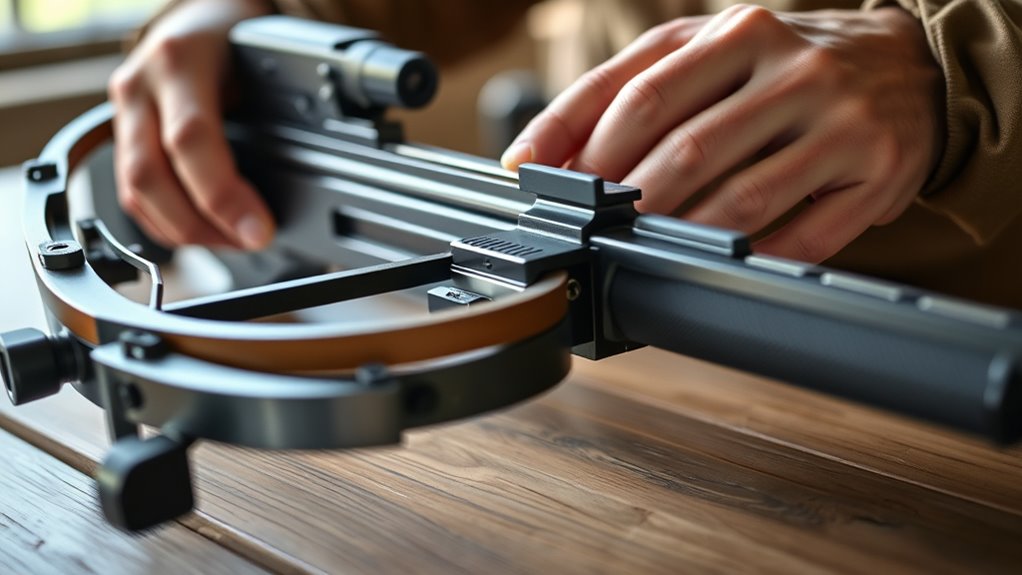
Before you load your crossbow, make certain it’s in a safe condition by checking the safety mechanism is engaged and the string and limbs show no signs of damage. Perform routine safety checks to verify the trigger functions smoothly and the safety catch locks firmly. Examine the string for fraying or wear, and inspect the limbs for cracks or splinters, which could compromise structural integrity.
Confirm the rail is clean and free from debris to prevent misfires. Crossbow maintenance includes regularly waxing the string to preserve flexibility and replacing any worn components promptly. Neglecting these procedures increases the risk of malfunction during operation.
Prioritize thorough safety checks as a critical step before loading to maintain reliability and prevent accidents, confirming your crossbow performs effectively each time you use it.
How to Cock and Load Your Crossbow Step-by-Step
With your crossbow verified safe and properly maintained, you’re ready to cock and load it. Begin by positioning the crossbow on a stable surface or using a cocking device to guarantee consistent force, which is vital for effective crossbow maintenance. Grasp the string firmly with both hands or use a rope cocking aid to evenly draw it back until it locks securely into the trigger mechanism.
Avoid twisting or uneven tension to prevent damage. Next, align the bolt with the flight groove carefully; do not press it down forcefully. Proper loading techniques reduce wear on the rail and guarantee reliable performance.
Always double-check that the crossbow remains on safe before proceeding. Following these steps will help maintain your crossbow’s integrity and readiness for accurate, safe use.
Position Your Bolt Correctly for Accurate Shots
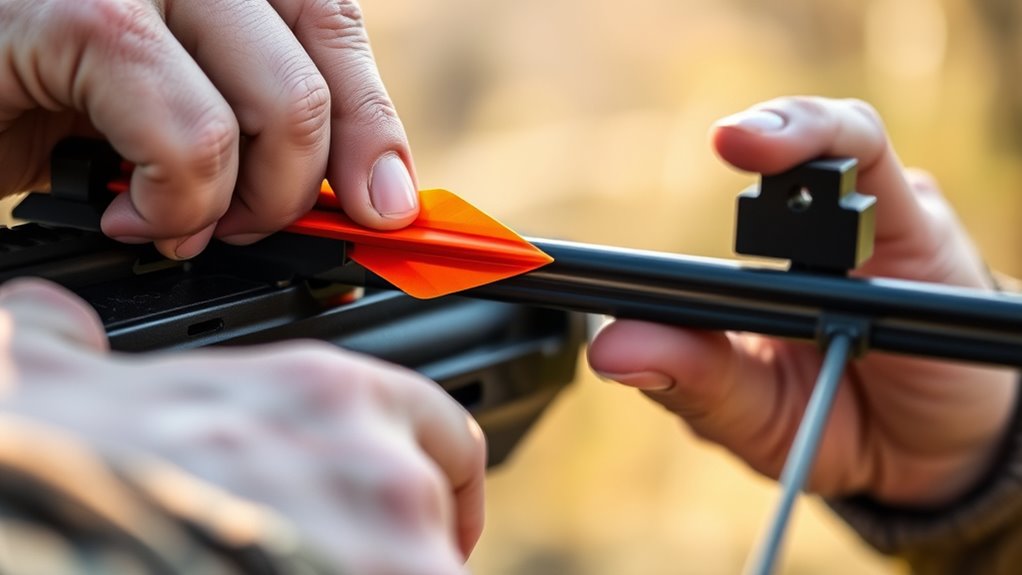
Once you’ve securely loaded the bolt, assure it’s positioned precisely in the flight groove, with the fletching aligned to avoid contact with the barrel or rail. Proper bolt orientation is critical for accuracy and safety. Ensure the nock fits firmly against the string, and the bolt lies flat without tilting.
Incorrect arrow alignment causes erratic flight paths and reduces precision.
| Step | Action | Reason |
|---|---|---|
| 1 | Place bolt in flight groove | Maintains straight path |
| 2 | Align fletching parallel to rail | Prevents interference |
| 3 | Verify nock engagement | Assures secure hold |
| 4 | Check bolt flatness | Avoids tilting |
| 5 | Confirm consistent orientation | Enhances shot accuracy |
Meticulous bolt orientation and arrow alignment optimize your shot consistency.
Common Crossbow Loading Mistakes and How to Avoid Them
Although loading a crossbow may seem straightforward, common mistakes can compromise safety and accuracy. One frequent error is failing to engage the safety before loading, which increases the risk of accidental discharge. Another is improper cocking technique, such as unevenly pulling the string, which can cause inconsistent tension and affect shot performance.
Additionally, neglecting to inspect the rail for debris before placing the bolt can lead to misfires or damage. Using incorrect bolts or placing them improperly—fletching touching the rail—also reduces accuracy.
To avoid these common errors, always follow established loading techniques: engage the safety immediately, use a cocking device for consistent tension, clean the rail regularly, and position bolts with the correct orientation. Adhering to these practices guarantees safe, reliable, and precise crossbow operation.
Tips to Keep Your Shots Accurate After Loading
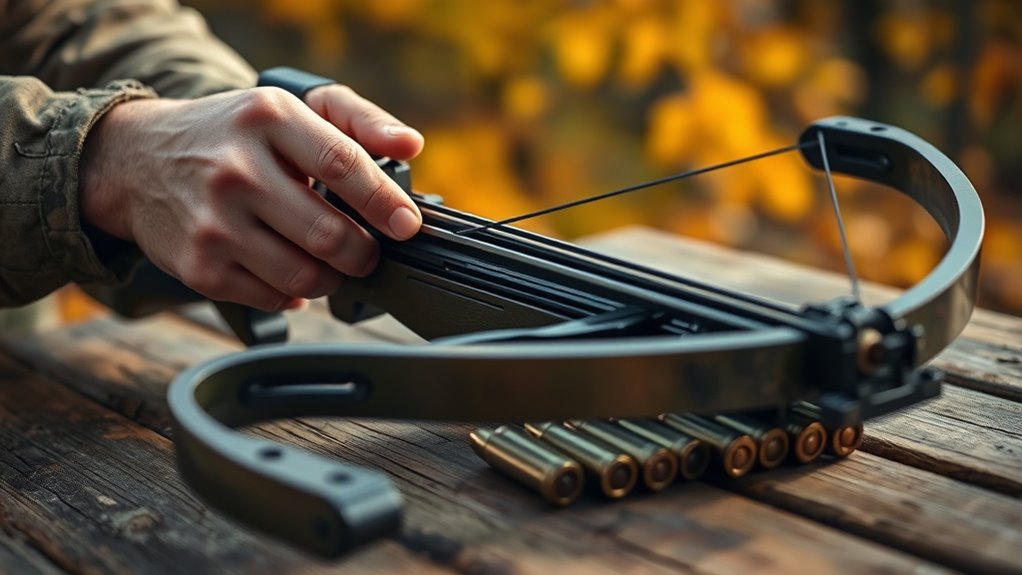
Even after properly loading your crossbow, maintaining shot accuracy requires careful attention to several factors. First, make precise sighting adjustments to align your scope with the point of impact; small deviations can cause significant accuracy loss. Regularly check and recalibrate your sights, especially after changing bolts or environmental conditions.
Next, adopt consistent grip techniques—hold the crossbow firmly but without excessive tension to minimize torque during the shot. Position your support hand under the foregrip to stabilize the weapon and reduce vibration. Additionally, maintain a steady stance and controlled breathing to prevent movement at release.
Frequently Asked Questions
What Types of Crossbows Are Best for Beginners?
You’ll find recurve crossbows best for beginners due to their simpler design and easier maintenance.
Compound crossbows offer more power but can be complex, so stick with recurve models until you gain experience and confidence.
How Do I Maintain My Crossbow After Use?
After use, you should perform crossbow cleaning by wiping down the limbs and rail. Regularly apply string maintenance, including waxing the string and cables to prevent fraying and extend their lifespan.
Store it dry and safe.
Can I Use Broadheads With Any Crossbow Bolt?
Think of broadhead compatibility like fitting puzzle pieces; not every bolt suits every blade. Using mismatched broadheads compromises crossbow accuracy, so always match your broadhead to the bolt’s design and specifications for peak performance.
Choosing the right broadhead ensures your shot remains true and effective. Always check the manufacturer’s recommendations for both your crossbow bolts and broadheads. This attention to detail helps maintain safety and maximizes hunting success.
What Safety Gear Should I Wear When Shooting?
You should always wear safety goggles to protect your eyes from debris and ear protection to reduce noise impact. Additionally, consider gloves for better grip and arm guards to shield against string slap during shooting sessions.
How Do Environmental Conditions Affect Crossbow Performance?
You might think weather impacts are minimal, but humidity effects can slow your bolt and alter flight path. Temperature changes affect string tension, while wind shifts trajectory—adjust your aim and maintenance accordingly for consistent crossbow performance.
Conclusion
Now that you’ve mastered loading your crossbow safely and accurately, you hold the power to release precision with every shot. Like a conductor directing an orchestra, your careful preparation turns tension into harmony.
Remember, each step—from cocking to positioning your bolt—builds the foundation for success. Avoid common pitfalls, and your aim will cut through the air like a whispering arrow.
Stay sharp, stay safe, and let your crossbow sing true. Properly loading a crossbow is the key to unlocking your full potential in every shot.