Crossbows typically range from $150 to over $600, depending on your needs.
Budget models cost around $150–$300, ideal for beginners. Mid-range crossbows, $300–$600, offer better materials and features suitable for casual hunters.
Premium models exceed $600, featuring advanced technology, superior speed, and precision, best for serious users.
Your choice should balance performance with cost. If you want to know how different features affect price and usability, keep exploring the options available.
Key Takeaways
- Crossbow prices range from $150 for budget models to over $600 for premium options with advanced features.
- Mid-range crossbows typically cost between $300 and $700, balancing performance and affordability.
- High-end crossbows start around $800, offering superior materials, trigger systems, and shooting speed.
- Performance factors like draw weight, speed, and accuracy influence crossbow pricing significantly.
- Investing in premium crossbows can provide long-term reliability and better shooting precision, justifying higher costs.
Crossbow Price Ranges: From Basic to Premium
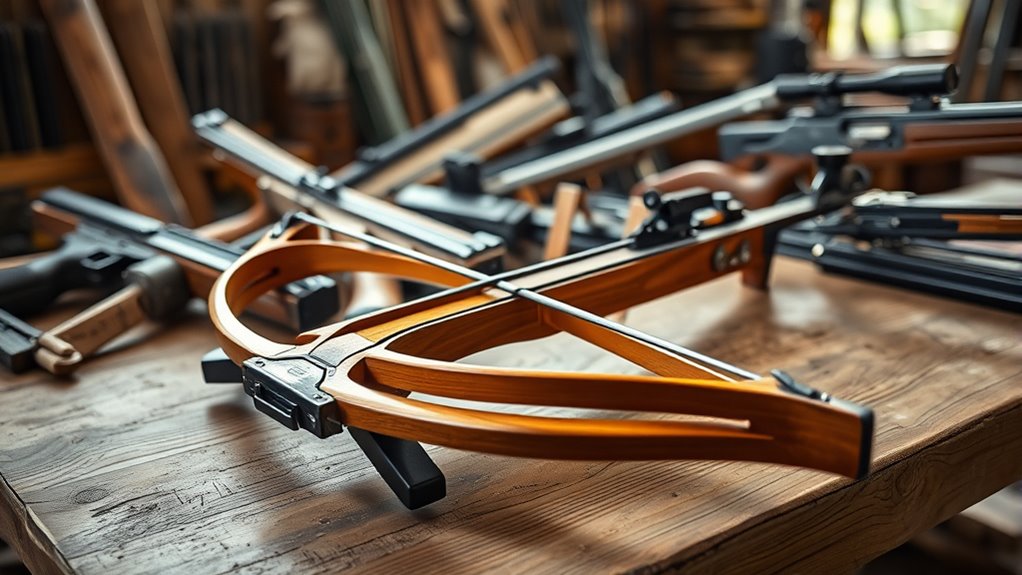
How much you’ll spend on a crossbow depends largely on its features and intended use. Budget friendly options typically start around $150 to $300, offering essential functionality suited for beginners. These models often have lower draw weights and simpler designs, making them ideal for novice users learning crossbow mechanics.
Beginner crossbow models in this range prioritize ease of use and safety over advanced performance metrics. Mid-range crossbows can cost between $300 and $600, providing enhanced accuracy, increased draw weight, and more durable materials.
Premium crossbows, exceeding $600, incorporate cutting-edge technology, superior build quality, and specialized components for experienced users. When selecting, focus on your skill level and intended application to balance cost with functionality effectively.
Key Features That Drive Crossbow Prices
Although crossbow prices vary widely, several key features primarily determine their cost. First, crossbow materials greatly impact price; premium components like carbon fiber limbs and aircraft-grade aluminum frames enhance durability and reduce weight but increase cost.
Next, technology advancements play an essential role. Modern crossbows may include integrated cocking mechanisms, advanced trigger systems for smoother release, and noise-dampening features, all of which add complexity and value. Additionally, precision engineering in cam systems affects performance and pricing.
You’ll also find that specialized accessories, such as illuminated scopes or adjustable stocks, can raise the price. Understanding these factors helps you assess whether a crossbow’s price reflects its build quality and technological sophistication, ensuring you invest wisely in a model that fits your needs and budget.
Comparing Mid-Range vs. High-End Crossbows
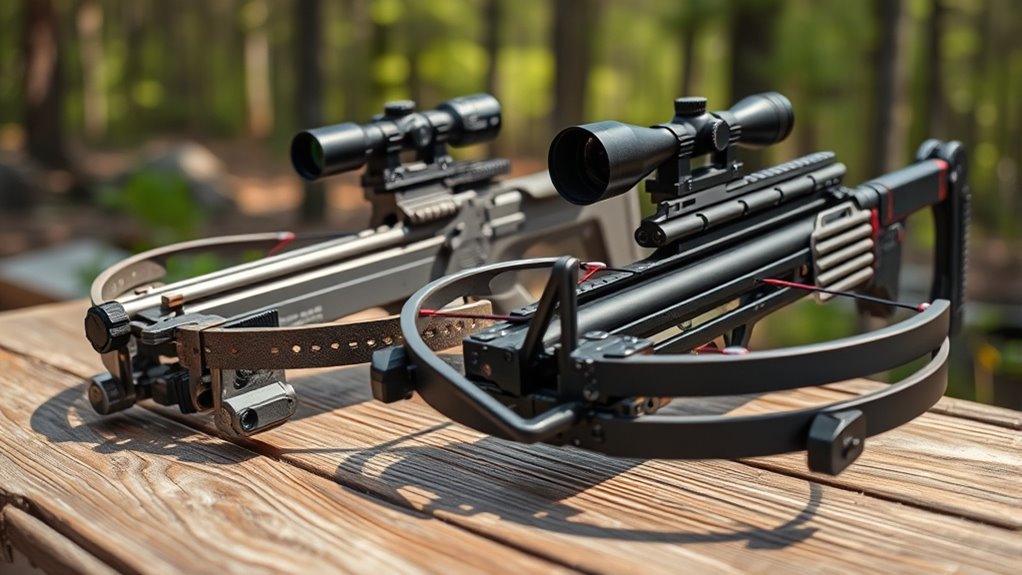
When comparing mid-range to high-end crossbows, you’ll notice significant differences in price that reflect variations in performance and features. High-end models typically offer superior durability and advanced technology, which can justify their cost.
Additionally, warranty coverage tends to be more extensive with premium crossbows, providing greater long-term value.
Price Range Differences
Even if you’re familiar with crossbows, distinguishing between mid-range and high-end models can greatly affect your purchasing decision. Budget considerations often define this divide, with mid-range crossbows typically priced between $300 and $700, while high-end models start around $800 and can exceed $1500. Brand comparisons also highlight differences in materials and warranty coverage.
Key price range differences include:
- Mid-range crossbows use composite materials; high-end employ advanced alloys.
- Trigger mechanisms are simpler in mid-range models.
- Scope quality varies markedly between tiers.
- Warranty length and customer support are more thorough for high-end brands.
- Mid-range options balance cost with performance; high-end prioritize premium components and durability.
Understanding these factors guarantees you align your investment with your needs.
Performance and Features
Three critical performance factors set mid-range and high-end crossbows apart: draw weight, speed, and accuracy. When comparing crossbow accuracy and shooting distance, high-end models typically deliver superior precision due to advanced limb technology and better trigger systems.
| Feature | Mid-Range Crossbows | High-End Crossbows |
|---|---|---|
| Draw Weight | 150-175 lbs | 175-200 lbs |
| Speed | 300-320 fps | 330-380 fps |
| Crossbow Accuracy | Moderate (effective ≤40 yds) | High (effective ≤60 yds) |
If you’re aiming for extended shooting distance and pinpoint accuracy, investing in a high-end crossbow will enhance your performance considerably. Mid-range options offer decent power but may fall short in long-range precision.
Durability and Warranty
Two key aspects you’ll want to review in crossbows are durability and warranty coverage, as they directly impact long-term value. High-end models undergo rigorous durability testing, ensuring components withstand extensive use and environmental stress. Mid-range crossbows, while reliable, may not match this level of endurance.
When comparing warranty options, high-end crossbows generally offer longer periods and more extensive coverage, including parts and workmanship. Mid-range warranties tend to be shorter with limited scope.
Consider these factors when reviewing durability and warranty:
- Materials used and corrosion resistance
- Stress and fatigue testing protocols
- Length and scope of warranty options
- Availability of replacement parts
- Manufacturer’s service and support reputation
These elements help you gauge reliability and protect your investment.
Where to Find the Best Crossbow Deals
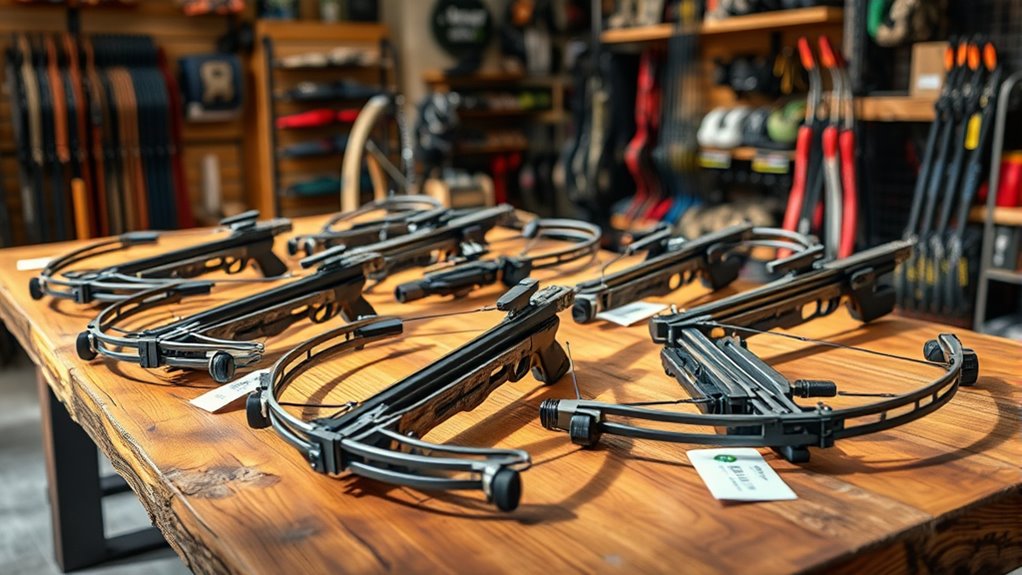
Where can you find the best crossbow deals without compromising on quality? Start by exploring reputable online retailers, which often offer competitive pricing, user reviews, and detailed product specifications. These platforms enable you to compare multiple models efficiently, guaranteeing you select a crossbow that meets performance standards.
Additionally, don’t overlook local shops; they provide hands-on experience and expert guidance, which can be invaluable for evaluating build quality and ergonomics. Local shops may also have seasonal promotions or package deals that aren’t available online.
When reviewing deals, consider factors like manufacturer warranties and return policies to guarantee long-term value. By combining research from both online retailers and local shops, you’ll maximize your chances of securing a high-quality crossbow at a prime price point.
How to Choose a Crossbow That Fits Your Budget
You need to set a clear spending limit before evaluating crossbows to avoid overspending.
Compare key features like draw weight, velocity, and durability against the price to identify the best value. Focus on essential qualities that meet your specific needs rather than optional extras that increase cost.
Assess Your Spending Limit
How much should you realistically invest in a crossbow? Conducting a thorough budget assessment helps align your spending priorities with your needs. Before purchasing, clearly define your financial limit to avoid overspending.
Consider the following factors:
- Intended use (recreational, hunting, competition)
- Frequency of use and maintenance costs
- Required specifications (draw weight, speed, durability)
- Accessory expenses (scopes, bolts, cases)
- Potential for upgrades or replacements
Compare Features Versus Price
Although it’s tempting to focus solely on price, evaluating a crossbow’s features in relation to cost guarantees you get the best value for your budget. When comparing crossbow brands, consider draw weight, speed, and included accessories.
User reviews often highlight performance consistency and durability, which can justify spending more upfront.
| Feature | Low-Cost Models | Mid-Range Models |
|---|---|---|
| Draw Weight | 150-160 lbs | 165-185 lbs |
| Speed | 250-280 fps | 290-320 fps |
| Accessories | Basic, limited | Sight, quiver, cocking device |
Balance your budget with features that meet your needs, using user reviews to validate the quality versus price ratio effectively.
Prioritize Essential Crossbow Qualities
When selecting a crossbow within your budget, focusing on essential qualities like draw weight, speed, and durability guarantees peak performance without overspending. You’ll want to prioritize factors that directly impact crossbow precision and user comfort.
Consider these key elements:
- Draw Weight: Determines bolt velocity and penetration power.
- Speed (FPS): Higher feet-per-second improves trajectory and accuracy.
- Crossbow Ergonomics: A well-balanced design reduces fatigue during extended use.
- Durability of Materials: Secures long-term reliability under various conditions.
- Trigger Mechanism: Precision triggers enhance shot consistency and safety.
Should You Splurge on a Premium Crossbow?
Why consider investing in a premium crossbow? If you’re serious about performance and durability, premium features such as advanced limb technology, superior trigger mechanisms, and precision-engineered cams make a significant difference. These enhancements improve accuracy, reduce noise, and increase draw weight consistency.
While the initial cost is higher, it’s a long term investment that typically yields better reliability and longevity, minimizing maintenance needs and replacement expenses. If you hunt frequently or compete, the precision and build quality justify the splurge.
However, if you’re a casual user, a mid-range model might suffice. Ultimately, your decision should balance budget constraints against how much you value enhanced performance and durability offered by premium crossbows.
Frequently Asked Questions
Are Crossbows Legal for Hunting in All States?
You won’t find crossbow regulations uniform in all states; some require specific hunting licenses, while others restrict or prohibit crossbow hunting.
Always check local laws to verify compliance before using a crossbow for hunting.
What Maintenance Does a Crossbow Require?
You’ll notice the string’s fibers fraying — that’s your cue for string maintenance. Regularly wax it and inspect for wear.
When damage’s evident, perform string replacement promptly to guarantee precision, safety, and peak crossbow performance.
How Heavy Is a Typical Hunting Crossbow?
A typical hunting crossbow weighs between 6 to 8 pounds. When comparing crossbow types, compound models tend to be heavier due to added mechanisms, while recurve crossbows are lighter, enhancing portability without sacrificing performance.
Can Beginners Safely Use a Crossbow?
Using a crossbow safely as a beginner is like learning to drive a car—you’ll need to follow strict crossbow safety rules and beginner tips, such as proper handling, aiming techniques, and always wearing protective gear to prevent accidents.
What Accessories Are Essential for Crossbow Use?
You’ll need essential accessories like a reliable scope for accurate targeting and various arrow types suited to your crossbow’s draw weight and purpose.
Additionally, a cocking device and safety gear are vital for efficient, safe use.
Conclusion
Choosing the right crossbow doesn’t have to feel like searching for a needle in a haystack. By understanding price ranges and key features, you can pinpoint exactly what fits your budget and needs.
Whether you opt for a reliable mid-range model or decide to splurge on a premium option, knowing where to find the best deals guarantees you get maximum value.
With the right info, your perfect crossbow is just within reach. Knowing how much is a crossbow will help you make a smart purchase that suits both your requirements and your wallet.