You can expect your crossbow to shoot effectively up to 30-50 yards, with accuracy dropping beyond that due to bolt drop and velocity loss.
How far can a crossbow shoot depends largely on factors such as draw weight and bolt type. Heavier draw weights increase kinetic energy, while lighter, aerodynamic bolts maintain velocity longer.
Environmental factors and your shooting form also impact performance.
For hunting, the ideal range is usually shorter to guarantee humane shots, while target shooting allows for longer distances.
A deeper look reveals how to fine-tune these aspects for better results.
Key Takeaways
- Most crossbows effectively shoot accurate bolts within 30 to 50 yards, depending on design and shooting technique.
- Hunting crossbow effective range is typically limited to 30-40 yards for ethical, humane kills.
- Target shooting can extend crossbow range to 50-70 yards due to stable shooting conditions.
- Draw weight and bolt type significantly influence crossbow range and accuracy.
- Crossbows rarely achieve accurate shots beyond 100 yards due to bolt drop and reduced kinetic energy.
Typical Crossbow Shooting Range: How Far Can They Shoot?
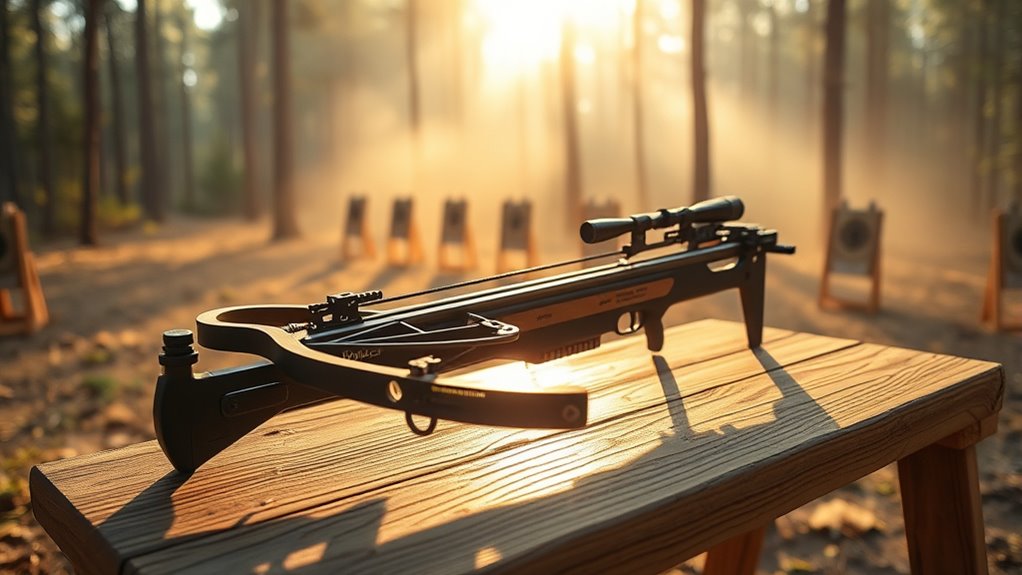
Although the maximum distance a crossbow bolt can travel varies by model and draw weight, most typical crossbows shoot effectively within 30 to 50 yards. In this range, crossbow accuracy is optimized, provided you apply proper shooting techniques.
Factors such as bolt trajectory, wind resistance, and target size influence effective range, but skillful execution of stance, grip, and trigger control greatly enhances precision. You’ll notice that beyond 50 yards, bolt drop and diminished kinetic energy reduce both accuracy and lethality.
Training to maintain consistent anchor points and sight alignment is essential for maximizing effective range. By focusing on these shooting techniques, you can reliably hit targets within the typical effective shooting range and fully utilize your crossbow’s performance capabilities.
How Draw Weight and Bolt Type Affect Crossbow Range
You’ll notice that increasing the draw weight directly boosts the kinetic energy, extending your crossbow’s effective range. However, the bolt type—its weight, length, and aerodynamic profile—also plays a critical role in flight stability and distance.
Understanding how these factors interact helps optimize your shooting performance.
Draw Weight Impact
One critical factor that directly influences a crossbow’s effective range is its draw weight, which determines the amount of force used to propel the bolt. When you increase draw weight, the bolt exits the barrel at higher velocity, extending the potential shooting distance.
However, higher draw weight also demands more from you regarding handling and stability, which can impact shooting accuracy if you’re not accustomed to the increased tension. It’s essential to balance draw weight with your ability to maintain a steady aim; too much force without control can decrease precision, negating range advantages.
Optimizing draw weight involves selecting a level that maximizes bolt speed while preserving consistent shooting accuracy, ensuring you achieve the desired effective range without compromising shot quality.
Bolt Type Influence
While draw weight determines the initial velocity of a bolt, the type of bolt you use greatly affects how that energy translates into range and accuracy. Bolt materials play a critical role: carbon shafts offer a high strength-to-weight ratio, reducing drag and maintaining velocity over distance, whereas aluminum bolts tend to be heavier and may lose speed faster.
The fletching design also influences aerodynamic stability; low-profile vanes reduce air resistance, enabling a flatter trajectory, while larger feathers improve stabilization but increase drag. Matching bolt weight to your crossbow’s draw weight is essential—too heavy, and velocity drops; too light, and you risk inconsistent flight.
Other Factors That Influence Crossbow Shooting Distance
Although the bow’s design and draw weight largely determine shooting distance, several additional factors can considerably affect your crossbow’s effective range. Crossbow design elements such as limb material, cam systems, and rail friction influence bolt acceleration and stability.
Environmental conditions also play a critical role—wind speed and direction can alter bolt trajectory, while temperature affects string tension and propulsive force. Humidity may impact both string elasticity and bolt flight.
Additionally, your shooting technique, including the consistency of your release and bolt placement, can influence accuracy at extended distances. Understanding and optimizing these variables allows you to maximize range and precision beyond the baseline capabilities set by your crossbow’s mechanical specifications.
Effective Crossbow Range for Hunting vs. Target Shooting
Factors like environmental conditions and shooting technique can greatly impact your crossbow’s performance, but the intended use—whether hunting or target shooting—ultimately dictates the effective range you should aim for.
When considering hunting techniques, ethical shots typically occur within shorter distances to guarantee humane kills. Target precision, conversely, allows for extended ranges due to controlled environments.
- Hunting: Effective range generally maxes out around 30-40 yards, prioritizing accuracy over distance to accommodate movement and wind variability.
- Target Shooting: You can push ranges to 50-70 yards or more, leveraging stable setups and consistent shooting forms.
- Environmental Influence: Wind, light, and terrain affect both scenarios but are more critical in hunting due to unpredictable conditions.
Aligning your crossbow use with these parameters optimizes performance and ethical responsibility.
Tips to Maximize Your Crossbow’s Shooting Distance
To maximize your crossbow’s shooting distance, you’ll need to optimize bolt selection by choosing the correct weight and length for your model. Adjusting the draw weight can increase the kinetic energy transferred to the bolt, improving range.
Additionally, maintaining proper shooting form guarantees consistent accuracy and energy efficiency with each shot.
Optimize Bolt Selection
When you want to maximize your crossbow’s shooting distance, selecting the right bolt is essential because it directly affects velocity, stability, and energy transfer. You need to take into account bolt materials and fletching options carefully to optimize performance.
- Bolt Materials: Choose lightweight yet durable materials like carbon fiber to reduce drag and maintain structural integrity, enhancing velocity and flight consistency.
- Bolt Length and Weight: Match bolt length and weight to your crossbow’s specifications; heavier bolts retain momentum better but may reduce initial velocity, while lighter bolts fly faster but lose energy quicker.
- Fletching Options: Select fletching that stabilizes the bolt without excessive drag—plastic vanes for speed or feather fletching for better flight control, depending on your shooting conditions.
Optimizing these factors guarantees maximum distance through precise energy transfer and stable trajectory.
Adjust Draw Weight
Selecting the ideal bolt sets the stage for maximizing your crossbow’s range, but the draw weight plays an equally significant role in determining shot power and distance. When you make draw weight adjustments, you directly influence the kinetic energy transferred to the bolt. Increasing draw weight elevates the potential energy stored in the limbs, resulting in higher bolt velocity and extended flight distance.
However, excessive draw weight can impair accuracy and increase physical strain, so fine-tuning is crucial. Understanding draw weight effects allows you to balance power and control effectively. To optimize shooting distance, adjust draw weight incrementally while testing performance metrics such as bolt speed and trajectory.
This analytical approach guarantees your crossbow operates at peak efficiency without compromising stability or shooter comfort.
Maintain Proper Form
Mastering proper form is essential for maximizing your crossbow’s shooting distance, as even minor deviations can greatly affect your bolt’s trajectory and velocity. To maintain consistent accuracy and power, focus on these critical elements:
- Proper Stance: Position your feet shoulder-width apart and align your body perpendicular to the target. This stance stabilizes your frame, reducing sway and guaranteeing a steady shot.
- Grip Technique: Hold the crossbow firmly but without excessive tension. A relaxed grip minimizes torque on the stock, preventing unwanted lateral movement during release.
- Consistent Shouldering: Confirm the stock is firmly seated against your shoulder with consistent pressure. This absorbs recoil effectively and maintains alignment between your eye, the sight, and the bolt’s path.
Adhering to these precise form fundamentals optimizes bolt velocity and shot consistency, thereby extending your crossbow’s effective range.
Common Myths About Crossbow Range Debunked
Although crossbows have been used for centuries, many misconceptions still surround their effective range, often leading to unrealistic expectations. One common myth is that crossbows can accurately hit targets over 200 yards, but accuracy myths like this ignore critical factors such as bolt velocity, drop, and wind resistance.
You need to understand that while a crossbow’s maximum shooting distance might exceed 300 yards, effective accuracy sharply declines past 40 to 50 yards. Another misconception is that all crossbows perform equally; in reality, draw weight, bolt design, and mechanical efficiency greatly influence range.
Frequently Asked Questions
How Long Does It Take to Reload a Crossbow?
It typically takes you 5 to 20 seconds to reload a crossbow, depending on crossbow reloading techniques used.
Compared to traditional bows, crossbow speed varies; advanced mechanisms can markedly reduce reload time, enhancing firing rate efficiency.
What Maintenance Is Required for a Crossbow?
You’ll need regular string maintenance, including waxing to prevent fraying, and timely string replacement when wear appears.
Also, inspect limbs and bolts, clean trigger mechanisms, and lubricate moving parts to guarantee peak crossbow performance and safety.
Are Crossbows Legal for Hunting in All States?
You know, “When in Rome, do as the Romans do.” Crossbow regulations vary widely; you can’t assume legality everywhere.
State variations dictate hunting permissions, so check local laws carefully before using your crossbow for hunting to avoid violations.
Can Crossbows Be Used Effectively in Wet Weather?
Yes, you can use a crossbow effectively in wet conditions, but you’ll need to maintain it carefully.
Moisture may slightly affect crossbow performance, especially the string and trigger mechanism, so regular cleaning and drying are essential to guarantee reliability.
What Safety Gear Is Recommended When Shooting a Crossbow?
You should always wear protective eyewear to shield against debris and padded gloves to improve grip and reduce vibration impact.
These safety measures optimize control and minimize injury risks during crossbow operation.
Conclusion
So, you’re wondering how far your crossbow can shoot—because obviously, it’s not just for impressing your neighbor or winning backyard battles. While draw weight, bolt type, and other factors technically govern your range, don’t expect to hit a target on the moon.
Master these variables, and you might just maximize your effective hunting or target distance. Remember, it’s science, not magic—so aim wisely and leave the superhero feats to the movies.
In the end, understanding how far a crossbow can shoot will help you get the most out of your gear and improve your accuracy.