You operate a crossbow by cocking its limbs to store elastic potential energy in the string, which, when released by the trigger, propels the bolt forward with precision.
The rigid stock stabilizes the frame, while the flight groove guarantees proper bolt alignment, optimizing accuracy.
Proper maintenance, like string inspection and lubrication, preserves performance.
Mastering the interplay of these components is key to efficient power transfer and reliability.
Further insights are available on usage, upkeep, and safety considerations.
Key Takeaways
- A crossbow stores potential energy by drawing back a string attached to flexible limbs under tension.
- The limbs convert stored elastic energy into kinetic energy to propel the bolt forward when released.
- A bolt is placed on the flight groove, aligned with the string and trigger for accurate shooting.
- Pulling the trigger releases the string smoothly, ensuring a clean shot without disturbing bolt trajectory.
- Safety mechanisms and proper maintenance improve reliability, accuracy, and prevent accidental firing.
How the Main Parts of a Crossbow Work Together
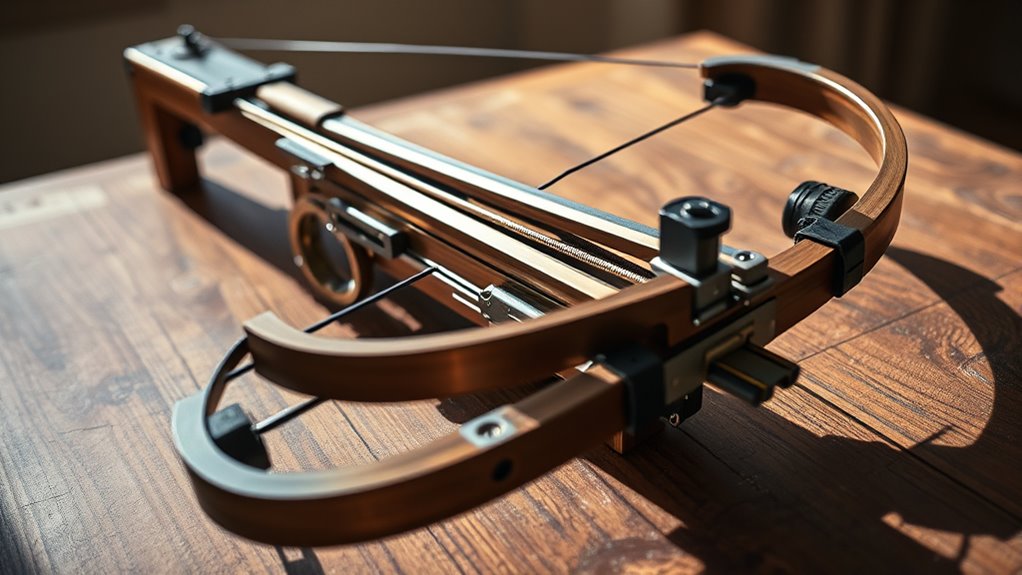
Although each component of a crossbow serves a distinct function, they must operate in precise coordination to secure effective performance. You’ll find that string tension plays a critical role, as it stores the potential energy necessary for propulsion. The limbs, designed for ideal flexibility and strength, convert this stored energy into kinetic energy efficiently.
Their specific limb design determines the amount of force transmitted to the string and ultimately to the bolt. When you engage the trigger mechanism, it releases the string under controlled tension, propelling the bolt forward. The synergy between the stock, trigger, limbs, and string tension secures accuracy and power.
Understanding this interplay helps you appreciate how precision engineering governs the crossbow’s overall effectiveness.
How to Cock, Load, and Fire a Crossbow
The coordinated function of the crossbow’s components sets the stage for effective operation, but you still need to understand the exact steps to cock, load, and fire it correctly. Start by engaging the cocking mechanism, which may involve a rope or lever, to draw the string back evenly; this guarantees consistent tension in the crossbow mechanics.
Next, place the bolt precisely on the flight groove, aligning it with the string and the trigger mechanism. Maintain a steady grip and adopt proper shooting techniques by aiming carefully, controlling your breathing, and guaranteeing trigger pull is smooth to prevent movement.
Finally, gently depress the trigger to release the string, propelling the bolt forward. Mastering these steps enhances accuracy and reliability in crossbow operation.
Why Do Crossbows Deliver Power and Accuracy?
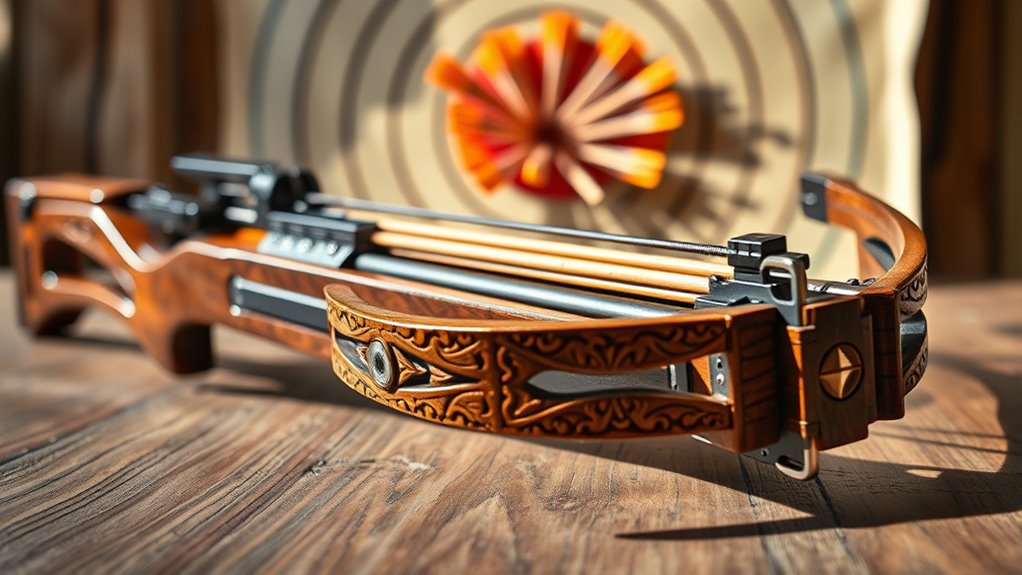
When you examine the mechanics behind a crossbow, you’ll find that its power and accuracy stem from a combination of high-tension limbs, a rigid stock, and a precise trigger mechanism. The power generation primarily relies on the limbs’ ability to store and rapidly release elastic potential energy, propelling the bolt with significant force.
The rigid stock minimizes vibration and stabilizes the frame during firing, which is essential for consistent shot placement. Accuracy factors also include the alignment of the flight groove and the design of the trigger, which guarantees a clean release without disturbing the bolt’s trajectory.
Together, these elements optimize energy transfer and maintain bolt stability, resulting in the crossbow’s characteristic combination of high power output and pinpoint accuracy.
How to Maintain Your Crossbow for Best Performance
Because regular upkeep directly impacts your crossbow’s reliability and longevity, you need to adopt a systematic maintenance routine. Focus on string maintenance by inspecting for frays and replacing strings periodically. Employ precise lubrication techniques on the rail and trigger mechanism to minimize friction and wear.
| Maintenance Area | Recommended Frequency | Key Action |
|---|---|---|
| String | Every 100 shots | Inspect & wax string |
| Rail | Monthly | Apply lubricant |
| Trigger | Quarterly | Clean & lubricate |
Regularly clean your crossbow to remove debris and moisture, preventing corrosion. Record maintenance intervals to promote consistency. This analytical approach to upkeep guarantees superior performance and extends your crossbow’s service life.
Common Safety Tips and Troubleshooting for Crossbows
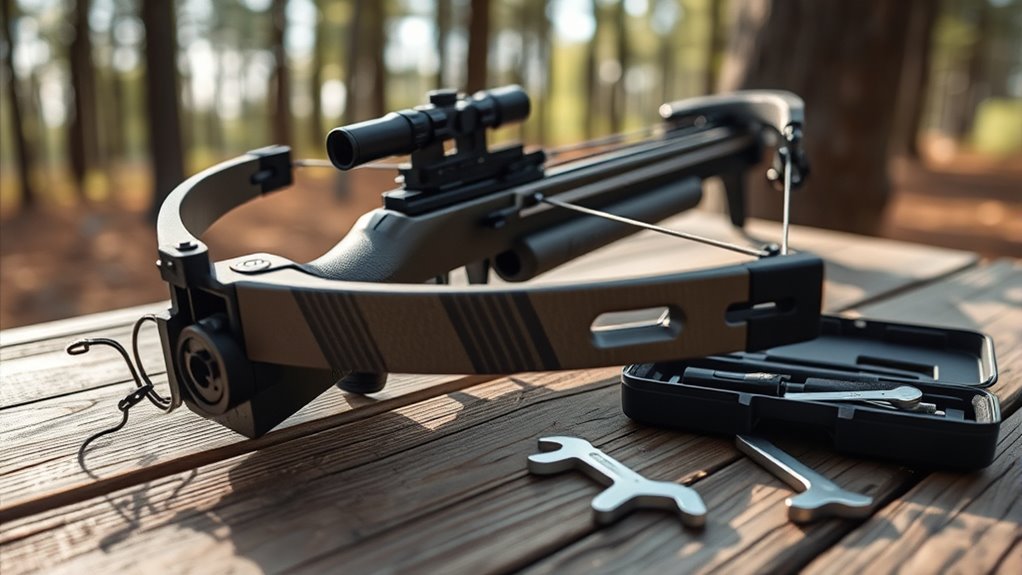
Although crossbows are engineered for reliability, adhering to strict safety protocols is essential to prevent accidents and equipment damage. When handling your crossbow, always engage the safety mechanism until ready to fire and guarantee the bolt is correctly seated to avoid misfires. Regularly inspect limbs and strings for wear or damage to uphold structural integrity.
If you encounter performance issues, troubleshooting tips include checking string tension, verifying trigger function, and confirming bolts are the correct size. Avoid dry firing, which can cause internal damage. Always store your crossbow unloaded and in a secure case.
Frequently Asked Questions
What Is the History of the Crossbow?
You’ll find the crossbow’s history rooted in ancient warfare, where its mechanical design revolutionized combat by enabling precise, powerful shots without extensive training.
This innovation marked a significant advancement in ranged weapon technology across cultures.
Are Crossbows Legal for Hunting in All States?
You can’t paint every forest with one brush; similarly, crossbow regulations vary by state. You’ll need specific hunting licenses and must check local laws carefully, as some states restrict or prohibit crossbow hunting entirely.
How Do Crossbows Compare to Traditional Bows in Competitions?
You’ll find crossbow accuracy often surpasses traditional bows due to mechanical advantage, but shooting techniques differ markedly. Precision demands mastering trigger control and bolt alignment, contrasting with the draw strength and release timing essential in traditional archery competitions.
What Are the Best Materials for Crossbow Limbs?
You’ll find carbon fiber and fiberglass limbs are best for crossbows due to their high tensile strength, lightweight properties, and durability.
These materials guarantee consistent performance and minimal limb fatigue, enhancing accuracy and longevity.
Can Children Safely Use Crossbows?
Children can use crossbows, but only under strict safety guidelines and proper supervision. Ensuring they understand mechanics, maintain control, and follow protocols is essential to prevent accidents and promote responsible handling in a controlled environment.
Conclusion
Now that you understand how each part of your crossbow works in harmony, you’re equipped to cock, load, and fire with precision.
Remember, power and accuracy aren’t just features—they’re the result of meticulous design and careful maintenance. Like a finely tuned instrument, your crossbow demands respect and attention to perform at its best.
Keep safety foremost, troubleshoot wisely, and your crossbow will serve you reliably, turning potential into mastery with every shot. Understanding how a crossbow works is key to unlocking its full potential and ensuring a rewarding experience every time you use it.