You can keep your trail camera from fogging up by managing moisture and temperature around it.
Place silica gel packs inside the housing to absorb humidity and regularly replace them. Seal all joints with silicone to prevent water entry and guarantee the housing is weatherproof.
Position the camera where airflow reduces condensation and avoid rapid temperature changes.
Choosing models with anti-fog lens coatings or built-in heating elements also helps maintain clarity.
Explore additional strategies to optimize your camera’s performance in varying conditions.
Key Takeaways
- Use silica gel packs inside the camera housing to absorb moisture and reduce internal condensation.
- Position the camera in shaded areas with good airflow to minimize temperature fluctuations and humidity buildup.
- Regularly clean the lens with a non-abrasive solution to prevent residue that can worsen fogging.
- Select trail cameras with built-in anti-fog coatings or heating elements to prevent moisture accumulation on the lens.
- Seal all camera housing joints with silicone sealant and inspect seals frequently to keep moisture out.
Why Trail Cameras Fog Up and Affect Your Photos
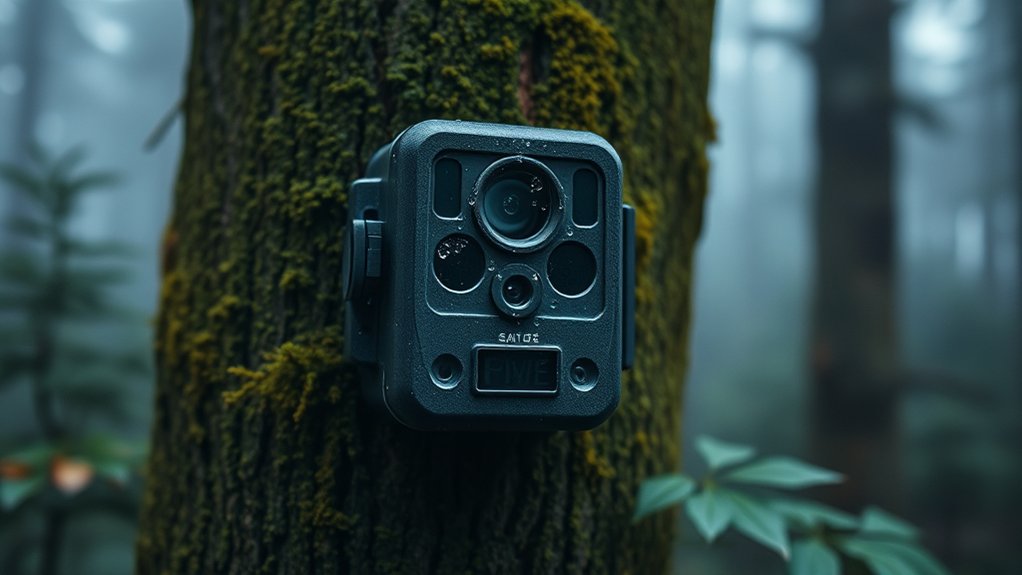
Although trail cameras are designed for outdoor use, they can still fog up due to temperature fluctuations and humidity. When warm, moist air encounters the cooler surface of your camera’s lens, condensation forms—this is lens condensation. The water droplets scatter light, reducing image clarity and detail.
Humidity effects are especially pronounced in environments with high moisture levels or rapid temperature changes between day and night. This moisture buildup on the lens impairs your camera’s ability to capture sharp photos and accurate colors. Understanding these physical interactions helps you recognize why your trail camera images might appear blurry or hazy.
The fogging results from the condensation of water vapor, which forms when the lens temperature drops below the dew point of the surrounding air, directly impacting photo quality.
How to Stop Your Trail Camera Lens From Fogging
When you want to prevent fogging on your trail camera lens, controlling temperature and moisture around the device is essential. Fog forms when warm, moist air contacts a cooler lens surface, causing condensation. To effectively stop lens fogging, focus on minimizing exposure to outdoor humidity and maintaining a stable temperature.
Prevent trail camera lens fogging by managing temperature and moisture to avoid condensation.
Consider these key steps:
- Regular lens cleaning with appropriate, non-abrasive solutions removes residues that attract moisture.
- Position your camera where airflow is sufficient to reduce stagnant humid air around the lens.
- Use desiccant packs inside the camera housing to absorb excess moisture and stabilize internal humidity levels.
Choosing Trail Cameras With Anti-Fog Features
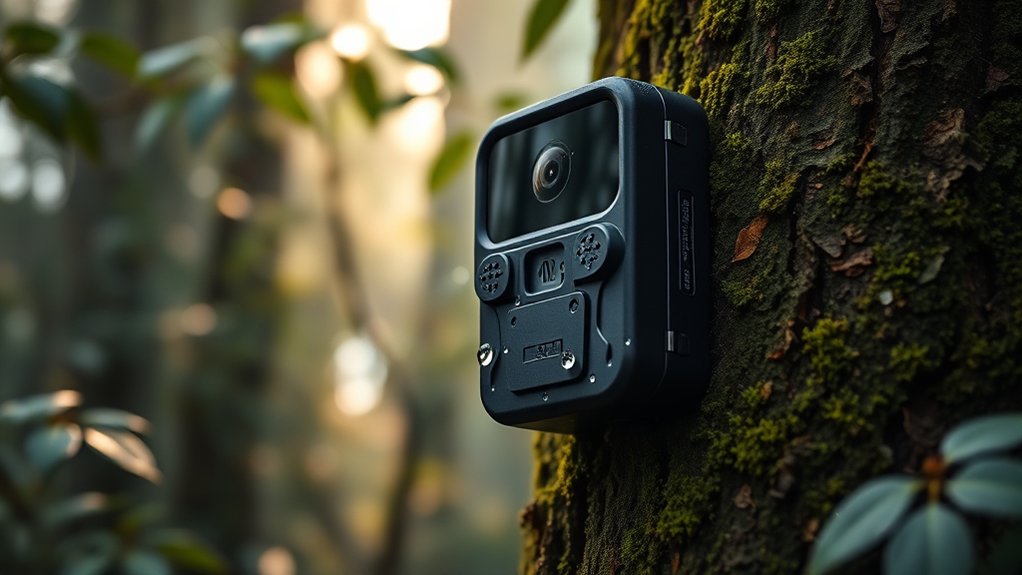
When selecting a trail camera, look for built-in anti-fog technology that prevents moisture buildup on the lens. Consider models with specialized lens coatings that reduce condensation and improve image clarity.
Additionally, choose cameras with weather-resistant housing designs to minimize internal fogging caused by temperature fluctuations.
Built-In Anti-Fog Technology
Since moisture buildup can severely impair your trail camera’s performance, selecting a model with built-in anti-fog technology is essential. These cameras often incorporate advanced anti-fog coatings on internal surfaces to reduce condensation caused by fluctuating environmental factors, such as temperature and humidity.
When choosing a trail camera, focus on key features that enhance anti-fog effectiveness:
- Hydrophilic coatings that disperse water evenly, preventing droplet formation
- Sealed housing designs that minimize air exchange and moisture ingress
- Integrated heating elements to maintain lens temperature above dew point
Lens Coating Benefits
Although environmental conditions vary, choosing trail cameras with specialized lens coatings greatly reduces fogging by preventing moisture accumulation on the lens surface. These lens treatments function at a microscopic level, altering surface tension to repel water molecules and inhibit condensation.
Optical coatings designed for anti-fog purposes improve light transmission while maintaining clarity, ensuring your camera captures sharp images even in high humidity. When selecting a trail camera, prioritize models employing hydrophilic or hydrophobic coatings, as these lens treatments effectively manage fog formation without compromising image quality.
Weather-Resistant Housing Designs
If you want to prevent fogging effectively, selecting trail cameras with weather-resistant housing is essential. These designs incorporate weatherproof materials that shield internal components from humidity and temperature fluctuations, reducing condensation risks. Moisture barriers within the housing prevent water vapor infiltration, maintaining a dry environment around the lens and sensors.
When choosing your trail camera, focus on:
- Durable weatherproof materials like sealed rubber gaskets and corrosion-resistant metals
- Integrated moisture barriers that block vapor penetration
- Ventilation systems with hydrophobic membranes allowing air exchange without water ingress
How to Seal Your Trail Camera Housing Against Moisture
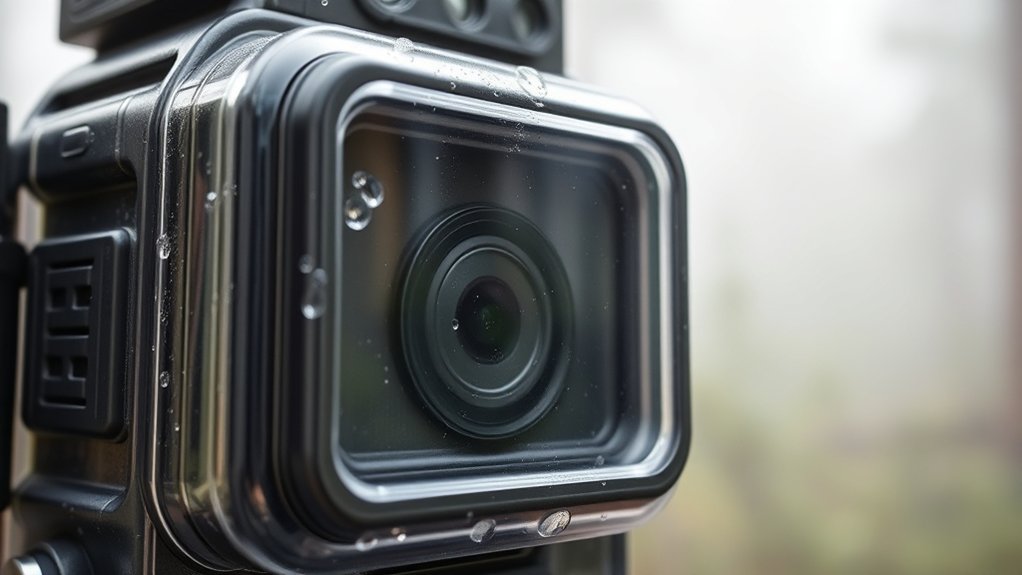
To prevent moisture from fogging your trail camera lens, you need to seal its housing effectively. Start by choosing weatherproof materials and apply a silicone sealant around all joints and openings.
Regularly inspect and maintain these seals to guarantee long-term protection against humidity and water intrusion.
Choose Weatherproof Materials
When protecting your trail camera from moisture, selecting weatherproof materials is crucial to prevent internal fogging. These materials enhance camera durability by resisting water infiltration and minimizing condensation inside the housing. Choose components that maintain a tight seal and withstand environmental stressors.
Focus on these key material attributes:
- Water-resistant plastics or polycarbonates: Provide a robust barrier against rain and humidity.
- Rubber gaskets and seals: Guarantee airtight closure, blocking moisture entry points.
- Corrosion-resistant metals: Maintain structural integrity in wet conditions without degrading.
Using weatherproof materials tailored for outdoor use considerably reduces the risk of fogging by limiting moisture ingress and stabilizing internal humidity. This approach directly supports your camera’s longevity and consistent image quality under varying weather conditions.
Apply Silicone Sealant
Applying silicone sealant involves carefully sealing all potential moisture entry points on your trail camera housing to create a waterproof barrier. Begin by selecting appropriate sealant types, focusing on those formulated for outdoor electronics and resistant to temperature fluctuations.
Before silicone application, clean and dry the housing surfaces thoroughly to guarantee strong adhesion. Apply a continuous bead of silicone along seams, joints, and around any openings such as lens edges or battery compartments. Use steady pressure to avoid gaps or air bubbles that could compromise the seal.
After application, allow the sealant to cure fully according to manufacturer instructions, typically 24 hours. Proper silicone application prevents condensation inside the housing, thereby reducing fogging and protecting sensitive internal components from moisture damage.
Inspect and Maintain Seals
A regular inspection and maintenance of your trail camera’s seals play an essential role in preventing moisture intrusion. You’ll want to focus on seal quality and seal placement to guarantee peak protection against fogging. Check seals for cracks, deformation, or dirt that compromise their integrity.
Proper seal placement guarantees no gaps allow humidity inside.
To maintain your camera housing effectively:
- Examine seals visually for wear or damage.
- Clean seals gently to remove debris affecting the seal quality.
- Reposition or replace seals that have shifted or degraded.
Using Silica Gel Packs to Prevent Trail Camera Moisture
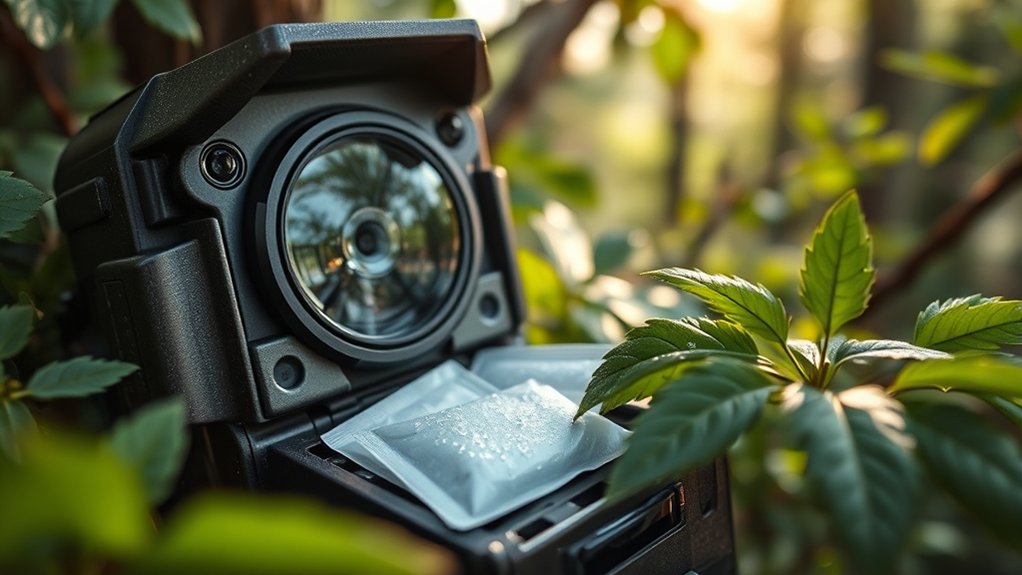
Silica gel packs effectively absorb excess moisture inside your trail camera housing, reducing the risk of fogging on the lens and internal components. By placing silica gel inside the camera case, you enhance moisture absorption, maintaining ideal internal humidity levels.
This method is simple, reusable, and cost-effective. Regularly replace or recharge packs to guarantee continued efficiency.
| Silica Gel Type | Moisture Absorption Capacity | Ideal Use Duration |
|---|---|---|
| Regular Beads | 20-30% weight in moisture | 1-2 months |
| Indicating | Changes color when saturated | 1 month |
| Reusable | Up to 40% weight | Several cycles |
| Pack Size (g) | 5g, 10g, 20g options | Varies by camera |
Use appropriate pack size based on camera volume for best moisture control.
Managing Temperature to Prevent Trail Camera Fogging
Controlling moisture inside your trail camera is essential, but managing temperature differences between the camera’s interior and the external environment also plays a significant role in preventing fogging. Temperature fluctuations cause condensation as warm, moist air contacts cooler surfaces, increasing internal humidity.
Managing internal temperature and moisture is key to preventing trail camera fogging and condensation.
To minimize this, you should:
- Insulate the camera housing to reduce rapid temperature changes and maintain stable internal conditions.
- Use small heating elements or chemical heat packs designed to keep the camera slightly warmer than the ambient temperature, preventing dew formation.
- Guarantee proper ventilation combined with humidity control methods to balance moisture levels and temperature inside the device.
Best Positions to Minimize Trail Camera Lens Fog
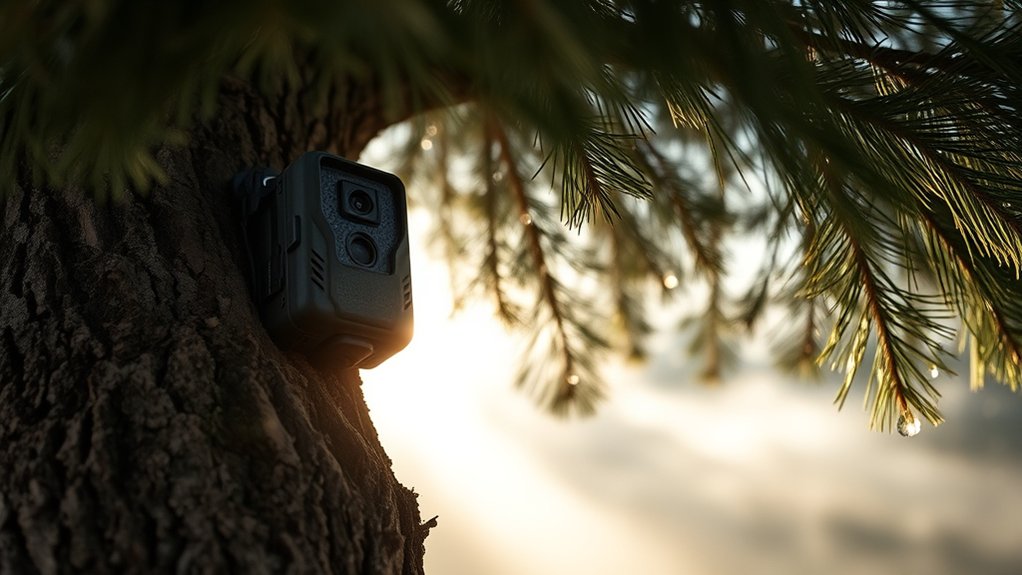
When you place your trail camera, choosing locations that reduce exposure to moisture and temperature fluctuations greatly decreases lens fogging. Position your camera at ideal angles that avoid direct facing of cold air currents or humid zones, as these conditions promote condensation. Avoid pointing the lens toward water sources or dense vegetation, which increase local humidity.
Distance considerations are vital; maintain sufficient space from surfaces that radiate moisture or cool rapidly, as proximity can cause temperature gradients leading to fog. Mount your camera where airflow is steady but not turbulent, ensuring moisture disperses rather than accumulates on the lens. By carefully selecting positions that balance angle and distance relative to environmental factors, you minimize the potential for lens fog and improve image clarity under varying field conditions.
DIY Tips to Prevent Trail Camera Lens Fogging
Selecting the right location for your trail camera helps reduce lens fogging, but implementing practical, hands-on solutions can further protect your equipment. You should focus on effective lens maintenance and humidity control to prevent condensation buildup. Start by cleaning the lens regularly with a microfiber cloth to remove dirt and moisture.
Choosing the right spot and keeping the lens clean are key to preventing trail camera fogging.
Use silica gel packets inside the camera housing to absorb excess humidity. Additionally, apply an anti-fog spray designed for optical lenses to create a moisture-resistant barrier. These DIY tips enhance your camera’s performance by minimizing fog:
- Clean lens surface frequently with appropriate materials
- Place desiccants inside housing for humidity control
- Apply anti-fog treatments to maintain clear optics
Incorporating these steps guarantees clearer images and prolongs your trail camera’s operational reliability in various environmental conditions.
How to Maintain and Troubleshoot a Foggy Trail Camera
Although fogging can impair your trail camera’s image quality, proper maintenance and troubleshooting can quickly restore its functionality. First, adjust your camera placement to reduce exposure to humidity and temperature fluctuations, which often cause condensation. Position the camera under natural cover or use a weatherproof housing to minimize moisture contact.
Regular lens cleaning is essential; use a microfiber cloth and lens-safe solution to remove dirt and residual moisture without scratching. If fogging persists, check for seal integrity around the camera casing and replace worn gaskets to prevent internal moisture buildup. Additionally, consider installing silica gel packs inside the camera housing to absorb excess humidity.
Frequently Asked Questions
How Long Do Silica Gel Packs Remain Effective in Trail Cameras?
Silica gel effectiveness in trail cameras typically lasts 1-3 months, depending on humidity levels. To maintain ideal moisture control, check and replace the packs regularly.
This ensures your camera stays fog-free and functions reliably during extended outdoor use.
Can Fogging Damage the Internal Electronics of Trail Cameras?
Yes, fogging effects can harm your trail camera’s internal electronics by promoting corrosion and electrical shorts. You must prioritize moisture control to protect sensitive components, extend device lifespan, and guarantee consistent, reliable performance in varied environments.
What Are the Best Brands Known for Anti-Fog Trail Cameras?
You’ll find the best anti fog brands include Browning, Bushnell, and Stealth Cam, which incorporate trail camera features like hydrophobic lens coatings and internal desiccants to effectively reduce moisture buildup and maintain clear image quality.
These technologies help ensure your trail camera captures sharp images even in damp or foggy conditions.
Choosing cameras from these trusted brands can significantly improve your outdoor monitoring experience.
How Often Should I Replace Weather Seals on My Trail Camera?
Think of your trail camera like a well-sealed jar; if the weatherproof materials degrade, moisture sneaks in.
Replace weather seals every 6-12 months as a key maintenance tip to guarantee peak performance and prevent fogging.
Is It Safe to Use Household Anti-Fog Sprays on Trail Camera Lenses?
You shouldn’t use household products on trail camera lenses, as they might damage coatings or sensors.
For safe lens maintenance, rely on manufacturer-recommended anti-fog solutions designed specifically for camera optics to guarantee peak performance and longevity.
Conclusion
Keeping your trail camera lens clear is like maintaining a window to the wild—without fog, every detail shines through. By sealing your camera tight and managing moisture with silica gel, you can significantly reduce fogging.
Choosing models with anti-fog features adds another layer of protection against haze. Position your camera wisely and control temperature shifts to prevent condensation from stealing your shot.
With these precise steps, you’ll capture crisp, clear images that reveal the true story of the trail. Keeping your trail camera from fogging up ensures you never miss a moment in the wild.