Trail camera batteries typically last between 3 to 12 months, depending on the battery type you use and how you configure your camera.
Lithium batteries offer the longest runtime, often lasting up to a year, while alkaline options last around 2 to 4 months.
Your battery life also depends on settings like image resolution and motion sensitivity—higher settings drain power faster.
Environmental factors like temperature play a role too. Exploring these influences can help you optimize your camera’s performance.
Key Takeaways
- Trail camera batteries typically last between 3 to 12 months depending on battery type and usage conditions.
- Lithium batteries offer the longest lifespan, usually lasting 6 to 12 months in trail cameras.
- High image resolution and increased motion sensitivity reduce battery life by increasing power consumption.
- Extreme temperatures and frequent camera activation can significantly shorten battery performance.
- Regular maintenance and using energy-efficient settings help maximize battery life in trail cameras.
How Long Do Trail Camera Batteries Typically Last?
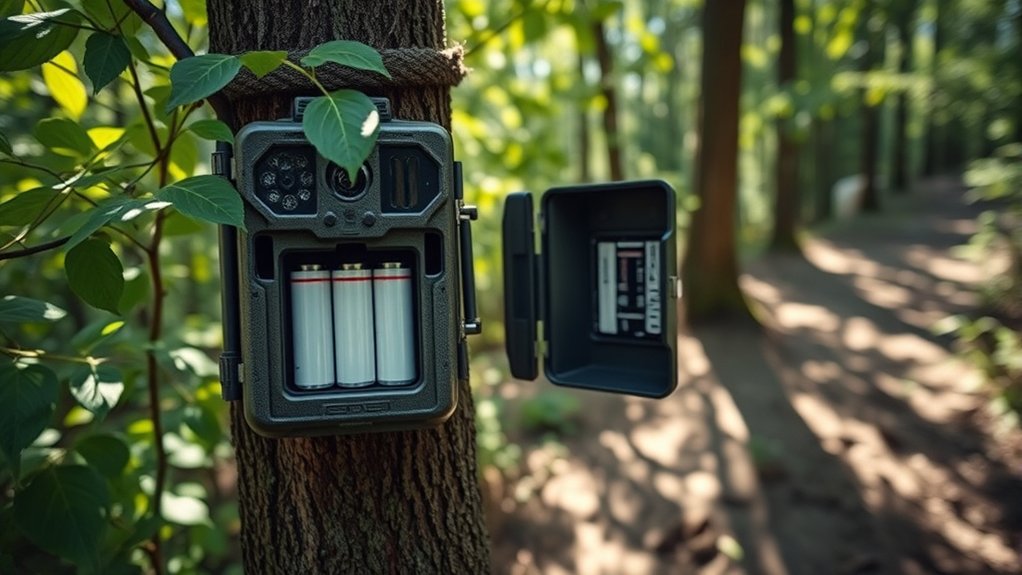
Although battery life varies depending on usage and camera model, trail camera batteries typically last between three to six months under normal conditions. You’ll notice that battery performance directly influences how long your camera remains operational without replacement.
To enhance battery performance, you should regularly perform battery maintenance, such as checking for corrosion on terminals and ensuring proper storage when the camera is not in use. Trail cameras running on high-capacity lithium batteries tend to sustain longer operation compared to alkaline batteries. Additionally, cameras with energy-efficient components and power management features generally extend battery life.
Key Factors That Affect Trail Camera Battery Life
When you use a trail camera, several factors greatly influence how long its batteries will last. First, the battery technology plays an essential role; lithium-based batteries typically offer superior capacity and discharge rates compared to alkaline types. Second, the camera’s energy efficiency directly impacts consumption—models with refined circuitry and low-power components extend battery life considerably.
Environmental conditions also matter: extreme temperatures can reduce battery performance, so you should consider your deployment location carefully. Additionally, camera settings like trigger sensitivity, photo resolution, and interval timing increase or decrease power usage. Frequent activation and prolonged standby drain batteries faster.
Battery Types and Their Lifespans in Trail Cameras
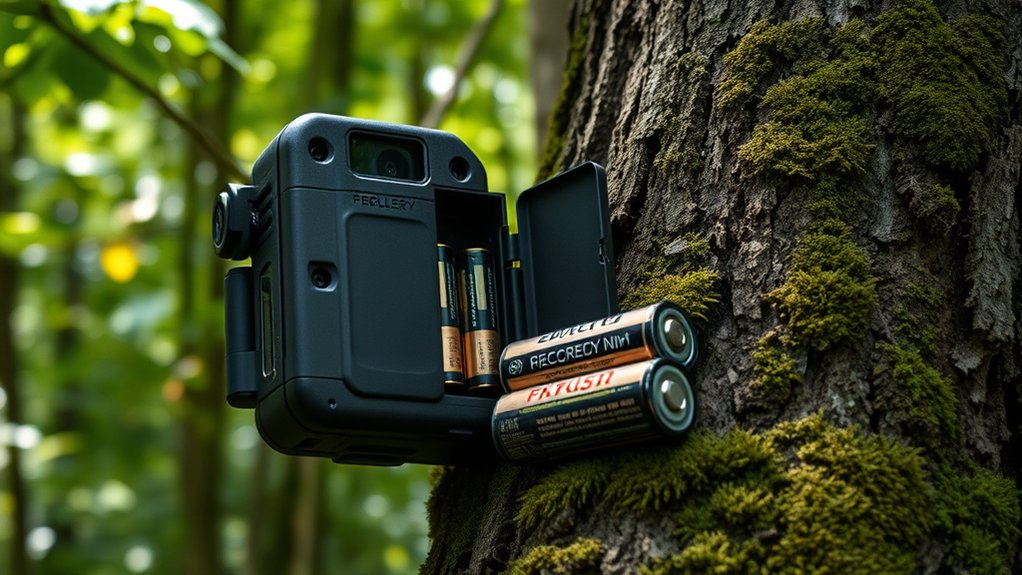
Since battery choice directly affects your trail camera’s operational duration, understanding the types available and their typical lifespans is essential. Lithium batteries offer significant advantages, including longer life and better performance in extreme temperatures.
In contrast, alkaline batteries have disadvantages like shorter lifespan and reduced efficiency in cold weather. Rechargeable NiMH batteries provide moderate longevity but require charging infrastructure.
| Battery Type | Typical Lifespan in Trail Cameras |
|---|---|
| Lithium | 6-12 months |
| Alkaline | 2-4 months |
| NiMH | 3-6 months |
| Lithium-ion | 6-10 months |
Choosing lithium batteries maximizes usage time and reliability, while alkalines may necessitate frequent replacements, impacting overall efficiency.
How Camera Settings Influence Battery Drain
Because your trail camera’s settings control how often and how long it activates, they play an essential role in battery consumption. Higher image resolution demands more processing power and storage, which accelerates battery drain. If you select the maximum resolution, expect shorter battery life compared to lower settings.
Motion sensitivity also impacts power usage; setting it high causes the camera to trigger more frequently, increasing activation time and energy expenditure. Conversely, low sensitivity may miss some activity but conserves battery by reducing unnecessary captures. Additionally, the length of video clips or the number of images taken per trigger influences power usage.
Tips to Maximize and Replace Trail Camera Batteries
Although trail camera batteries vary in lifespan depending on usage and environmental conditions, you can considerably extend their performance through strategic management. Prioritize battery maintenance by regularly checking contacts for corrosion and ensuring batteries are seated properly. Implement energy saving tips like adjusting trigger intervals and disabling unnecessary features to reduce power consumption.
When it’s time to replace batteries, opt for high-quality lithium options for longer life and better cold-weather performance. Store unused batteries in a cool, dry place to prevent degradation. Use the camera’s sleep mode during inactive periods. Rotate batteries periodically to maintain consistent performance.
Frequently Asked Questions
Can Trail Cameras Operate in Extreme Cold Without Battery Issues?
You can’t expect ideal cold weather performance from trail cameras without addressing battery efficiency tips like using lithium batteries and insulating the camera.
These steps help maintain functionality despite extreme cold, preventing rapid battery drain and failures.
How Do Solar Panel Chargers Work With Trail Camera Batteries?
Solar panel chargers convert sunlight into electricity, maintaining your trail camera batteries by optimizing solar efficiency. Confirm charger compatibility with your battery type to prevent damage and guarantee consistent power supply for uninterrupted camera operation in the field.
Are Rechargeable Batteries Better for Trail Cameras Than Disposable Ones?
You’ll notice rechargeable batteries offer rechargeable advantages, lasting up to 500 cycles, enhancing battery longevity considerably compared to disposables. They’re cost-effective and eco-friendly, ensuring your trail camera runs consistently without frequent replacements, optimizing performance and saving money.
What Is the Environmental Impact of Disposing Trail Camera Batteries?
You’ll reduce environmental pollution by practicing battery recycling; improperly disposing of trail camera batteries releases harmful chemicals into soil and water, damaging ecosystems.
Responsible recycling conserves resources and prevents toxic waste from entering landfills.
Can Battery Life Be Affected by the Camera’s Placement in the Field?
Yes, your camera’s placement directly impacts battery conservation. Placing it in ideal spots with minimal temperature extremes and avoiding constant motion triggers helps you maximize battery life.
This approach guarantees efficient operation in the field.
Conclusion
Think of your trail camera’s battery as the heartbeat of your wilderness watch. Just like a steady pulse signals life, well-chosen batteries and optimized settings keep your camera alive longer, capturing every moment.
By understanding factors that drain power and selecting the right battery type, you guarantee your device runs reliably through the seasons. With careful maintenance, you’ll extend that crucial energy, transforming fleeting wildlife glimpses into lasting evidence.
Ultimately, knowing how long trail camera batteries last is key to ensuring your camera consistently performs when it matters most.