You shouldn’t leave your crossbow cocked longer than 24 to 72 hours, depending on the type—recurve models up to 24 hours, compound up to 72.
How long can you leave a crossbow cocked is an important question for maintaining your equipment properly.
Prolonged cocking stresses limbs and strings, increasing wear and risk of mechanical failure.
Inspect your crossbow regularly for signs like string fraying or uneven tension to decide when to uncock.
Proper maintenance and storage are essential for longevity and safety.
If you want to optimize your crossbow’s performance and lifespan, it’s important to understand these factors thoroughly.
Key Takeaways
- Recurve crossbows can safely remain cocked for up to 24 hours without damage.
- Compound crossbows tolerate being cocked longer, usually between 48 to 72 hours.
- Prolonged cocking increases wear on strings, cables, and limb fibers, risking mechanical failure.
- Manufacturers recommend uncocking if the crossbow will be unused for several hours to preserve limb integrity.
- Regular inspection and maintenance are essential when leaving a crossbow cocked to ensure safety and performance.
How Long Can You Safely Leave a Crossbow Cocked?
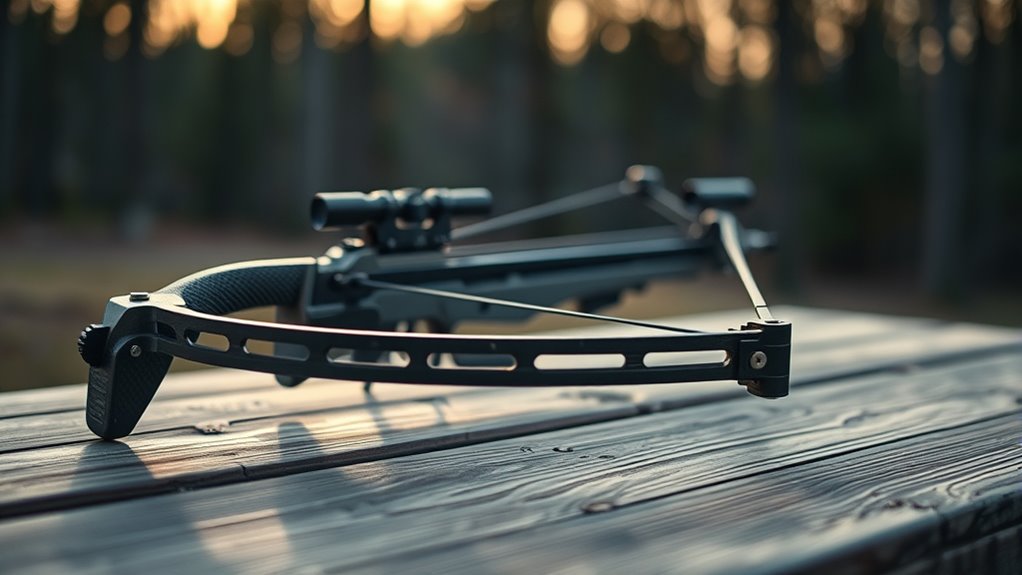
How long can you safely leave a crossbow cocked without risking damage or injury? The duration depends heavily on the crossbow mechanics and cocking methods employed. Modern crossbows often use durable materials and precise limb tensioning systems designed to hold the draw weight steadily, but leaving them cocked for extended periods can gradually stress limbs and strings.
Cocking methods, whether manual or assisted by a cocking device, influence the evenness of tension distribution, affecting the crossbow’s longevity. Generally, manufacturers recommend uncocking the crossbow if it won’t be used within a few hours to prevent mechanical wear and potential safety hazards.
Regular inspection of limb integrity and string condition is essential if you must leave it cocked longer, ensuring the crossbow remains reliable and safe for operation.
Does Your Crossbow Type Change How Long It Can Stay Cocked?
Although the fundamental mechanics of cocking apply across all crossbows, the specific type you own considerably impacts how long it can safely stay cocked. Different crossbow types have varied tension mechanisms and limb materials, directly affecting the cocked duration they can maintain without damage or performance loss.
| Crossbow Type | Average Cocked Duration | Key Consideration |
|---|---|---|
| Recurve | Up to 24 hours | Simpler limbs, quicker stress |
| Compound | 48–72 hours | Cam system reduces limb stress |
| Reverse Limb | 24–48 hours | Inverted limbs, moderate stress |
Understanding these distinctions helps you avoid compromising your crossbow’s integrity over extended cocked periods.
What Happens If You Leave a Crossbow Cocked Too Long?
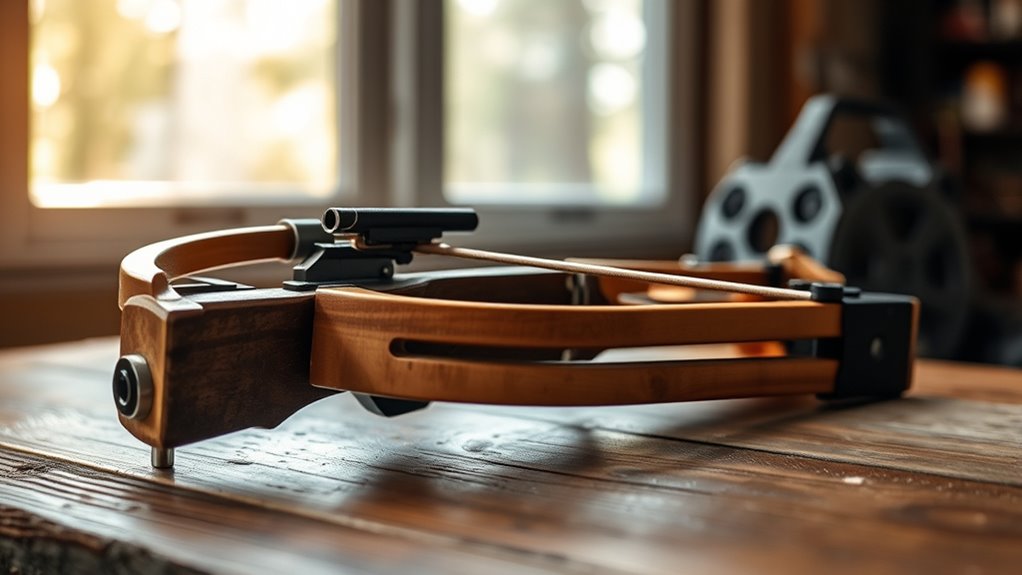
If you leave your crossbow cocked for too long, the string and cables can experience accelerated wear, reducing their lifespan and potentially compromising performance.
You also increase the risk of accidental discharge or mechanical failure, which can pose serious safety hazards. Understanding these risks is essential for maintaining both your equipment and personal safety.
String Wear And Tear
Since a crossbow’s string is under constant tension when cocked, leaving it in that state for extended periods accelerates wear and tear on the fibers. This continuous stress reduces string longevity, making timely maintenance essential.
You should regularly inspect the string for fraying or stretching and apply wax to maintain fiber integrity.
| Factor | Effect on String | Maintenance Tips |
|---|---|---|
| Constant Tension | Fiber fatigue and breakage | Uncock when not in use |
| Environmental Exposure | UV degradation, moisture damage | Store in dry, shaded area |
| Lack of Lubrication | Increased friction wear | Apply string wax regularly |
Following these guidelines guarantees peak performance and prolongs your crossbow string’s service life.
Safety Risks Involved
When you leave a crossbow cocked for too long, you increase the risk of mechanical failure and accidental discharge. Maintaining strict crossbow safety means understanding the consequences of improper cocking procedures and prolonged tension.
Extended cocking can compromise the trigger mechanism, causing unpredictable release. It also increases stress on limbs, raising the chance of limb failure. Additionally, it accelerates string and cable fatigue, risking sudden breakage.
Prolonged tension may lead to inadvertent firing due to worn safety components. You should always follow recommended cocking procedures and avoid leaving the crossbow cocked longer than necessary.
This practice reduces the likelihood of malfunctions and enhances overall safety. Proper maintenance and timely uncocking are essential to prevent accidents and guarantee reliable performance under any conditions.
How To Know When It’s Time To Uncock Your Crossbow
You’ll want to uncock your crossbow when you notice signs of string wear or increased trigger sensitivity, as these indicate potential safety risks.
Always adhere to the manufacturer’s recommended duration for keeping the crossbow cocked to avoid mechanical stress. Monitoring these factors helps maintain your equipment’s reliability and longevity.
Signs Of String Wear
Although crossbow strings are designed for durability, regular inspection is vital to detect signs of wear that indicate it’s time to uncock your crossbow. Ignoring wear indicators can lead to premature string failure, compromising safety and performance.
You should closely examine the string for:
- Fraying or broken strands along the entire length
- Excessive fuzziness or unraveling near the cams or string loops
- Uneven tension or visible stretching compared to a new string
- Discoloration or hardened areas signaling material fatigue
Once you identify these wear indicators, it’s critical to perform string replacement promptly. Keeping your string in peak condition not only maintains accurate shooting but also prevents dangerous breakage.
Uncocking your crossbow when you notice these signs prolongs the lifespan of your equipment and guarantees your safety in the field.
Trigger Mechanism Sensitivity
Since the trigger mechanism is a critical safety component of your crossbow, monitoring its sensitivity is vital to determine when to uncock the weapon. Over time, prolonged cocking can alter the trigger pull pressure, potentially leading to either an overly light or excessively stiff release. Both conditions compromise safety features designed to prevent accidental discharge.
You should routinely test the trigger pull weight; if you notice a significant deviation from the manufacturer’s specifications—usually a lighter, inconsistent pull—it’s a clear sign that internal components may be wearing or shifting. At that point, uncocking your crossbow is prudent to prevent malfunction.
Regular inspection and maintenance of the trigger assembly guarantee that safety features remain fully functional, preserving control and reducing the risk of unintentional firing during storage or transport.
Manufacturer’s Recommended Duration
Maintaining the trigger mechanism’s integrity is a key factor in deciding when to uncock your crossbow, but manufacturer guidelines offer the most reliable timeline for safe cocked storage. Each brand specifies a maximum cocking duration to prevent spring fatigue and trigger wear. Ignoring these recommendations risks compromising performance and safety.
To determine the appropriate uncocking time, consider:
- Reviewing the user manual for explicit cocking duration limits
- Monitoring any warranty conditions tied to cocking times
- Following maintenance advice related to prolonged cocking
- Consulting manufacturer customer support for model-specific guidance
How Should You Maintain a Cocked Crossbow?
When you keep your crossbow cocked, you need to regularly inspect and lubricate key components like the string, rail, and trigger mechanism to secure peak performance and safety. Focus on crossbow maintenance by examining the string for fraying or wear, applying appropriate string wax to maintain flexibility and prevent premature damage.
The rail requires lubrication with a recommended rail lube to reduce friction during firing. Check the trigger mechanism for dirt or debris, cleaning it carefully without disassembly unless specified by the manufacturer. Avoid over-lubricating, as excess oil can attract particles that degrade performance.
Regular crossbow maintenance secures reliability and prolongs the lifespan of your equipment, especially when left cocked. Consistent string care is critical to prevent snapping and maintain shooting accuracy over time.
What Are the Best Ways To Store a Cocked Crossbow in the Field?
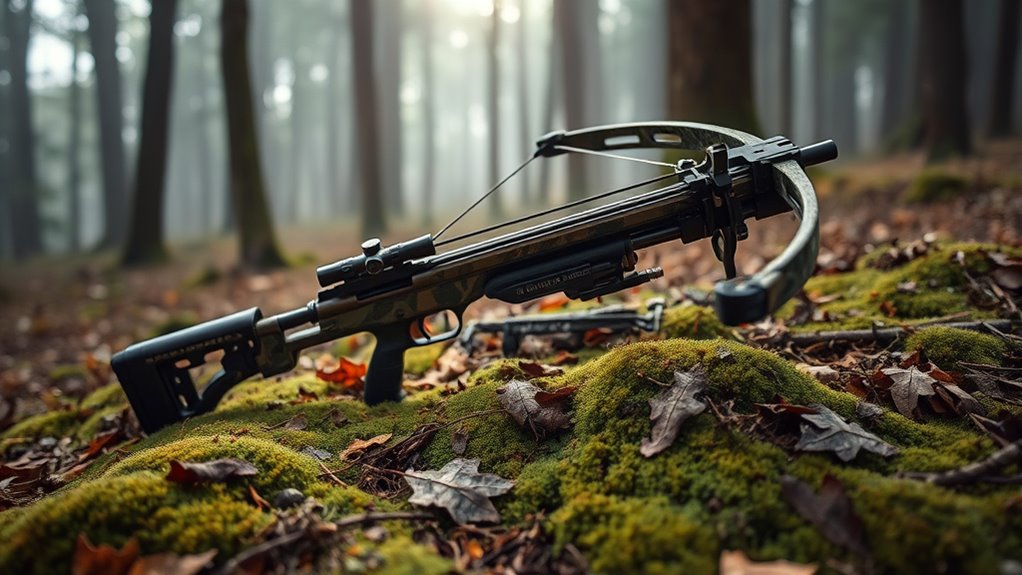
To store a cocked crossbow safely in the field, you need to focus on securing it against environmental factors and accidental discharge. Proper field storage not only preserves your crossbow’s performance but also enhances safety.
Use these best practices:
- Employ a sturdy crossbow case or protective cover designed for cocked weapons to shield against moisture and debris.
- Utilize crossbow accessories like limb dampeners and string silencers to reduce vibration and wear during storage.
- Position the crossbow on a stable surface, preferably horizontal, to avoid stress on the limbs and trigger mechanism.
- Engage the safety catch firmly and avoid placing the crossbow in high-traffic areas where it might be knocked or jostled.
Following these steps guarantees your cocked crossbow remains reliable and safe throughout your field activities.
Frequently Asked Questions
Can You Transport a Cocked Crossbow Safely in a Vehicle?
You shouldn’t transport a cocked crossbow in your vehicle; for crossbow safety, always uncock it first. Secure it unloaded in a locked case, ensuring proper vehicle storage to prevent accidental discharge and damage during transport.
Does Temperature Affect a Cocked Crossbow’s Performance?
Like a knight checking armor, you’ll find temperature extremes can alter crossbow accuracy by affecting string tension and limb flexibility.
Cold stiffens components, heat loosens them, so monitor conditions to maintain consistent performance during use.
Are There Legal Restrictions on Carrying a Cocked Crossbow?
You’ll find crossbow regulations vary widely by jurisdiction, with carrying restrictions often limiting where and how you can transport a cocked crossbow.
Always check local laws to verify compliance and avoid legal issues.
How Do Different String Materials Impact Cocking Duration?
Different string materials affect cocking duration by their string durability and material flexibility. You’ll find synthetic fibers like Dacron offer more flexibility but less durability, while high-modulus materials resist stretching, allowing longer cocked periods without compromising performance.
Can Cocking a Crossbow Affect Its Warranty?
Think of your crossbow’s warranty as a delicate dance; improper cocking mechanics can step on the toes of warranty limitations.
If you cock it incorrectly or too often, you might void coverage, so always follow the manual’s guidance precisely.
Conclusion
Leaving your crossbow cocked for extended periods is like keeping a spring wound tight—it strains the limbs and strings, risking damage. Depending on your crossbow type, safe cocked time varies, but generally, you shouldn’t exceed a few hours.
Regularly inspect and properly maintain your bow to guarantee longevity. When in doubt, uncock it to preserve performance and safety.
Treat your crossbow with care, and it’ll perform reliably when you need it most. Remember, knowing how long you can leave a crossbow cocked is key to maintaining its durability and ensuring safe use.