Does a crossbow kill grass? You can injure grass with a crossbow bolt, but it usually won’t kill it outright. The damage is mechanical and localized—your grass experiences small punctures or cuts, disrupting tissues only where the bolt strikes.
Most grass types are tough and regrow quickly unless crucial roots or growth points are hit.
Crossbow use for grass control is imprecise compared to mowing or manual removal.
If you want to understand when this method might work and safer alternatives, keep exploring the topic.
Key Takeaways
- Crossbow bolts cause localized mechanical damage but do not chemically kill grass or cause widespread plant death.
- Grass can regrow after crossbow injury unless critical growth tissues or roots are severely damaged.
- Damage from crossbow impacts is limited to the precise point of contact and does not affect surrounding grass.
- Crossbows are inefficient for grass control compared to mowing, herbicides, or manual removal methods.
- Using a crossbow for grass removal is unconventional and mainly suitable for isolated patches without chemical use.
How Does a Crossbow Affect Plants?
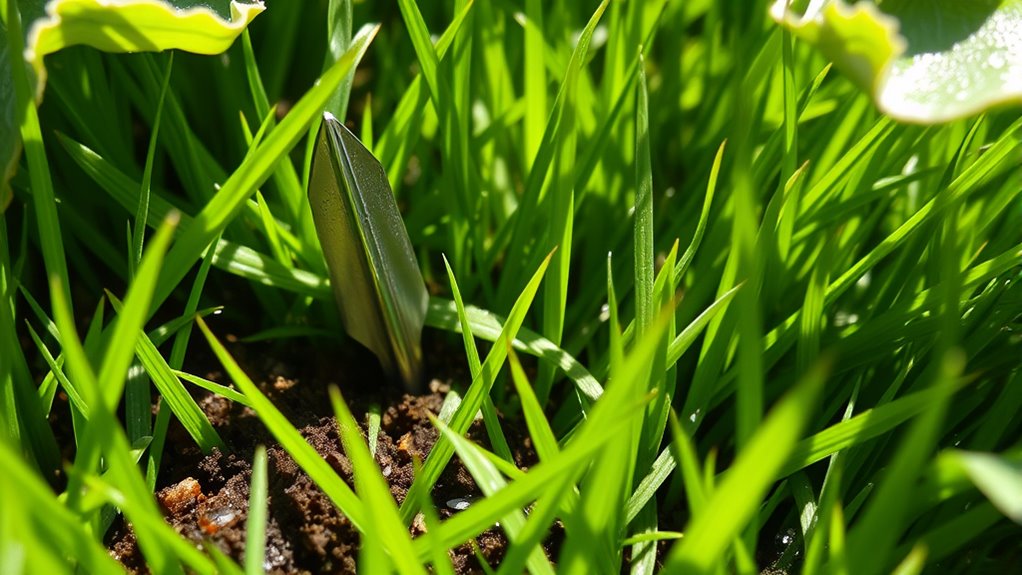
Although a crossbow is designed primarily as a hunting or sporting weapon, its interaction with plants is quite limited and mechanical. When you fire a crossbow, the mechanisms propel a bolt with significant kinetic energy, potentially puncturing or cutting plant tissue upon impact. This physical damage can disrupt cellular structures, leading to localized injury.
However, plants exhibit specific responses to such mechanical damage, including activating wound-healing processes and producing protective compounds to prevent infection. You should understand that a crossbow’s effect on plants is not chemical or systemic but strictly mechanical, causing immediate physical harm without triggering widespread physiological changes.
Consequently, while the crossbow mechanisms can injure individual plant parts, they do not inherently induce broad or lasting plant damage beyond the point of contact.
Can a Crossbow Kill Grass?
When you shoot a crossbow at grass, the impact can cause immediate physical damage to the blades and stems. However, grass has strong regenerative abilities and often regrows after such injuries, depending on the extent of the damage.
Understanding this balance between damage and regrowth helps clarify whether a crossbow can effectively kill grass.
Crossbow Impact On Grass
If you examine the interaction between a crossbow bolt and grass blades, you’ll find that the sharp, high-velocity projectile can cause localized damage by puncturing and severing the plant tissues. The degree of harm depends on factors like crossbow precision and the inherent grass resilience.
When a bolt strikes grass, it creates precise, linear wounds due to the bolt’s focused impact, reflecting crossbow precision. It disrupts vascular tissues essential for nutrient transport, potentially impairing immediate function. It affects only limited areas given grass’s structural flexibility and ability to distribute mechanical stress.
Thus, while a crossbow can physically injure grass at the impact site, the damage is typically confined and influenced by both the accuracy of the shot and the grass’s capacity to withstand mechanical injury.
Grass Regrowth After Injury
Since grass has a high capacity for regeneration, a single crossbow bolt injury rarely results in permanent death of the plant. You should understand that grass recovery depends on the severity and location of the injury effects caused by the bolt. If the crossbow damages only a few blades or superficial tissue, the grass will typically regrow within days to weeks, utilizing stored nutrients in its roots and meristematic cells.
However, if the injury disrupts critical growth points or causes extensive root damage, recovery is delayed or inhibited. Environmental factors such as moisture, temperature, and soil quality also influence regrowth rates. To sum up, while a crossbow bolt can cause localized injury effects, grass generally demonstrates resilience through rapid regrowth, minimizing long-term damage unless injuries are severe or repeated.
Which Grass Types Are Most Vulnerable to Crossbow Bolts?
Grass species vary considerably in their structural composition and density, which directly affects their vulnerability to crossbow bolts. You’ll find that certain grasses show distinct responses due to their anatomy and growth habits. For instance, fescue sensitivity is notable because its thinner blades and less dense growth make it more susceptible to damage from bolt impact.
Conversely, zoysia resilience arises from its thicker, tougher blades and tightly packed growth pattern, which dissipate the force more effectively.
Key vulnerable grass types include:
- Fine fescues: High fescue sensitivity due to low blade toughness.
- Bermuda grass: Moderate vulnerability; thinner blades but aggressive growth aids recovery.
- Kentucky bluegrass: Intermediate density, making it moderately susceptible.
Understanding these differences helps you predict the extent of damage crossbow bolts may cause.
How Does Crossbow Use Compare to Traditional Grass Removal?
When you compare crossbow use to traditional grass removal methods, you’ll notice differences in effectiveness and environmental impact. Crossbows target specific grass patches but may not eliminate root systems as thoroughly as mechanical or chemical techniques.
Understanding these distinctions helps assess which method suits your grass management goals best.
Effectiveness Against Grass
How effective is using a crossbow for grass removal compared to traditional methods like mowing or herbicide application? Crossbows rely on precision shooting to target species precisely, but their effectiveness against grass is limited. Grass, being widespread and dense, does not respond uniformly to single-point impacts.
Unlike mowing or herbicides that treat large areas efficiently, crossbow use is time-consuming and less practical for grass control. Crossbows affect individual grass blades or small clusters, requiring repeated shots for noticeable impact.
Traditional mowing provides uniform cutting, physically removing grass at the base level. Herbicides chemically inhibit growth across extensive areas, ensuring thorough control.
Environmental Impact Differences
Although crossbows aren’t typically associated with vegetation control, their environmental impact differs markedly from traditional grass removal methods. When you assess crossbow effectiveness, it’s clear that while they can damage targeted vegetation, their environmental consequences are localized and minimal compared to mechanical or chemical approaches that disrupt ecosystems broadly.
Crossbows avoid soil disturbance and chemical runoff, reducing long-term negative effects.
| Aspect | Crossbow Use |
|---|---|
| Environmental Consequences | Minimal, localized damage |
| Impact on Soil | None |
| Non-target Organism Safety | Higher compared to chemicals |
In contrast, traditional grass removal methods often result in soil erosion, chemical pollution, and harm to non-target species, emphasizing crossbows as a less impactful alternative despite lower efficiency.
What Are the Safety Risks of Using a Crossbow Outdoors?
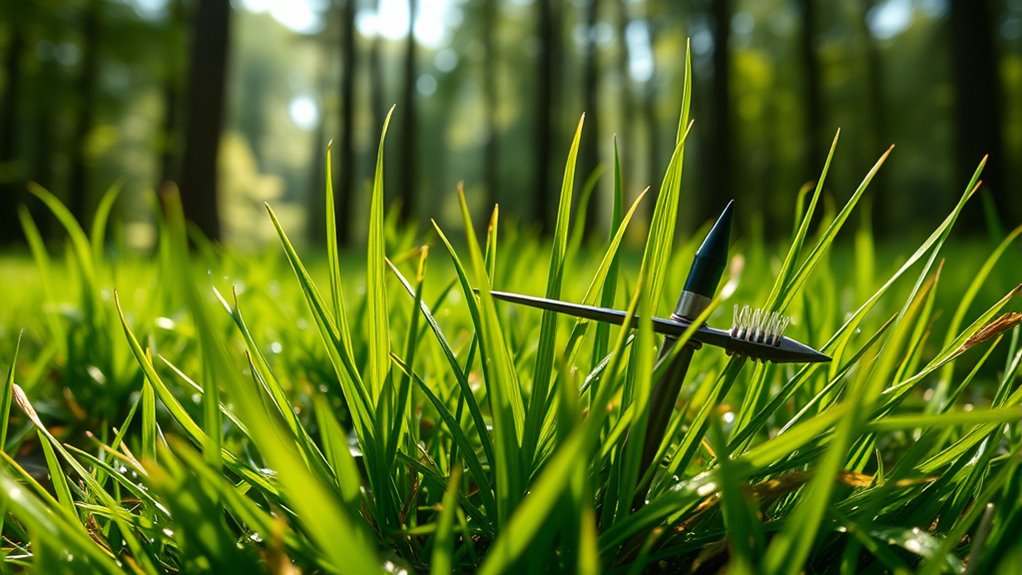
Why must you exercise caution while using a crossbow outdoors? Safety precautions and adherence to outdoor guidelines are critical due to inherent risks.
Crossbows are powerful weapons that can cause serious injury or property damage if mishandled. Key safety risks include:
Crossbows possess significant power and can lead to severe injuries or damage if not handled with care.
- Accidental discharge: Misfiring can occur if the crossbow is improperly loaded or triggered unintentionally.
- Ricochet hazards: Arrows may bounce off hard surfaces, posing threats to bystanders and the environment.
- Misidentification: Firing without clear targets increases the risk of harming people, animals, or objects.
What Legal and Ethical Rules Govern Crossbow Use in Your Yard?
When using a crossbow in your yard, you must understand the legal restrictions and ethical considerations that apply to guarantee responsible and lawful practice. Crossbow regulations vary widely by jurisdiction, often dictating where and when crossbows can be discharged. You should consult local laws to verify compliance with permitted usage zones, age restrictions, and licensing requirements.
Ethically, employing a crossbow aligns with principles of ethical hunting, which emphasize safety, respect for wildlife, and minimizing unnecessary harm. Even if your intent isn’t hunting, maintaining ethical standards means avoiding property damage and considering neighbors’ safety.
When Is Using a Crossbow to Kill Grass a Good Idea?
If you’re considering unconventional methods for grass control, using a crossbow might seem appealing under very specific circumstances. However, crossbow techniques for grass management are generally inefficient and imprecise compared to traditional methods. You might consider this approach only if:
- You need to target isolated patches without chemical usage.
- Access to the area is restricted, making mechanical tools impractical.
- You aim to experiment with alternative, non-chemical control methods.
Nevertheless, effectiveness is limited, as arrows cause localized damage rather than systemic grass kill. The kinetic impact disrupts tissue but rarely eradicates roots, leading to regrowth.
Consequently, while possible, using a crossbow for grass management is best reserved for niche scenarios where precision targeting outweighs practicality and efficiency concerns.
What Are Effective Alternatives to Using a Crossbow for Grass Removal?
Several effective alternatives to using a crossbow for grass removal offer greater precision, efficiency, and control. Manual removal, such as hand-pulling or using specialized weeding tools, allows you to target individual grass plants precisely, minimizing damage to surrounding vegetation. This method is labor-intensive but highly effective in small areas or when dealing with invasive species.
Natural alternatives, including solarization or mulching, suppress grass growth by altering environmental conditions without chemical input. Solarization uses clear plastic to trap heat, effectively killing grass and seeds beneath the surface. Mulching inhibits light penetration, reducing grass viability. These approaches are environmentally friendly and sustainable.
When choosing an alternative, consider site size, labor availability, and environmental impact to optimize grass removal effectively without relying on a crossbow.
How Can You Remove Grass Without Chemicals?
Alternatives to chemical herbicides provide effective options for grass removal while minimizing environmental impact. You can remove grass without chemicals effectively by employing manual removal and natural solutions. Manual removal involves physically uprooting grass, ensuring you extract the roots to prevent regrowth.
Manual grass removal and natural methods offer effective, eco-friendly alternatives to chemical herbicides.
Natural solutions leverage environmental factors or organic materials to inhibit grass growth. Here are three scientifically sound methods:
- Solarization: Cover the grass with clear plastic to trap heat, killing grass and seeds beneath.
- Smothering: Use thick layers of mulch or cardboard to block sunlight, starving grass of necessary light.
- Manual Removal: Employ tools like hoes or hand trowels to dig out grass, focusing on root extraction.
These approaches reduce chemical dependency, promoting sustainable and eco-friendly grass control.
Frequently Asked Questions
Can Crossbow Bolts Harm Pets or Wildlife in the Garden?
Yes, crossbow bolts can harm pets or wildlife in your garden, posing significant risks. For pet safety and wildlife conservation, avoid using crossbows where animals frequent.
This helps prevent injury and preserve local ecosystems responsibly.
What Maintenance Is Required for a Crossbow Used Outdoors?
Like a well-oiled machine, your crossbow demands regular crossbow cleaning and timely string replacement to maintain tension and accuracy.
Guarantee lubrication of moving parts and inspect for wear to optimize outdoor performance and longevity.
How Much Does a Typical Crossbow Cost for Yard Use?
Typical crossbows for yard use cost between $150 and $600, depending on crossbow features like draw weight and accuracy. Budget options offer decent performance, while advanced models provide enhanced precision and durability for outdoor tasks.
Are There Specific Crossbow Bolt Types Designed for Plant Impact?
You won’t find crossbow bolt designs specifically for plant impact, as bolts are engineered for penetration and accuracy in hunting or target shooting. Their construction doesn’t accommodate or target vegetation effects scientifically or functionally.
Can Weather Conditions Affect Crossbow Accuracy in Grass Removal?
You’d think weather impact wouldn’t matter much when removing grass with a crossbow, but it does. Wind, humidity, and temperature are essential accuracy factors, altering bolt trajectory and affecting your precision during grass removal tasks.
Conclusion
While a crossbow can physically damage grass by puncturing blades, it’s an imprecise and inefficient tool compared to traditional methods. Think of it as using a hammer to turn a screw—effective only in very specific, limited scenarios. Crossbow bolts may harm certain vulnerable grasses, but they don’t provide controlled or consistent removal.
For safe, legal, and practical grass management, relying on proven mechanical or non-chemical alternatives is far more reliable and scientifically sound. Ultimately, using a crossbow to kill grass is neither practical nor effective for most purposes.