What Does AR 15 Shoot?
If you have an AR-15, it most commonly shoots .223 Remington or 5.56 NATO rounds, both offering similar dimensions but differing slightly in pressure and velocity.
You’ll also find variants chambered in calibers like .300 Blackout and 7.62x39mm.
Bullet types range from full metal jacket to hollow points, each affecting performance based on use.
Barrel length further impacts velocity and accuracy.
Keep in mind, regulations vary by state.
Explore further to understand how these factors shape your AR-15’s capabilities.
Key Takeaways
- The AR-15 primarily shoots .223 Remington and 5.56 NATO calibers, commonly used for target shooting and self-defense.
- It can also chamber other calibers like .300 Blackout, 6.5 Grendel, and 7.62x39mm for specialized uses.
- .223 Remington offers manageable recoil and velocity, while 5.56 NATO typically delivers higher pressure and velocity.
- Bullet types for the AR-15 include full metal jacket for training, hollow points for self-defense, and soft points for hunting.
- Barrel length and ammo type impact muzzle velocity, accuracy, and terminal performance of the AR-15 rounds.
What Caliber Does the Standard AR-15 Shoot?
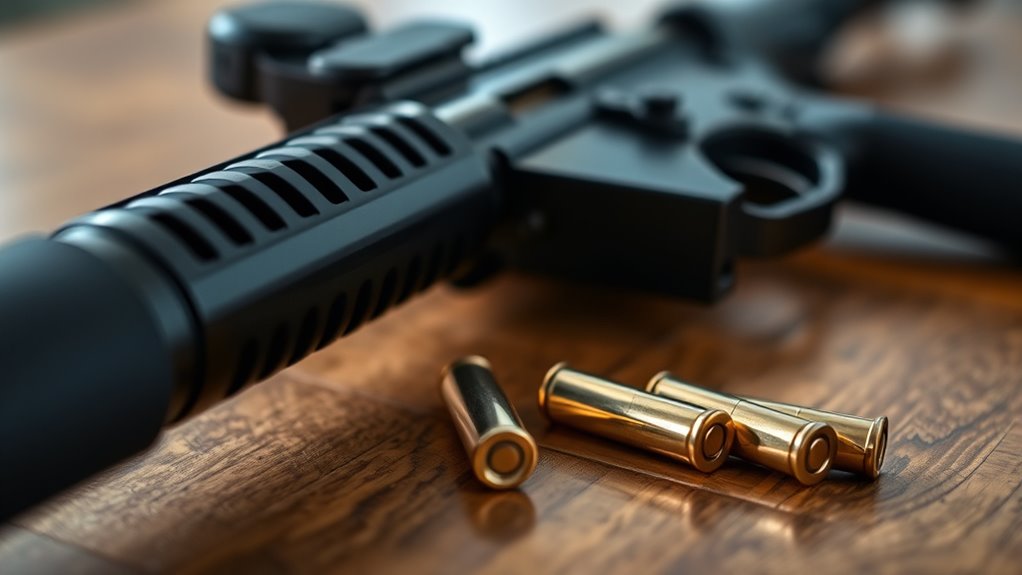
What caliber does the standard AR-15 shoot? Primarily, the AR-15 is chambered for the .223 Remington caliber, a widely accepted standard. However, you’ll find several caliber variations available, each tailored to specific needs.
While the .223 Remington offers a balance of velocity and manageable recoil for reliable shooting accuracy, other calibers like 5.56 NATO, .300 Blackout, and 6.5 Grendel have been adapted to the AR-15 platform to enhance performance under different conditions.
These caliber variations affect ballistics, recoil, and terminal performance, meaning you’ll want to choose based on your intended application. Overall, understanding these options helps you optimize your AR-15 for precision and effectiveness in various shooting scenarios.
Why Are .223 Remington and 5.56 NATO Popular AR-15 Rounds?
You’ll find that .223 Remington and 5.56 NATO rounds offer distinct ballistic characteristics, with 5.56 NATO typically providing higher pressure and velocity.
Their widespread popularity also stems from extensive ammunition availability and compatibility with the AR-15 platform.
Understanding these factors helps clarify why these cartridges dominate the market.
Ballistic Performance Comparison
Several factors contribute to the widespread popularity of the .223 Remington and 5.56 NATO cartridges in AR-15 platforms. Understanding their ballistic characteristics helps you appreciate their performance differences. Comparison charts illustrate velocity, energy, and trajectory distinctions, guiding your cartridge choice.
| Parameter | .223 Remington | 5.56 NATO |
|---|---|---|
| Muzzle Velocity | ~3,240 fps | ~3,100 fps |
| Muzzle Energy | ~1,300 ft-lbs | ~1,350 ft-lbs |
| Maximum Effective Range | ~500 yards | ~600 yards |
| Chamber Pressure | ~55,000 psi | ~62,000 psi |
| Barrel Twist Rate | 1:12 | 1:7 or 1:9 |
This table highlights how 5.56 NATO typically offers higher pressure and velocity, enhancing range and terminal performance compared to .223 Remington.
Ammunition Availability Factors
Because of their longstanding military and civilian use, both .223 Remington and 5.56 NATO rounds benefit from extensive manufacturing infrastructure, ensuring consistent availability and competitive pricing. When you choose these calibers for your AR-15, you tap into a robust ammunition supply chain supported by numerous manufacturers worldwide. This widespread production mitigates the impact of market fluctuations that often affect less common calibers.
Additionally, standardized specifications for 5.56 NATO and .223 Remington promote interoperability and ease of sourcing. While ammunition shortages can occur due to geopolitical events or increased demand, the established supply network for these rounds generally provides reliable access. Understanding these factors helps you make informed decisions about ammunition procurement, ensuring your AR-15 remains ready and cost-effective for various applications.
How Can You Tell .223 Rem From 5.56 NATO Ammo?
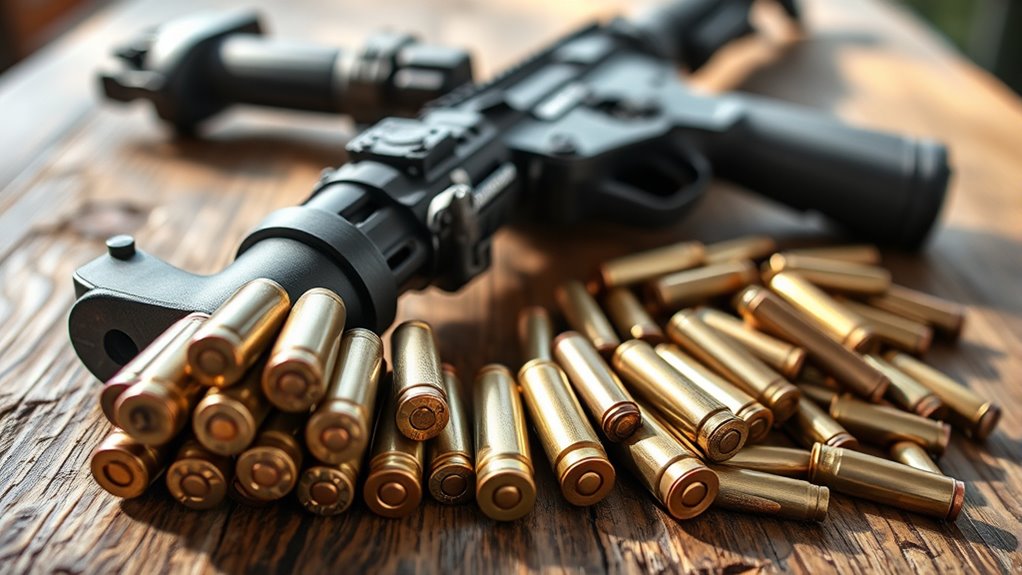
How can you distinguish between .223 Remington and 5.56 NATO ammunition when they look so similar? The key lies in examining ammunition markings and cartridge dimensions. While both cartridges share nearly identical external dimensions, 5.56 NATO typically operates at higher pressures and has different chamber specifications.
Ammunition markings on the case head or box often indicate the caliber and pressure rating, helping you identify the round. Here’s a concise comparison:
| Feature | .223 Remington | 5.56 NATO |
|---|---|---|
| Cartridge Dimensions | Standard SAAMI specs | Slightly thicker case walls |
| Ammunition Markings | Usually “.223 REM” | Marked “5.56 NATO” or “5.56” |
| Chamber Pressure | ~55,000 psi | ~62,000 psi |
Checking these details guarantees safe and appropriate ammunition use in your AR-15.
Other Common Calibers for AR-15 Rifles
You’ll find AR-15 rifles chambered in several popular calibers beyond the standard .223 Rem and 5.56 NATO, each offering specific ballistic advantages. Understanding the benefits and limitations of these variants helps you select the right caliber for your purpose.
Keep in mind that caliber compatibility requires careful consideration of barrel, bolt, and magazine specifications to guarantee safe and reliable operation.
Popular Caliber Variants
Caliber versatility is one of the AR-15’s defining features, allowing you to tailor the rifle for specific applications beyond the standard .223 Remington/5.56 NATO rounds. Popular caliber variants include the .300 Blackout, known for its subsonic performance and enhanced terminal ballistics, ideal for suppressed shooting applications.
The 6.5 Grendel offers improved long-range accuracy and energy retention, making it suitable for precision shooting and hunting. You might also consider the 7.62x39mm, which provides increased stopping power and compatibility with AK-style magazines.
Each caliber selection impacts factors like recoil, trajectory, and barrel life, so understanding these parameters helps you optimize your AR-15 for intended use. By carefully choosing your caliber, you guarantee your rifle performs effectively across diverse shooting applications, from target practice to tactical scenarios.
Advantages Of Different Calibers
Although the AR-15 platform is most commonly chambered in .223 Remington/5.56 NATO, exploring other calibers can greatly enhance your rifle’s performance for specific tasks. For instance, the .300 Blackout offers superior terminal ballistics in short barrels and excels in suppressed shooting, making it ideal for close-quarters engagements.
Meanwhile, the 6.5 Grendel extends effective range and improves accuracy at longer distances, catering to precision shooting preferences. The 7.62×39 caliber provides increased stopping power but at the cost of higher recoil, suiting users prioritizing impact over rapid follow-up shots.
When conducting a caliber comparison, consider how each cartridge aligns with your intended use, balancing factors like recoil, velocity, and terminal effect. Selecting the right caliber tailors your AR-15 to your specific shooting preferences and operational requirements.
Caliber Compatibility Considerations
When selecting cartridges for your AR-15, it’s crucial to take into account the rifle’s chamber specifications, barrel twist rate, and magazine compatibility to guarantee reliable feeding and peak performance. Caliber selection directly impacts these factors, as not all ammunition types function interchangeably within the platform.
Besides the standard 5.56×45mm NATO, popular calibers include .223 Remington, 6.5 Grendel, and .300 Blackout, each requiring specific barrel chambers and magazines. For example, 6.5 Grendel demands a longer barrel twist rate to stabilize heavier bullets, while .300 Blackout works effectively with standard AR-15 magazines but different barrel profiles.
Ensuring your rifle is configured for your chosen caliber will help avoid malfunctions and maximize accuracy. Always verify that your ammunition types align with your AR-15’s design parameters for safe, efficient operation.
Best Bullet Types for AR-15 Ammo and Their Uses
Since the AR-15 platform supports a variety of bullet types, understanding their specific characteristics is crucial for selecting the right ammo for your intended use. Common bullet types include full metal jacket (FMJ), hollow point (HP), and soft point (SP). FMJs, typically lighter in bullet weight, are ideal for target practice and training due to consistent penetration at varied shooting distances.
Hollow points expand on impact, making them suitable for self-defense by maximizing stopping power while minimizing over-penetration. Soft points offer controlled expansion, preferred in hunting applications where deeper penetration is necessary. Matching bullet weight to your shooting distances ensures best ballistic performance, accuracy, and terminal effects.
How AR-15 Ammo Choice Affects Performance and Accuracy
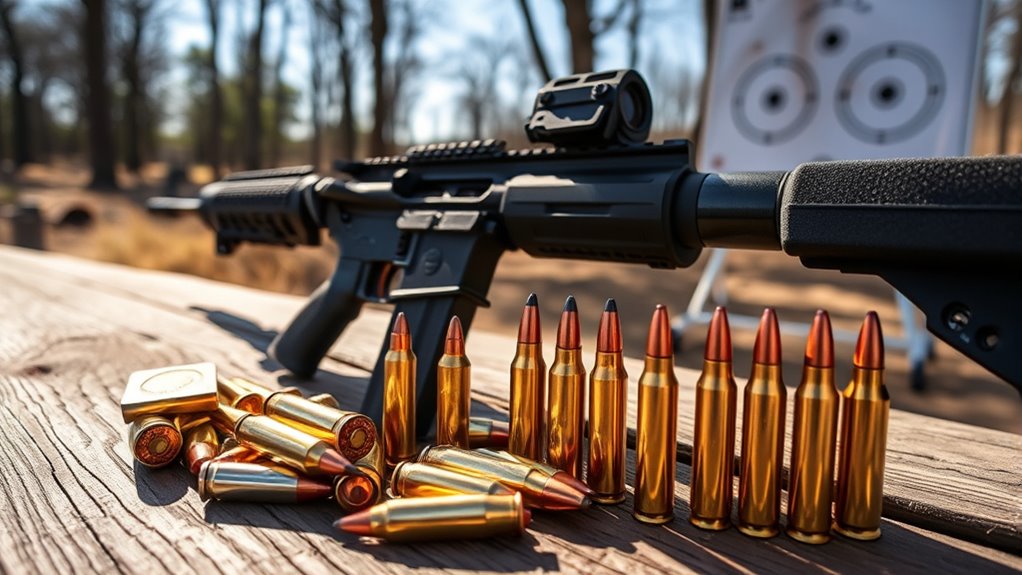
Choosing the right ammo for your AR-15 directly influences both its performance and accuracy by affecting factors such as muzzle velocity, recoil, and barrel harmonics. Different ammunition types cause variations in these performance factors, altering how your rifle behaves shot-to-shot.
You’ll notice differences in grouping tightness and point of impact depending on your ammo choice.
When selecting ammo, consider how it impacts:
- Consistent muzzle velocity for predictable bullet trajectories
- Recoil impulse affecting shooter control and follow-up shots
- Barrel harmonics influencing shot dispersion and accuracy
- Terminal ballistics suited to your intended use
Understanding these variables helps you optimize your AR-15’s effectiveness. By matching ammunition types to your specific needs, you guarantee reliable performance and precise accuracy with every round fired.
How Barrel Length Influences AR-15 Ammo Effectiveness
Although barrel length doesn’t change the caliber you’re shooting, it greatly impacts your AR-15’s ammo effectiveness by altering muzzle velocity and pressure. A longer barrel generally increases muzzle velocity, allowing the bullet to achieve higher speeds before exiting, which improves accuracy and terminal performance.
However, barrel twist rate must complement this length; if the twist is too slow or fast for your bullet weight, stability suffers regardless of velocity. Shorter barrels reduce muzzle velocity, which can diminish effective range and energy transfer.
Additionally, pressure dynamics inside the barrel shift with length changes, affecting how the powder burns and the bullet accelerates. Understanding this interplay helps you select barrel lengths and twist rates optimized for your preferred ammunition, ensuring consistent performance tailored to your shooting needs.
Which States Restrict AR-15 Ammo?
Where can you legally use all types of AR-15 ammunition? The answer depends heavily on state regulations, as ammunition restrictions vary greatly across the U.S. Certain states impose strict controls on the types of AR-15 ammo you can purchase, possess, or use.
Here are key states with notable ammunition restrictions:
- California restricts high-capacity magazines and specific ammo types like armor-piercing rounds.
- New York bans certain ammunition calibers and mandates background checks for ammo sales.
- New Jersey limits armor-piercing and tracer rounds alongside magazine capacity.
- Connecticut enforces regulations on large-capacity magazines and bullet types.
Before buying or using AR-15 ammo, always verify local state regulations to confirm compliance and avoid legal issues related to ammunition restrictions.
How to Safely Pick and Buy AR-15 Ammo
Understanding state-specific ammo restrictions is just one part of responsible AR-15 ownership. When picking and buying AR-15 ammo, you need to verify that the ammunition complies with your local purchasing regulations, which can vary widely. Always purchase from licensed dealers who adhere to federal and state laws, guaranteeing legitimacy and safety.
Check the caliber specifications—most AR-15s use 5.56x45mm NATO or .223 Remington—and select ammo suited for your firearm’s chambering. Proper ammo storage is critical: keep rounds in a cool, dry place, ideally in locked containers to prevent unauthorized access and degradation.
Following these technical guidelines will help you maintain safety, guarantee functionality, and comply with legal requirements when acquiring AR-15 ammunition.
Frequently Asked Questions
Can an AR-15 Be Converted to Shoot Different Calibers?
Yes, you can perform a caliber conversion on an AR-15 by swapping barrels, bolts, and magazines to accommodate different ammunition types. This modularity allows you to efficiently shoot various calibers with proper components and adjustments.
By changing these key parts, the AR-15 platform becomes highly versatile. It enables users to tailor their firearm for specific purposes, whether for target shooting, hunting, or tactical use.
Keep in mind that some calibers may require additional modifications or considerations for optimal performance and safety. Always ensure compatibility and follow manufacturer guidelines when converting your AR-15.
What Is the Typical Magazine Capacity for AR-15 Ammo?
Think of capacity as the heartbeat of your AR-15; typical magazines hold 30 rounds, though options vary widely.
You’ll find different magazine types matched to ammo choices, optimizing performance for your shooting needs.
How Does Weather Affect AR-15 Ammunition Performance?
You’ll notice temperature effects alter powder burn rate, impacting velocity and accuracy. Humidity impacts primer sensitivity and corrosion risk, potentially causing misfires.
Are There Specific Cleaning Tools for AR-15 Ammo Residue?
Cleaning supplies designed for AR-15 residue removal are your secret weapon. You’ll need bore brushes, cleaning rods, patches, and solvent specifically formulated to tackle carbon buildup.
These tools ensure peak performance and prevent fouling in your rifle’s barrel and chamber. Using the right supplies helps maintain reliability and accuracy over time.
What Are Common Causes of Misfires With AR-15 Ammo?
Common misfire causes include faulty primers, improper ammunition types, and inconsistent powder loads. You should always verify ammo compatibility, inspect primers, and maintain your AR-15’s firing pin and chamber to guarantee reliable ignition and performance.
Conclusion
Choosing the right ammo for your AR-15 is like selecting the perfect key for a complex lock—it directly impacts performance and accuracy. Understanding the differences between .223 Remington and 5.56 NATO, along with other calibers, guarantees you get the best results.
Always consider barrel length and legal restrictions in your state when buying ammo. By staying informed and cautious, you’ll maximize your AR-15’s potential safely and effectively every time you shoot. Knowing exactly what does AR 15 shoot is essential for both safety and performance.